

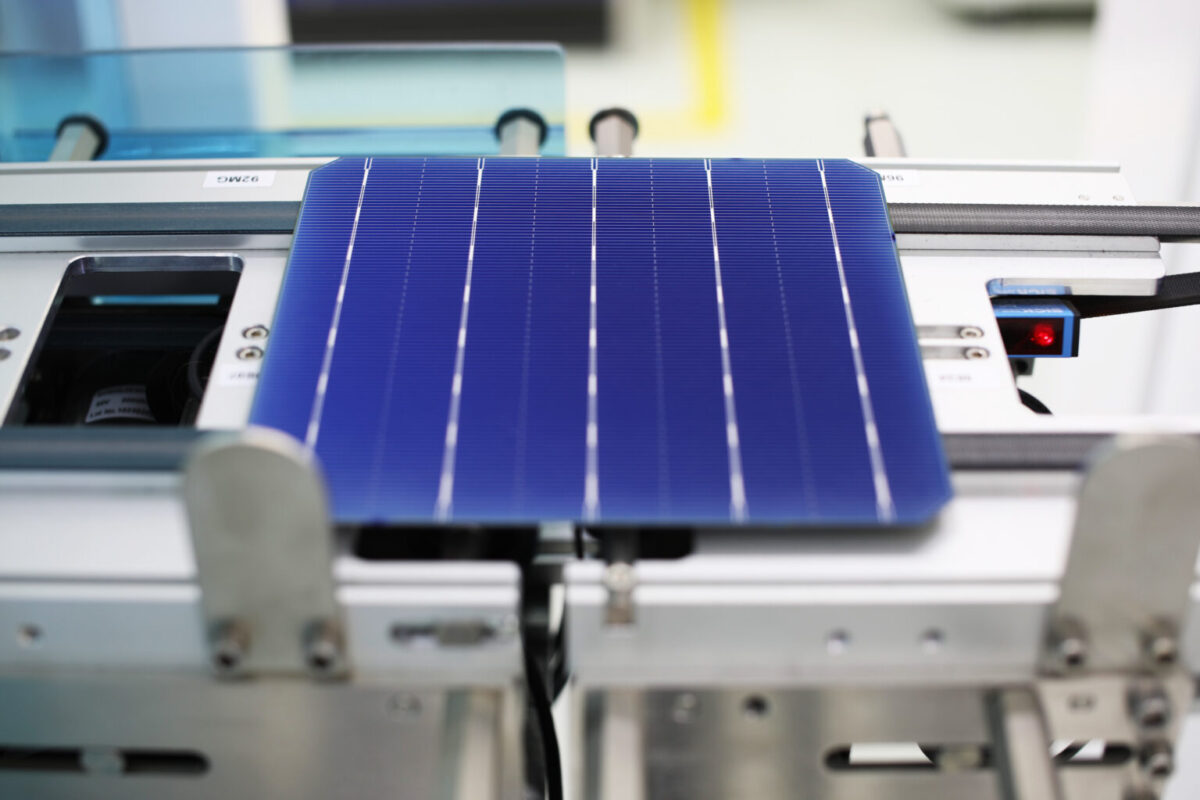
DK Electronic Materials (DKEM) plans to raise up to CNY 3.0 billion (USD 413 million) through a private placement to finance PV paste, metal powder expansion, R&D and debt repayment. The company is developing PV paste with a high copper content towards volume production for TOPCon 3.0 cells.
Supplier of PV metallization pastes DK electronic materials (DKEM) said on April 21 that it plans to raise up to CNY3.0 billion (USD413 million) through a private equity placement. The company stated that the proceeds will be used for a 2,000 ton/year low-silver base metal PV paste project, a 1,450 ton/year electronic metal powder expansion and upgrade project, and R&D for the next generation of high-efficiency cell metallization pastes, among other initiatives. Of the total funds raised, CNY 900 million (USD 124 million) will be allocated to repaying bank debt and working capital. In October, the company told investors that collaboration with major downstream customers had progressed and its high-copper pasta products had entered volume production. The company said it has made advances in seed layer formulation and paste design, demonstrating compatibility and scalability with high-efficiency TOPCon 3.0 cell processes. Later in January, a DKEM spokesperson told pv magazine that pure copper paste solutions, unlike high copper paste, are not yet technically mature. “They will need additional time to counter the oxidation of copper, to clarify and empirically validate copper diffusion risk management mechanisms, and to establish a supportive industrial ecosystem that includes materials and equipment,” the spokesperson said. “While the short-term driver for GW-scale TOPCon customers to accelerate mass production of high copper paste is pressure from rising silver prices, the medium to long-term driver lies in sustainability issues surrounding the supply of photovoltaic-grade silver.”
Aiko Solar recently announced plans to invest CNY 1.665 billion ($229 million) in upgrading production lines at its Yiwu and Chuzhou production bases. The company will convert the existing PERC capacity of 5 GW in Yiwu and the TOPCon capacity of 6 GW in Chuzhou into ABC cell capacity, with investments of CNY 721 million and CNY 944 million respectively. The Yiwu project is expected to start in the second quarter and begin production in the third quarter, while the Chuzhou upgrade is expected to start in the third quarter and ramp up in the fourth quarter.
Chinas National Energy Administration (NEA) said on April 23 that the country’s total installed power generation capacity reached 3.96 TW at the end of March, an increase of 15.5% year-on-year. Solar energy accounted for 1.24 TW, an increase of 31.3%, while wind energy reached 660 GW, an increase of 22.4%. Based on late March figures and previously released data from January to February, market watchers estimate that China added about 8.91 GW of solar power in March, a decline of about 56% year over year.
On April 21, the Shenzhen Stock Exchange said it would review the IPO filing of China is gaining new energy companies on April 28. The company plans to raise approximately CNY24.5 billion (USD3.37 billion), with proceeds earmarked for renewable energy generation projects including large-scale wind and solar power bases, integrated multi-energy projects, green ecosystem initiatives and hybrid development programs.
According to the Silicon Industry Branch of the China Non-ferrous Metals Industry Association (CNMIA), polysilicon prices were unchanged this week after nine straight weeks of decline. N-type rechargeable polysilicon traded at CNY35,000–36,000/ton ($4,814–4,952/ton), with an average of CNY35,300/ton, flat week on week. N-type granular silicon traded at CNY 34,000-36,000/ton, with an average CNY 34,300/ton, also unchanged. Wafer prices were also stable, with N-type G10L at CNY 0.93/piece, G12R at CNY 1.00/piece and G12 at CNY 1.17/piece. According to the association, recent policy signals have improved sentiment and supported futures prices, although inventories remain high.
This content is copyrighted and may not be reused. If you would like to collaborate with us and reuse some of our content, please contact: editors@pv-magazine.com.
