

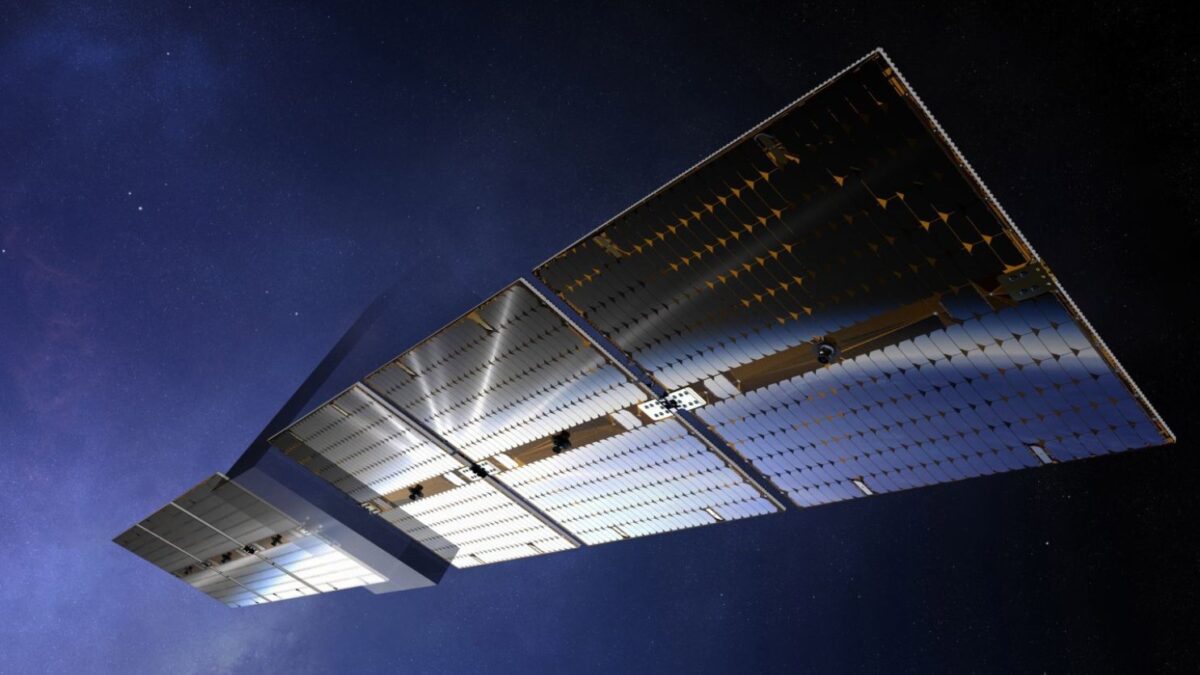
The Netherlands Organization for Applied Scientific Research (TNO) is working with solar energy manufacturer MCPV and aviation giant Airbus to adapt terrestrial proven silicon technology for space operations. It is expected that the technology could serve as a cheaper alternative to the gallium arsenide solar cells used in most space solar panels today.
Dutch research institute TNO, Netherlands-based solar energy manufacturer MCPV and aviation giant Airbus are collaborating on research into the application of silicon solar technologies in space.
Because many current space solar panels rely on gallium arsenide (GaAs) solar cells, which are expensive and limited by supply chain constraints, the three partners are exploring whether Earth-proven silicon PV technology could serve as a lower-cost alternative.
As part of their collaboration, MCPV acts as an industrialization partner, bridging the gap between the development of TNO’s cell technology and the expertise of Airbus Netherlands in the field of space integration. A statement from the three companies explains that the initial joint activities are aimed at exchanging key technical knowledge and identifying terrestrial PV concepts that could be suitable for space applications.
“A central topic is TNO’s own expertise in the field of back-contact silicon solar cells, which enable highly accurate pick-and-place production,” the statement said. “One of the first technical questions to be explored is how silicon-backed contact cells perform under space-specific conditions, such as particle radiation, extreme thermal cycling and mechanical loading.”
The trio add that by assessing how mature terrestrial PV technologies could work in space, they aim to improve both performance and affordability for future satellite missions.
“As Europe seeks to strengthen its strategic autonomy in space, the ability to build on proven terrestrial technologies becomes increasingly important,” their statement added. “Exploring the applicability of advanced silicon-based solar photovoltaics for space missions provides a way to broaden technology options and strengthen supply chain resilience.”
Harald Kerp, Senior Business Developer at TNO, emphasized that solar energy on Earth has evolved enormously in terms of manufacturability, costs and design flexibility. “The key question we are exploring is how these strengths can be translated to space applications while meeting the stringent reliability requirements of the space environment,” he added.
This content is copyrighted and may not be reused. If you would like to collaborate with us and reuse some of our content, please contact: editors@pv-magazine.com.
