

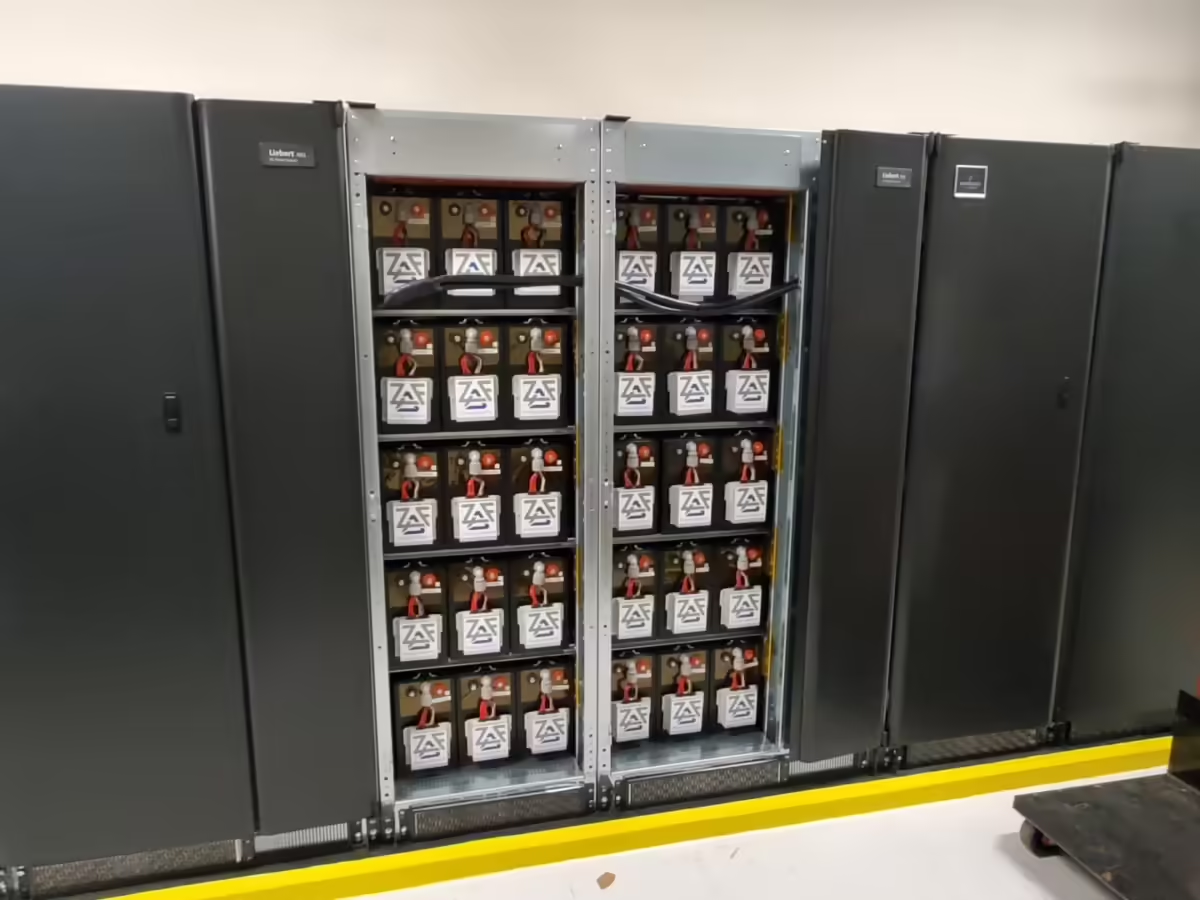
Josef Daniel-Ivad of the Zinc Battery Initiative provides an update on the current scale of zinc battery manufacturers and technology.
By ESS news
Safe and sustainable zinc batteries have made major strides in energy storage over the past five years, garnering $1.3 billion in combined private and public investment and leading to the construction of half a dozen factories.
Last month, I had the pleasure of working with U.S. Department of Energy leadership at a Zinc Battery Workshop at West Virginia University, where we created a roadmap to accelerate commercialization and scale production of zinc batteries. This opportunity has helped me see how far our industry has come and what challenges we still have to overcome.
Going into the workshop, I assessed how far our industry has progressed in six short years. Since the International Zinc Association (IZA) launched the Zinc Battery Initiative (ZBI) in 2020, five battery developers have commercialized their batteries, while several others are moving from pilot lines to full production. The paths to achieving scale vary.
For example, zinc-bromine battery manufacturer Eos Energy Enterprises has benefited from private and public investments, resulting in two plants in Pennsylvania with expected annual production of 8 GW.
Nickel-zinc battery manufacturer ZincFive, on the other hand, has relied entirely on private funding and found its niche in powering data centers, where high performance combined with safety makes a compelling case for zinc batteries over the flammable lithium alternative.
A third U.S. company, nickel-zinc producer AEsir Technologies, started with private financing but has found its specialty in fulfilling government contracts to supply backup power to defense systems such as fighter jets and submarines. While we represent manufacturers in Asia, Europe and North America, we have seen the most growth in the United States, where the government has committed to nurturing and providing financial support to the energy storage industry – critical to helping development companies make the leap from pilot line to scale.
Scale support
Even in a nurturing environment, our members need support to scale, as we recently discovered during a meeting with battery manufacturers, suppliers and policymakers in West Virginia. Key points include developing battery material standards, adopting battery performance protocols, creating safety standards specific to zinc batteries, providing affordable access to pilot testing, and ensuring production orders achieve scale.
One area that the four national laboratory workshop participants were keen to explore is improving zinc anode efficacy; a private-public partnership to develop standardized performance testing protocols will improve zinc battery performance and achieve maximum energy density.
Just as important as material performance standards are safety standards, which are currently designed to address the limitations of lithium-ion batteries. As discussed in our workshop, these regulations are written for flammable lithium-ion batteries, which require an expensive monitoring system due to their tendency to thermal flood.
In contrast, we see that zinc batteries are non-flammable and excel in long-term and stationary applications, but are forced into regulatory frameworks that do not reflect their strengths or their risk profile. We should update national and industry standards to explicitly include zinc-based chemicals, and the Zinc Battery Initiative is forming a working group with its members to advance this issue and encourage utilities, regulators and developers to evaluate zinc systems on their merits rather than the risks associated with lithium.
For zinc battery developers, we also find that gaining access to pilot lines for testing remains an expensive hurdle to overcome. Using a pilot line at a national laboratory can cost more than $50,000 for a week of testing – too much for many development companies. We are actively working with policymakers to reduce costs for battery manufacturers so they can reach the final phase of production scale-up, where government policy can make or break an industry. Utilities are inherently risk averse and should be incentivized through financing and policy to try out newer technologies. We believe that production tax credits, investment tax credits or performance-based incentives specifically designed for non-lithium, long-term storage will motivate utilities to deploy zinc-based systems. Similar incentives exist for established lithium technology, so targeting non-lithium technologies would level the playing field.
While the zinc battery industry has made tremendous progress in recent years, the workshop reminded me of the need for continued government cooperation and support.
The change I have observed in U.S. policy is a focus on developing a domestic zinc battery industry rather than advancing the energy transition, and this new focus should serve as a wake-up call for other countries and regions. Asia is also supporting the battery industry, and our member GP Energy Tech is building its factory in the Johor-Singapore Special Economic Zone. Our goal is to emulate a similar movement in Europe, where zinc battery developers could benefit from the same financing and demonstration projects as in Asia and North America.
With the most recent The BloombergNEF report predicts that demand for energy storage will grow fifteenfold by 2030Promoting the growth of zinc batteries and other safe, sustainable technologies through the targeted, intentional support discussed in our recent workshop is critical, not only in the US but also abroad.
Author: Josef Daniel-Ivad
Josef Daniel-Ivad leads the Zinc Battery Initiative (ZBI), a program launched in 2020 by the International Zinc Association to promote the remarkable story of zinc rechargeable batteries and encourage their further adoption. Its members are the industry’s leading companies – each with proprietary technologies, yet all share zinc as a common foundation for the production of high-quality, safe and environmentally sustainable batteries.
The views and opinions expressed in this article are those of the author and do not necessarily reflect those of the author pv magazine.
This content is copyrighted and may not be reused. If you would like to collaborate with us and reuse some of our content, please contact: editors@pv-magazine.com.
