

Authors of the World Nuclear Industry Status Report 2024, the world had 408 operational reactors producing 367 GW by mid-year, which is significantly less than forecasts of installed solar capacity by the end of the year and five times less than cumulative PV capacity of the world. , which is now approaching 2 TW.
The World Nuclear Industry Status Report (WNISR) 2024overseen by French nuclear energy consultant Mycle Schneider, shows that the installed PV capacity in the world is now almost five times that of nuclear power.
“The role of an annual report like the WNISR is to identify pre-existing trends that have continued over the past year and potential developments that contradict previous trends or simply exceptional events,” says the report’s lead author, Mycle Schneider. told pv magazine. “In addition, the WNISR tries to identify developments that would otherwise receive little attention.”
He also said that the WNISR confirms the trends of recent years when it comes to key indicators: nuclear production increased slightly in 2023, but remains below 2021 and 2019 levels; By mid-2024, the number of operational units is 408, one more than a year ago, but 30 below the 2002 peak, while installed capacity has increased to a new record (marginally +0.3 GW) after the 2006 record.
“Similarly, there is one more reactor under construction in the world by mid-2024, but three fewer countries are building them – the US, UAE and Brazil,” he added. “That means that the US, the largest nuclear power nation, has no reactors under construction, and no utility in the country has applied for a construction permit for a large reactor. The only application for a construction permit was sent to the US regulator for Bill Gates’ small fantasy reactor Sodium, the design of which has not even been licensed yet.”
The report shows that 408 operational reactors worldwide were producing 367 GW at the end of June, compared to around 1.6 TW of PV at the end of 2023 and possibly around 1.9 TW at the end of June, given BloombergNEF’s recent projections. and Bernreuter Researchers, who foresee 592 GW and 660 GW respectively this year.
The report also only mentions that Last year, five new nuclear reactors totaling 5 GW were switched on in Belarus, China, Slovakia, South Korea and the US, adding that this small growth was not enough to increase the world’s operational nuclear capacity , as another five plants with a combined power capacity of 6 GW were closed in Germany, Belgium and Taiwan.
“In the 20 years between 2004 and 2023, there were 102 startups and 104 closures,” the report said. Of these, 49 startups were in China that did not close any reactors. As a result, outside China, there There has been a dramatic net decline of 51 units over the same period, with net capacity falling by 26.4 GW.”
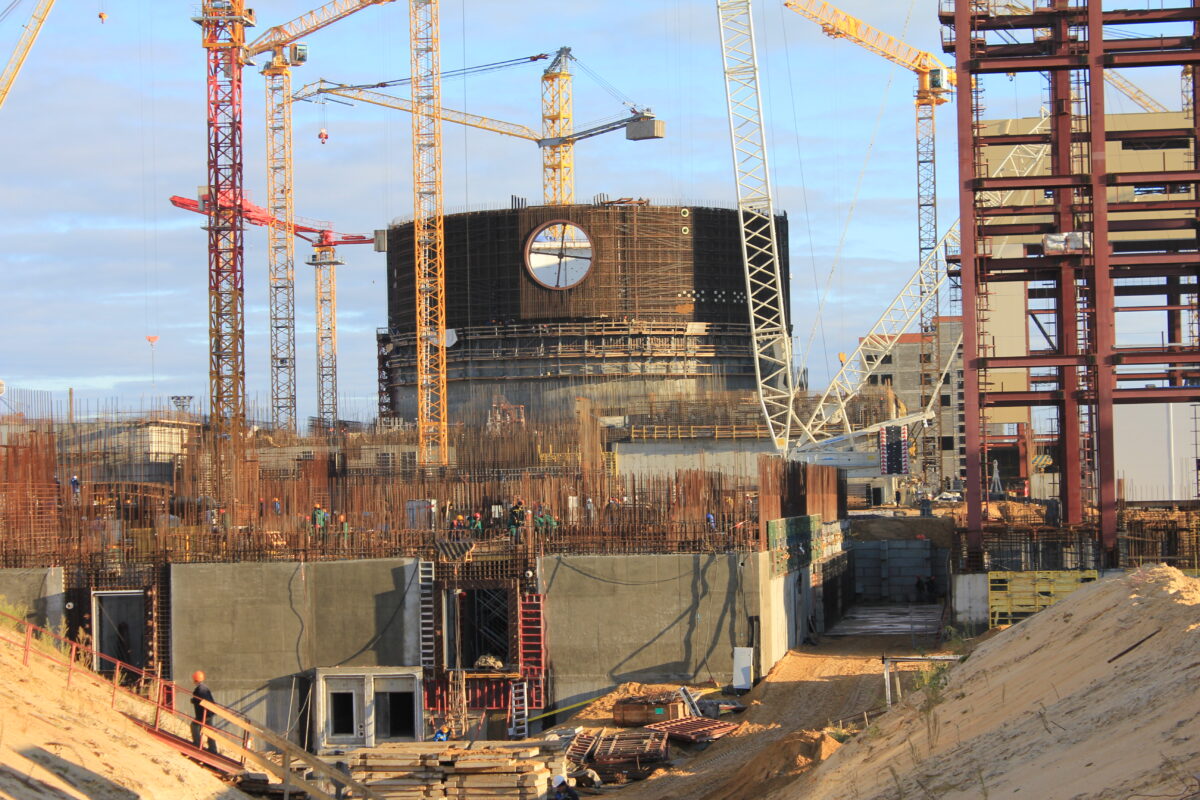
The report’s authors also report that at the end of June, 59 nuclear power plants, amounting to 60 GW, were under construction in 13 countries, compared to 64 projects in 2023. China accounts for about 46% of the total with 27 projects under construction.
“All reactors under construction in at least nine of the thirteen construction countries have suffered delays of often a year,” the report authors said. “Of the 23 reactors documented as behind schedule, at least 10 have reported more delays and two were reported as delayed for the first time in the past year.”
According to Schneider, the key is to analyze the dominant role of China and Russia. Since December 2019 and until mid-2024, there have been 35 construction starts worldwide, 22 in China and 13 by Russia in various countries. “Nothing else, nowhere, by no one,” he declared. “But even in the only country that is building massively, China, nuclear development is relatively marginal. In 2023, China will start up one new nuclear reactor, that is plus 1 GW, and more than 200 GW of solar energy alone. Solar energy generated 40% more energy than nuclear energy and all non-hydro renewable energy sources – especially wind, solar and biomass – produced four times as much as nuclear energy.”
The report also highlights how nuclear energy is challenged not only by the strong growth of solar and wind energy, but also by battery storage, the costs of which are high. is expected to fall below that of coal and nuclear power plants in China around 2025. “Solar plus storage is already significantly lower than nuclear power in most markets today, and is also highly competitive with other low-emission electricity sources commercially available today,” the report also notes.
The authors also cite data from investment bank Lazard reveals that solar plus storage could already be cheaper than peak gas and new nuclear power. “The competitive costs and large-scale availability of variable renewable energy sources, combined with reinforcing options – especially storage – could prove to be the game changer of energy policy in the coming years,” they further explain.
The report also analyzes the current trajectory of so-called small modular reactors (SMRs), which promise to be the next generation of power stations despite extremely limited development to date. “The gap between the hype about SMRs and industrial reality continues to grow,” say the authors. “The nuclear industry and several governments are doubling down on their financial and political investments in SMRs. So far, the reality on the ground does not reflect these efforts: without design certifications and without construction in the West, SMR projects continue to be postponed or canceled.”
They conclude that, despite the general view that nuclear energy is gaining popularity, this energy is becoming “irrelevant” on the global market. “Solar plus storage could be the game changer for adapting policy decisions to current industrial realities,” they say.
This content is copyrighted and may not be reused. If you would like to collaborate with us and reuse some of our content, please contact: editors@pv-magazine.com.
