

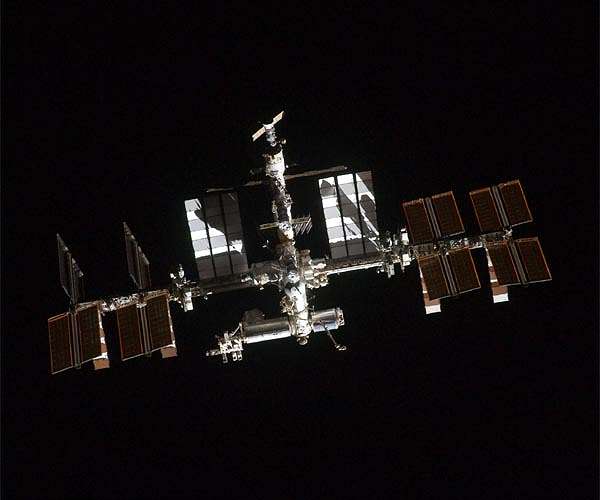
Lyten’s lithium-sulfur batteries are being tested on the ISS
Lyten, a leader in supermaterial applications and lithium-sulfur battery technology, announced that its rechargeable lithium-sulfur battery cells have been selected for testing aboard the International Space Station (ISS). The Department of Defense’s Defense Innovation Unit (DIU) is funding this project as part of its ongoing collaboration with Lyten focused on the development and production of lithium-sulfur batteries.
As part of this agreement, DIU will fund Spacebilt/Skycorp’s integration and testing of Lyten’s rechargeable lithium-sulfur cells. The batteries will undergo rigorous testing under launch, orbital and recovery conditions, aimed at assessing their viability for use in satellites, spacesuits and extravehicular activities, among other applications. Lyten aims to achieve flight certification for its cells, confirming their compatibility with space environments and opening the door for use in a variety of space missions.
“The process for ingesting batteries for testing on the International Space Station is highly competitive and a necessary step to enable widespread adoption of lithium-sulfur for space applications. We are honored by the selection of Lyten’s lithium-sulfur cells,” said Dan Cook, co-founder and CEO of Lyten. “We believe the high gravimetric energy density and light weight of our lithium-sulfur cells make them perfectly suited for current and future space applications.”
The tests will be conducted on the ISS under sponsorship of the ISS National Lab and will be part of a NASA-funded commercial resupply mission. Lyten plans to qualify three different battery cell sizes during the ISS testing, including pouch cells and two sizes of cylindrical cells.
“The rapid growth in the deployment of low Earth orbit satellites to support communications and the expansion of the broader space economy are creating a very compelling use for high energy density lithium-sulfur battery cells. These are applications where weight and reliability are critical,” says Celina Mikolajczak, Lyten Chief Battery Technology Officer.
Ratnakumar Bugga, Senior Fellow at Lyten with more than 34 years of experience in space battery research and development, added: “The development of lithium-sulfur battery technology was originally funded by NASA to extend the Astronaut’s extravehicular activity to 8 hours, Instead of the 4 to 5 hours possible with existing lithium-ion batteries, Lyten now has the opportunity to validate this technology on the ISS.”
Lyten recently collaborated with AEVEX to demonstrate unmanned aerial vehicles (UAVs) powered by lithium-sulfur batteries, marking the first space application for this technology. These high energy density cells can reduce weight by up to 40% compared to lithium-ion batteries and 60% compared to lithium iron phosphate (LFP) batteries, making them well suited for industries such as automotive, aerospace, aerospace, UAVs , micromobility, defense and consumer electronics.
Lyten’s lithium-sulfur batteries are manufactured in San Jose, CA, in both pocket and cylindrical sizes. The cells are made from locally sourced materials and are manufactured entirely in the United States, ensuring compliance with the Inflation Reduction Act and the National Defense Appropriations Act of 2024, while avoiding tariffs on materials imported from China.
Earlier this year, Lyten was recognized by Fast Company as the eighth most innovative energy company in the world, and for the second consecutive year, Lyten was listed in Silicon Valley Defense Group’s NATSEC100 as the only battery company recognized for its national security technologies.
