
Close Menu
  • News
  • Industry
  • Solar Panels
  • Commercial
  • Residential
  • Finance
  • Technology
  • Carbon Credit
  • More
    • Policy
    • Energy Storage
    • Utility
    • Cummunity
What's Hot

A deep learning model tracks the status of the EV battery with high precision

March 6, 2026

Mitsubishi Electric Trane announces new heat pump line for hydronic heating – SPE

March 6, 2026

Origis is developing a 413 MW solar portfolio in West Texas

March 6, 2026
Facebook X (Twitter) Instagram
Solar Energy News
Friday, March 6
  • News
  • Industry
  • Solar Panels
  • Commercial
  • Residential
  • Finance
  • Technology
  • Carbon Credit
  • More
    • Policy
    • Energy Storage
    • Utility
    • Cummunity
Solar Energy News
Home - Policy - Climate data-based methodology for sizing residential air source heat pumps – SPE
Policy

Climate data-based methodology for sizing residential air source heat pumps – SPE

solarenergyBy solarenergyOctober 23, 2024No Comments3 Mins Read
Facebook Twitter Pinterest LinkedIn Tumblr Email
Share
Facebook Twitter LinkedIn Pinterest Email

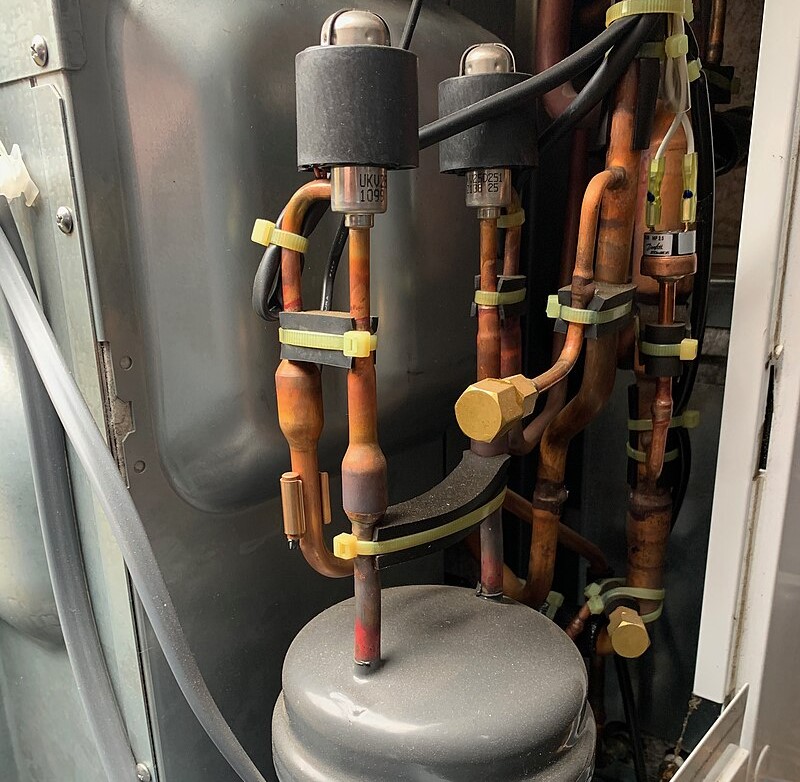
A European research team has proposed a new approach to sizing air source heat pumps that uses long-term climate data and adjusts system operation based on actual local climate conditions. The sizing algorithm includes the peak heat demand, the unitary final energy demand and the seasonal heat demand for different house sizes.

October 23, 2024
Emiliano Bellini

An international research group has devised a new sizing methodology for air source heat pumps (ASHP) that is tailored to specific weather conditions. The new method is designed for ASHPs used in detached houses for space heating and hot water supply.

The group presented the new approach in the study “Climate-based sizing and long-term economic assessment of air-to-water heat pumps for home heating”, published in Applied thermal technologywhere it explained that the new approach uses long-term local climate data and key parameters such as ambient air temperature, peak heat demand, unitary final energy or seasonal heat demand.

“The proposed tool allows accurate selection of HP, avoiding problems such as over- or under-sizing, which can lead to inefficiencies,” the scientists emphasized. “By taking into account local weather variations and long-term trends, the tool ensures the economic viability of HP systems.”

The researchers said the proposed approach was validated by a series of simulations on Toshiba’s 4th generation HPs of different sizes: HWS-804H-E (8 kW), HWS-1104H8-E (12 kW) and HWS-1604H8-E (16kW) . They assumed the houses had underfloor heating, which they said is the perfect match for HPs, and a ‘highly efficient’ water system, with the central heating temperature set at 30C and the hot tap water at 45C.

See also  "Are there enough women in the room?" – SPE

They compared the performance of these heat pumps with that of an EcoTherm Kompakt WBS 14E gas boiler with a heat capacity ranging from 3.5 kW to 14 kW. The analysis relied on local weather data in Poland, Lithuania and Croatia, which they say offers the benefit of a “granular understanding of region-specific dynamics.”

According to the research group, the simulations showed that local weather conditions have a significant impact on the economic viability of ASHPs. “Comparison of cold and warm years demonstrates the variability of the cost-effectiveness indicators,” they specified. “The more detailed local conditions are considered, the more optimal the selection will be.”

Furthermore, the scientists found that ASHPs can only compete with gas boilers in some cases, with gas prices playing a key role.

“It is worth noting that when analyzing many years for a given location, the number of warm periods may be higher than that of cold periods,” she added. “Although the optimal HP for a cold year will be significant, a smaller HP may prove to be more cost-effective.”

In the next phase of their work, they plan to incorporate climate change projections, refine model validations with external datasets to avoid overfitting, and expand geographic applicability.

The research team included academics from the University of Zagreb in Croatia, Opole University of Technology in Poland and Vilnius Gediminas University of Technology in Lithuania.

This content is copyrighted and may not be reused. If you would like to collaborate with us and reuse some of our content, please contact: editors@pv-magazine.com.

Popular content

Source link

See also  Fraunhofer ISE achieves 30.6% efficiency for perovskite-silicon tandem based on industry standard TOPCon bottom cell – SPE
air climate databased heat methodology pumps residential sizing source SPE
Share. Facebook Twitter Pinterest LinkedIn Tumblr Email
solarenergy
  • Website

Related Posts

Mitsubishi Electric Trane announces new heat pump line for hydronic heating – SPE

March 6, 2026

New Jersey expands state community solar program by 3 GW

March 6, 2026

Oleic acid anti-pollution coating for solar panels – SPE

March 5, 2026
Leave A Reply Cancel Reply

Don't Miss
News

Energy aggregators in California are signing up for a portion of 50 MW of long-term compressed air energy storage

By solarenergyFebruary 13, 20260

Energy aggregators in California are signing up for a portion of 50 MW of long-term…

Longi supports Carbon’s shift to GW-scale solar production in France

December 16, 2025

BYD launches a new residential battery – PV Magazine International

May 9, 2025

ZGR presents a new range of 4500 KW central inverters and PCs at Intersolar

May 8, 2025
Stay In Touch
  • Facebook
  • Twitter
  • Pinterest
  • Instagram
  • YouTube
  • Vimeo
Our Picks

A deep learning model tracks the status of the EV battery with high precision

March 6, 2026

Mitsubishi Electric Trane announces new heat pump line for hydronic heating – SPE

March 6, 2026

Origis is developing a 413 MW solar portfolio in West Texas

March 6, 2026

New Jersey expands state community solar program by 3 GW

March 6, 2026
Our Picks

A deep learning model tracks the status of the EV battery with high precision

March 6, 2026

Mitsubishi Electric Trane announces new heat pump line for hydronic heating – SPE

March 6, 2026

Origis is developing a 413 MW solar portfolio in West Texas

March 6, 2026
About
About

Stay updated with the latest in solar energy. Discover innovations, trends, policies, and market insights driving the future of sustainable power worldwide.

Subscribe to Updates

Get the latest creative news and updates about Solar industry directly in your inbox!

Facebook X (Twitter) Instagram Pinterest
  • Contact
  • Privacy Policy
  • Terms & Conditions
© 2026 Tsolarenergynews.co - All rights reserved.

Type above and press Enter to search. Press Esc to cancel.