

Clean energy in Britain by 2030? Feasible but challenging, the report said
The British Labor government’s intention to decarbonise the country’s electricity grid by the end of this decade is a “huge challenge” but “achievable”, according to a report published on Tuesday.
Prime Minister Keir Starmer’s pledge is seen as crucial for Britain to meet its legal obligation to achieve net zero greenhouse gas emissions by 2050 to fight climate change.
– What has Labor promised? –
Labor pledged at the July election to deliver ‘carbon-free electricity’ by 2030.
It means that electricity production, which was previously dominated by coal and currently relies on natural gas, would not contribute to overall CO2 emissions.
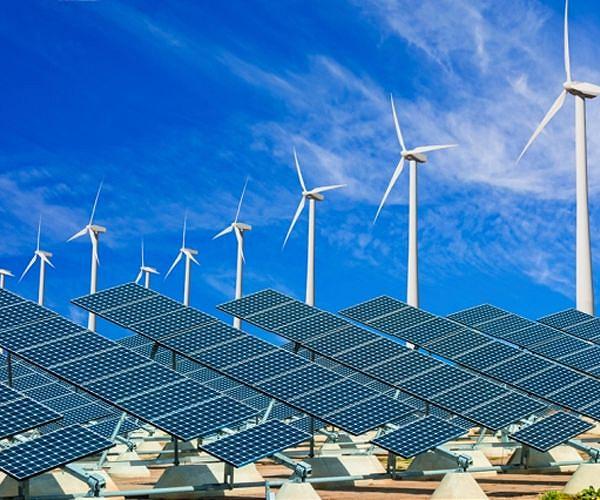
Wind, solar, nuclear and tidal energy would instead generate the vast majority of electricity used in Britain from the start of the next decade.
Labor says its plans will reduce dependence on fossil fuels from abroad, which fluctuate in price, such as Russian gas, and lead to cheaper energy bills for households.
– How does it plan to achieve clean energy? –
Labor has said it will work with the private sector to quadruple onshore wind, quadruple offshore wind and triple solar power by 2030.
This implies a “phased and responsible transition” to renewable energy sources for the oil and gas industry in the North Sea.
Labor pledges to invest in carbon capture and storage, hydrogen and marine energy, saying new nuclear power stations “will play an important role”.
It also plans to “maintain a strategic reserve of gas-fired power stations to ensure security of supply”.
– What first steps has Labor taken? –
One of Labour’s first moves was to scrap the Conservatives’ de facto ban on new onshore wind farms. Planning policy was also revised to make it more difficult for local authorities to oppose energy developments.
Labor has set up a state-owned green energy company called Great British Energy to boost investment in renewable projects. The company will receive 8.3 billion ($10.8 billion) in taxpayer money over the next five years.
Last month, Starmer announced planned government investment of almost €22 billion over 25 years to support three carbon capture projects that will remove 8.5 million tonnes of CO2 emissions each year.
In early October, Britain’s last coal-fired power station closed, making Britain the first G7 country to end its reliance on fossil fuels for electricity.
– How do opponents and experts react? –
Critics say the plan risks causing power outages and rising bills. Environmentalists have welcomed Labour’s ambition, although many experts question whether it is achievable.
Tuesday’s report from the public National Energy Systems Operator (Neso), which runs the UK’s electricity grid, sought to set out how decarbonisation could be achieved.
It says that 40 billion in investments will be needed annually until 2030 and that some nuclear power plants that have to close in 2028 will have to stay open longer.
According to Neso, the next five years will require the construction of more than twice the amount of transmission network infrastructure – masts, cables, substations, etc. – that was built in the last ten years.
That amounts to more than 1,000 kilometers of power lines, which are likely to face stiff opposition.
Neso added that the government should also speed up the connection queue so that completed green energy projects no longer have to wait years to be connected to the electricity grid.
If “the scale of these challenges is matched by the bold, sustainable actions outlined in this report, the benefits delivered could be even greater,” said Neso CEO Fintan Slye.
– What does the government say? –
Energy Minister Ed Miliband said the analysis was “compelling evidence that clean energy by 2030 is not only achievable but also desirable”.
It “could lead to cheaper, safer electricity for households, it will break the stranglehold of the dictators and the oil states, and it will create good jobs and economic growth across the country in the industries of the future,” he wrote in The newspaper Guardian. .
