
Close Menu
  • News
  • Industry
  • Solar Panels
  • Commercial
  • Residential
  • Finance
  • Technology
  • Carbon Credit
  • More
    • Policy
    • Energy Storage
    • Utility
    • Cummunity
What's Hot

A deep learning model tracks the status of the EV battery with high precision

March 6, 2026

Mitsubishi Electric Trane announces new heat pump line for hydronic heating – SPE

March 6, 2026

Origis is developing a 413 MW solar portfolio in West Texas

March 6, 2026
Facebook X (Twitter) Instagram
Solar Energy News
Friday, March 6
  • News
  • Industry
  • Solar Panels
  • Commercial
  • Residential
  • Finance
  • Technology
  • Carbon Credit
  • More
    • Policy
    • Energy Storage
    • Utility
    • Cummunity
Solar Energy News
Home - Energy Storage - Fraunhofer ISE, EDF develops AI-based heat pump controller – SPE
Energy Storage

Fraunhofer ISE, EDF develops AI-based heat pump controller – SPE

solarenergyBy solarenergyDecember 18, 2024No Comments3 Mins Read
Facebook Twitter Pinterest LinkedIn Tumblr Email
Share
Facebook Twitter LinkedIn Pinterest Email

The Fraunhofer Institute for Solar Energy Systems (Fraunhofer ISE) and EDF lead an international consortium developing AI-powered heat pumps that adapt to environmental conditions and learn from changing conditions.

December 18, 2024
Emiliano Bellini

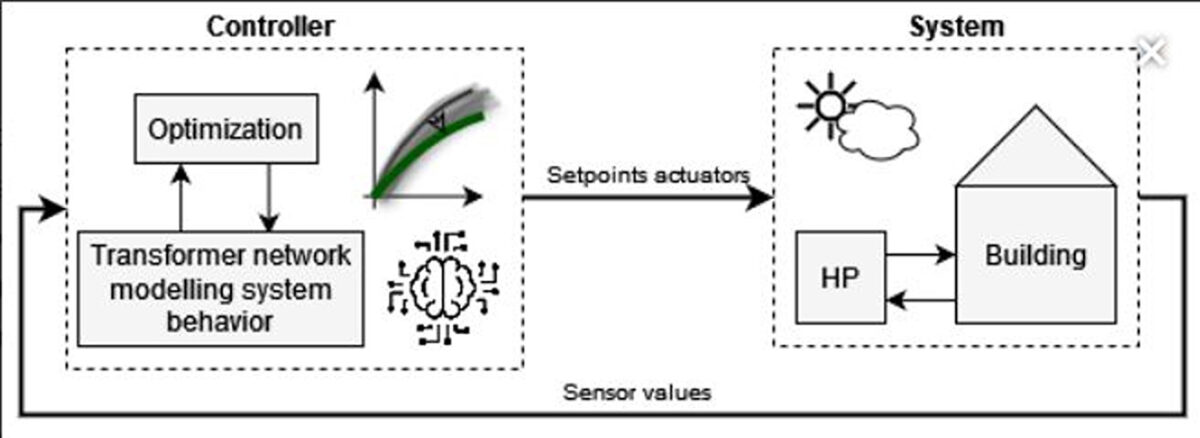
Self-learning heat pump control with AI system model

Image: Fraunhofer ISE

Germany’s Fraunhofer ISE leads an international consortium developing AI-powered heat pumps designed to avoid incorrect settings and adapt to environmental conditions.

The consortium consists of the French energy giant EDF, the German heating manufacturer Stiebel Elton and the French research institutes CEA List and LPNC.

The AI-powered heat pumps will have a smart controller that can monitor changes in room temperature. Using an artificial neural network, the system analyzes the thermal behavior of a building and calibrates the heat pump’s supply temperature accordingly.

“In this project, the specific behavioral patterns of buildings, for example how they change with varying solar radiation, are learned by artificial intelligence (AI) that continuously analyzes recorded measured values,” Fraunhofer ISE said in a statement. “Only reliable methods that guarantee safe operation will be accepted by heat pump manufacturers and their customers.”

The research team ran a series of simulations on the AI-based heat pump controller in three different buildings during one heating season.

“The questions about self-calibration and adaptability to new environmental conditions were both answered positively,” the scientists said. “Depending on the building, the resulting energy savings were on average 13% compared to the standard heating curve.”

Matching the reference room temperature with the desired temperature was crucial for the performance of the controller. “Further energy savings can be expected if the controller is extended with the efficiency properties of the heat pump,” the researchers said.

See also  Britain to increase industrial energy price exemption to 90%

They also tested the controller in a real building for a week and found that it “significantly” improved the heat pump’s coefficient of performance (COP).

“Compared to the reference period, the AI ​​controller recorded a 25% COP increase, although this needs to be evaluated in more detail during longer field test series and across different building types,” they said. “It is remarkable that the algorithm led to the determination of stable heating curve parameters after just a few days.”

EDF tested the efficiency of the controller for domestic hot water (DHT) production and found that the heat pump reduced energy consumption by up to 8%.

This content is copyrighted and may not be reused. If you would like to collaborate with us and reuse some of our content, please contact: editors@pv-magazine.com.

Popular content
Source link

AIbased controller develops EDF Fraunhofer heat ISE pump SPE
Share. Facebook Twitter Pinterest LinkedIn Tumblr Email
solarenergy
  • Website

Related Posts

Mitsubishi Electric Trane announces new heat pump line for hydronic heating – SPE

March 6, 2026

Oleic acid anti-pollution coating for solar panels – SPE

March 5, 2026

EirGrid identifies a shortage of energy capacity in Ireland

March 5, 2026
Leave A Reply Cancel Reply

Don't Miss
Solar Industry

The American company introduces new solar carports

By solarenergyFebruary 22, 20250

Brooklyn Solar Company announced a new post-truss, Cantilever and Houtpost Zonne-Carports. February 19, 2025 Ryan…

Serbia reaches 281 MW of solar capacity – PV Magazine International

August 21, 2025

Bio -inspired design approach is intended to improve the sustainability and scalability of perovskiet solar cells

July 27, 2025

Agrivoltaic energy can help lettuce survive extreme heat

January 30, 2026
Stay In Touch
  • Facebook
  • Twitter
  • Pinterest
  • Instagram
  • YouTube
  • Vimeo
Our Picks

A deep learning model tracks the status of the EV battery with high precision

March 6, 2026

Mitsubishi Electric Trane announces new heat pump line for hydronic heating – SPE

March 6, 2026

Origis is developing a 413 MW solar portfolio in West Texas

March 6, 2026

New Jersey expands state community solar program by 3 GW

March 6, 2026
Our Picks

A deep learning model tracks the status of the EV battery with high precision

March 6, 2026

Mitsubishi Electric Trane announces new heat pump line for hydronic heating – SPE

March 6, 2026

Origis is developing a 413 MW solar portfolio in West Texas

March 6, 2026
About
About

Stay updated with the latest in solar energy. Discover innovations, trends, policies, and market insights driving the future of sustainable power worldwide.

Subscribe to Updates

Get the latest creative news and updates about Solar industry directly in your inbox!

Facebook X (Twitter) Instagram Pinterest
  • Contact
  • Privacy Policy
  • Terms & Conditions
© 2026 Tsolarenergynews.co - All rights reserved.

Type above and press Enter to search. Press Esc to cancel.