

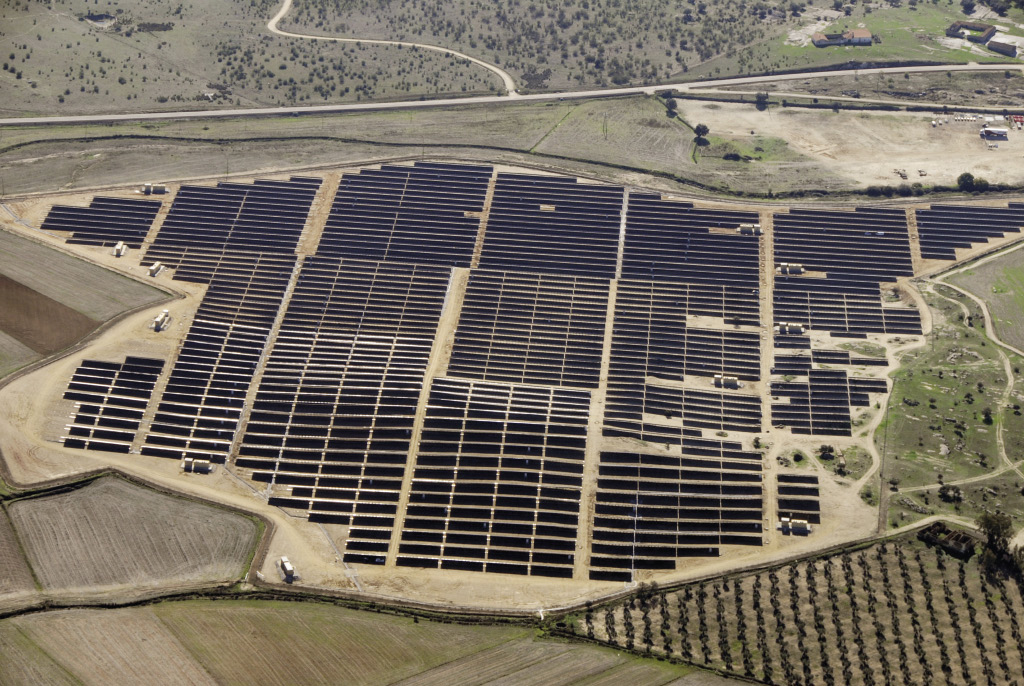
Spain has considerably increased the share of the solar energy since 2020, with the total capacity rising from approximately 11.74 GW to around 34 GW.
The first limitation events for solar energy took place in April 2022. In the past two years, limitations have influenced 2.9% of the photovoltaic energy output of Spain, with 2.5% of those who received no compensation. Briefing is not compensated when they are reported a day in advance.
During that period, PV restrictions caused losses of more than € 107 million ($ 125.9 million), or € 146,400 per day. The level of energy costs (LCOE) increased by € 0.10/kWh (+2.5%) and the net present value (NPV) decreased by € 27.10/kW (-7.7%), according to calculations by researchers from Sapienza University of Rome and the University of Jaén.
Since 1 April 2024, Spain has also seen negative electricity prices. These took place for 5.5% of the operating hours, with an average price of -€ 0.4/kWh and lows of -€ 2.0/kWh.
In the past two years, the PV market in Spain has seen a sharp fall in project prices. “It was as abrupt if it was necessary” PV -Magazine.
“What some people define as a collapse, see others as an adjustment that, although painful in the short term, can lay the foundation for a more rational and sustainable ecosystem in the long term,” said Izquierdo. At Nteaser: “We experienced this transformation from the inside: with real transaction data, conversations with investors and an avalanche of projects that are looking for an exit,” she said.
Based on this insight on the market, the platform has updated its project and asset rate curves, now available for business users. The curves follow the current values and historical trends in activities and are integrated into a new dynamic part on the platform, fed by weekly offers.
What is the price range? Ready-to-building (RTB) projects-with a value of more than € 150,000/MW only a few years ago now priced between € 30,000/MW and € 90,000/MW, Izquierdo said. The most important drivers: low or negative polar prices during solar hours, stagnating demand and an oversupply of both electricity and assets.
Banks have responded quickly, reducing their hunger for projects with exposure to traders.
“Without a guarantee for stable income, traditional financiers start and many developers have no choice but to sell before they are built,” she said. Some new players enter the space, including specialized funds, but they require a higher return and tighter conditions.
What about projects with signed electricity purchases (PPAs)?
“They are not abundant,” said Izquierdo. Many deals close to unattractive prices, which limits their usability to secure financing. “If, however, an RTB project appears with a reasonable and well-structured PPA, the interest is immediately. This type of assets is quickly and efficiently placed, which reflects the enormous latent demand for solid opportunities in a risk-saturated market,” she said.
The regulatory environment has also added pressure. “Because deadlines of the grid connection were ruthless, many chose to sell everything instead of losing everything,” she said.
With the approval of Royal Decree-Law 7/2025, which means that important milestones can be changed, the question now is whether flexibility will help to get ahead. “It is still too early to measure its actual impact, but the sector is looking closely at it,” said Izquierdo.
In anticipation of the implementation of the new law, Nteaser follows a clear market segmentation. “Every week we publish projects that are approaching rtb, and we clearly see Market segmentation: While some well-located assets, with good connection infrastructure and hybridized with batteries, continue to close above-generate ethy Have Have, Have Have Have Have Have Have Have Have Have Have Have Have Have Have Have Have Have Have Have Have Have Have Have Have Have Have Have Have Have Have Have Have Have Have Have Have Have, Have Have Have, Have, Have, Have, Have, Have, Have, Have, Have, Have, Have, Have, Have, Have, Have, Have, Have, Have, Have, Have, Have, Have, Have, Have. They Carry Unbearable Regulatory Risks.
The headlines about “Projects of € 0/MW” have increased in recent months, but the reality differs. “These offers, which often consist of transferring the project in exchange for repairing the guarantees, rarely materialize – or at least, we are not aware of closed deals at those levels. They tend to display the developer’s despair instead of the real appetger of the investor. At Nteaser we have not yet closed Deal.
And what about projects that are already in use? “They have followed a similar but more process followed. From peaks of € 1.1 million/MW early 2024, prices have fallen to a range between € 550,000/MW and € 780,000/MW in mid -2025,” she said. The correction reflects tighter electricity markets and an abundance of projects that are for sale. Izquierdo said that the electrification of the question remains unsolved. “As long as demand does not rise, the value of energy remains depressed … and that also applies to the prices of assets,” she said.
Nevertheless, commercial operational date (COD) projects investors attractive: no developmental risk, actual production data and proven performance. “Investors who look for more stable returns continue to consider this kind of assets as a reasonable bet, especially if they consider them to hybridize with Bess,” she said. But challenges remain. “Because they are already in operation, these assets are immediately exposed to the current low-or even zero price environment, which limits their profitability in the short term. Paradoxically, those who now buy can anchor their income at the worst time in the market, just when a gradual recovery in electric prices is expected in the coming years.
In both RTB and COD segments, battery hybridization has shifted from a “plus” to a strategic necessity. “Projects with storage deliver better, have greater flexibility and are more resistant to market volatility. At Nteaser we see a growing interest in this type of assets and a clear prize premium for hybrid projects via pure solar energy,” she said.
What are the prospects in the short and medium term? Izquierdo said the market remains saturated but starts to recover. “The question of investors, who was out of spring in the spring, is slowly fading. We see at Nteaser that many investors who have withdrawn during the price bells from 2022, return, this time with more discretion, less hurry and more negotiation forces,” she said. “The price correction has opened a chance for people with capital: assets are discounts, and those who can afford to buy themselves position themselves strong and protect portfolios at historically low prices.”
In this context, well -capitalized funds find value where they once saw risk. “If the regulatory environment stabilizes and the energy prices begin to recover, as many expect, current buyers will be in the next cycle on very well -appreciated assets,” Izquierdo said.
“The good news is that the Fundamentals have not changed in the long term. Spain remains an excellent solar energy market. But it is no longer enough to have sufficient radiation. It requires knowing how to be executed, managing risks and should be skillfully moved in an environment that combines regulatory urgency, financial pressure and financial pressure,” she said. “We are convinced that the new cycle will be more competitive, but also more transparent and more professional. And that in the medium term only the sector can benefit.”
