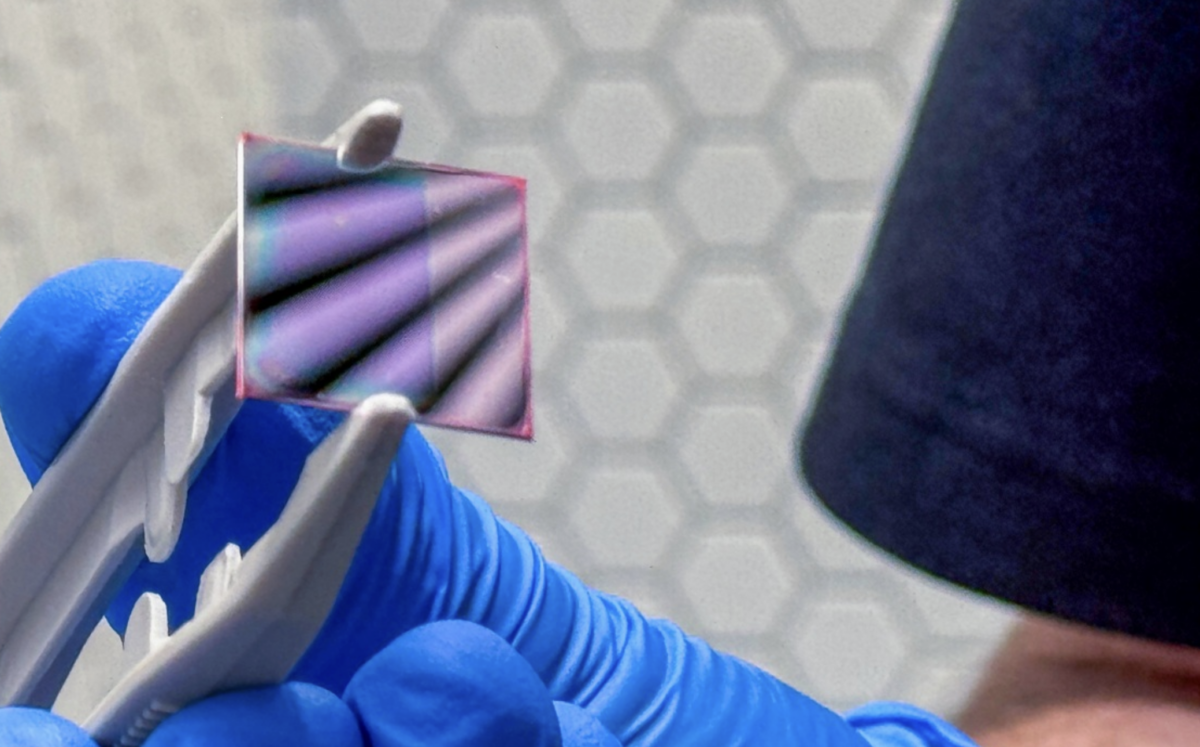
Researchers from the Royal Melbourne Institute of Technology (RMIT University) and the Commonwealth Scientific and Industrial Research Organization (CSiro) of Australia have developed a way to extend the life of Dicke-Kwantumbatterijen up to 1000 times, while retaining their fast-loading properties.
Researchers at RMIT University And CSiro have developed a method to extend the lifespan of quantum batteries (QBs) by 1000 times.
The research tries to tackle the problem of super radiance that causes fast self -discharge in dicke QBs, due to rapid radiation emission losses, despite the capacity of superbsorption technology for very fast charging.
The scientists brought a new method to extend the lifespan of the energy storage by including molecular triplet states in the battery design, which are “dark” and do not easily send light and offer a longer lecture compared to “clear” single states that are responsible for superabsorption.
They tested multi -layered microcavities that include a Donar layer (Rhodamine 6G), which absorbs energy from light, and an acceptor (storage) layer (PDTPP*), so that absorbed energy can be transferred to the dark molecular triplet states.
The article identifies two mechanisms to transfer energy in this way, but experiences were aimed at an optically driven transfer to polaritone tripletresonance, where the scientists say that although their demonstration is optical, the PRustle for designing QBs That energy extraction if an electrical current makes it possible.
Study co-author and RMIT-Promovendus Daniel Tibben said the investigation is getting closer to a working quantum battery.
“Although we have tackled a small ingredient of the general piece, our device is much better at storing energy than its predecessor,” he said.
A paper published in PRX -Energy“Extending the self-discharge time of Dicke-Kwantumbatteries using molecular triplets“The build discusses five devices. Due to the best of them, energy could be stored more efficiently, 1000 times longer than previous demonstrations, which improved the energy storage from nanoseconds to microseconds.
Prof. Daniel Gómez, co-author of the study and RMIT chemical physicist, said that their research marks an important progress for quantum batteries and clears the way for improved designs.
“Although a working quantum battery can still be away for a while, this experimental research has enabled us to design the next iteration of devices,” said Gómez. “It is hoped that in one day quantum batteries can be used to improve the efficiency of solar cells and small small electronic devices.”
CSiro Science leader Dr. James Quach, who led earlier experiments, said that Australia is at the forefront of experimental research into quantum batteries and this work is an important progress.
Gomez and his team at RMIT have engaged industrial partners to work together on designing the following iteration of prototypes.
Financing was provided by the Australian Research Council, the European Union and an RMIT University Vice-Chancellor’s Senior Research Fellowship.
This content is protected by copyright and may not be reused. If you want to work with us and reuse part of our content, please contact: editors@pv-magazine.com.
Popular content