

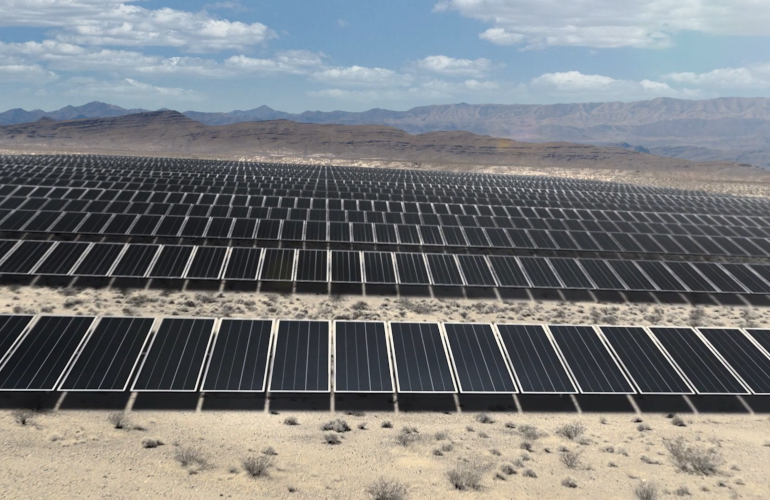
The U.S. Department of the Interior Bureau of Land Management (BLM) has canceled an environmental impact assessment of Esmeralda 7, a proposed 6.2 GW solar and storage project in Esmeralda County, Nevada. The seven separate arrays that would compose Esmeralda 7 were located on 62,300 acres of BLM land.
The Gemini Solar + Storage project in Nevada. Primergy
The project is listed as canceled under the National Environmental Policy Act status BLM website. World of solar energy contacted the BLM for comment but received a voicemail saying no one is in office due to the federal government shutdown.
Esmeralda 7 came under BLM jurisdiction in November 2023 and held public comment and project scoping periods by the agency shortly thereafter. As of the original review timeline, BLM planned to make a ruling on the project in April 2025.
“While we await further clarity from BLM on its apparent decision to abruptly cancel these solar projects in the late stages of the review process, we remain deeply concerned that this administration continues to ignore the law at the expense of consumers, the electric grid and American economic competitiveness,” said Ben Norris, VP of Regulatory Affairs for the Solar Energy Industries Association (SEIA). “We need more power on the grid quickly, and the solar and storage industries are ready to provide it, but we need the administration to get serious about truly achieving American energy dominance.”
Esmeralda 7 would be built adjacent to the proposed 525 kV Greenlink West transmission project, with all seven solar and storage arrays interconnected to the Esmeralda substation. The proposed projects were: Lone Mountain Solar, Smoky Valley Solar, Gold Dust Solar, Nivloc Solar, Red Ridge 1 and Red Ridge 2. According to an environmental impact statement in July 2024, construction of the solar panels was expected to take five years, with a consistent workforce of 845 people.
SEIA follows the DOI’s additional research for locating renewable energy projects on federal land. During a roundtable with members of the solar trade press at RE+ 2025, Abigail Ross Hopper, president and CEO of SEIA, said the following about that additional oversight: “We’ve heard different things in terms of the impact on private development. Everything from, [developers] from contacting BLM offices and asking what the process is, and no one really knows what the process is, to not hearing from field offices, because there doesn’t seem to be any clear direction from the Secretariat depending on where this is the project… I think people are having some one-off conversations, trying to negotiate specific permits directly with the Department of the Interior. But I feel like this could be a cascading issue. Over time, the blockage becomes more severe as these systems, never known for their acuity, become even more cumbersome.”
