

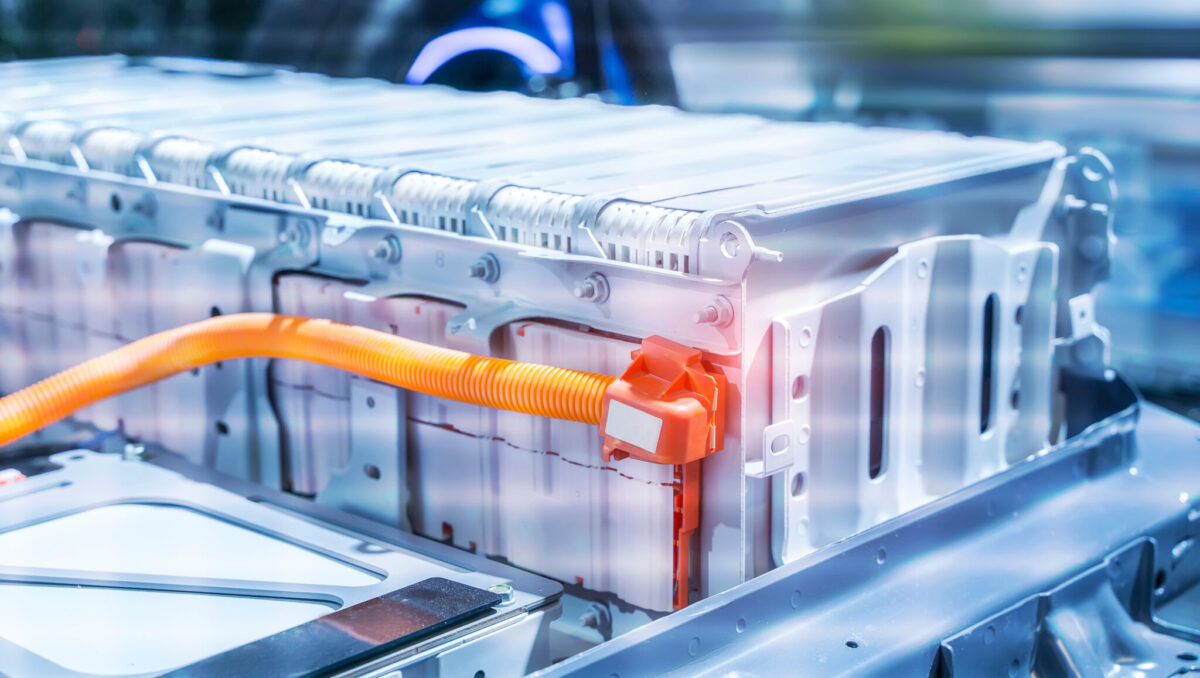
Following China’s recent decision to tighten export controls on lithium battery materials and manufacturing equipment, industry leaders in India see the development as both a challenge and a catalyst.
China’s new rules, which come into effect on November 8, 2025, cover the export of high-quality lithium-ion batteries, cathode materials, graphite-based anode materials and associated manufacturing technologies. The move is seen as part of its broader efforts to safeguard national security, comply with international non-proliferation obligations and regulate the export of critical dual-use items (goods, software and technology) that have both civilian and military applications.
Ankur Khaitan, Managing Director and CEO of Advanced Carbons Company (TACC Ltd), calls the development a “defining moment” for global clean energy supply chains. “While this may cause near-term volatility in battery material prices and impact EV manufacturers dependent on Chinese imports, it also accelerates a long-awaited rebalancing of global sourcing,” Khaitan said.
He said the global EV industry is heavily dependent on China, which is no surprise to anyone – but at the same time the costs and timelines are very significant, requiring strategies to develop alternative sources.
“Players outside China need to look at this through a different lens and develop new strategies towards non-Chinese equipment. India has a major advantage where we can build at a rapid pace while maintaining a strong competitive position with China.”
Khaitan emphasized that the government’s proactive initiatives – from the PLI program for ACC manufacturing to setting up missions for critical minerals to state governments supporting companies in building new manufacturing bases – are laying the foundation for self-reliance in battery materials.
TACC, a company with over 59 years of experience in graphite and carbon, is already investing in graphite anode materials for the global industry, with ‘make in India’ as a priority”
“In the short term, tighter Chinese exports could drive up global costs of battery components, which had become dangerously low, leading to stiff competition, especially from newer Chinese players, but in the long term it would encourage non-Chinese productions, with India taking precedence due to cost and execution power. This diversification will make the global EV ecosystem more resilient and sustainable,” he said. Khaitan.
Khaitan added that India is gearing up to compete not just on cost but also in innovation: “India has a strong talent base and now industries are not only focusing on improving traditional production methods but also developing new technologies and products. While this is a very strong point of China, India will play a crucial role in this.”
As India-China relations improve significantly, Khaitan remains optimistic that India and China will build a stronger relationship in the near future, leveraging the strengths of both countries together.
Hiren Pravin Shah, CEO of Replus Engitech, emphasized that while the world is actively exploring a ‘China Plus One’ strategy, the reality is that global supply chains remain highly dependent on China. He noted that geopolitical developments will play a crucial role in keeping the supply chain running over the next five years. “Currently, China controls and produces raw materials including rare earths, lithium reserves and critical minerals that are significant and important to the world’s transition to new and clean energy. Nearly 70% of the supply chains for solar, wind and battery technologies are controlled by China. In addition, the FAB, silicon and wafer materials that power the entire semiconductor industry not only for EVs, but also for overall electronics production.”
China has announced new export control measures targeting a wide range of lithium battery technologies, materials and production equipment. The controls cover three main categories: high-performance lithium-ion batteries, cathode materials and precursors, and graphite-based anode materials.
In particular, the export of lithium-ion battery cells or packs with a weight energy density of 300 Wh/kg or higher now requires a permit. In addition, specialized production equipment such as winding machines, laminating machines, liquid injection machines and capacity cabinets are also listed as controlled items. Technologies related to the production of these batteries are subject to the same restrictions.
The second group of newly controlled products includes key cathode materials, such as high-density lithium iron phosphate (LFP), nickel-cobalt-manganese hydroxides and nickel-cobalt-aluminum hydroxides, as well as lithium-rich manganese-based cathodes. Production equipment for these materials, including rolling furnaces, mixers and grinding mills, are also subject to the new rules.
The third category concerns graphite anode materials, which are widely used in the production of lithium-ion batteries. Both artificial graphite and mixed graphite anodes are included, along with specialized manufacturing technologies such as granulation, graphitization and coating processes. Equipment such as CVD rotary kilns, spray dryers and box ovens are also covered.
Under the new rules, exporters of listed items must apply for an export license from the Ministry of Commerce. All declarations must clearly indicate whether they are controlled dual-use items or not.
For controlled items, exporters are required to declare the term ‘dual-use item’ on the customs declaration and provide the relevant control code. For items not subject to control but with similar technical specifications, exporters must mark “uncontrolled item” and submit supporting documentation describing the technical parameters. Chinese customs authorities will have the power to delay or stop shipments if discrepancies or uncertainties arise regarding the nature of the exported goods.
This latest move builds on China’s previous export controls on natural graphite, lithium iron phosphate (LFP), cathode active material (CAM) and lithium processing technologies.
This content is copyrighted and may not be reused. If you would like to collaborate with us and reuse some of our content, please contact: editors@pv-magazine.com.
