

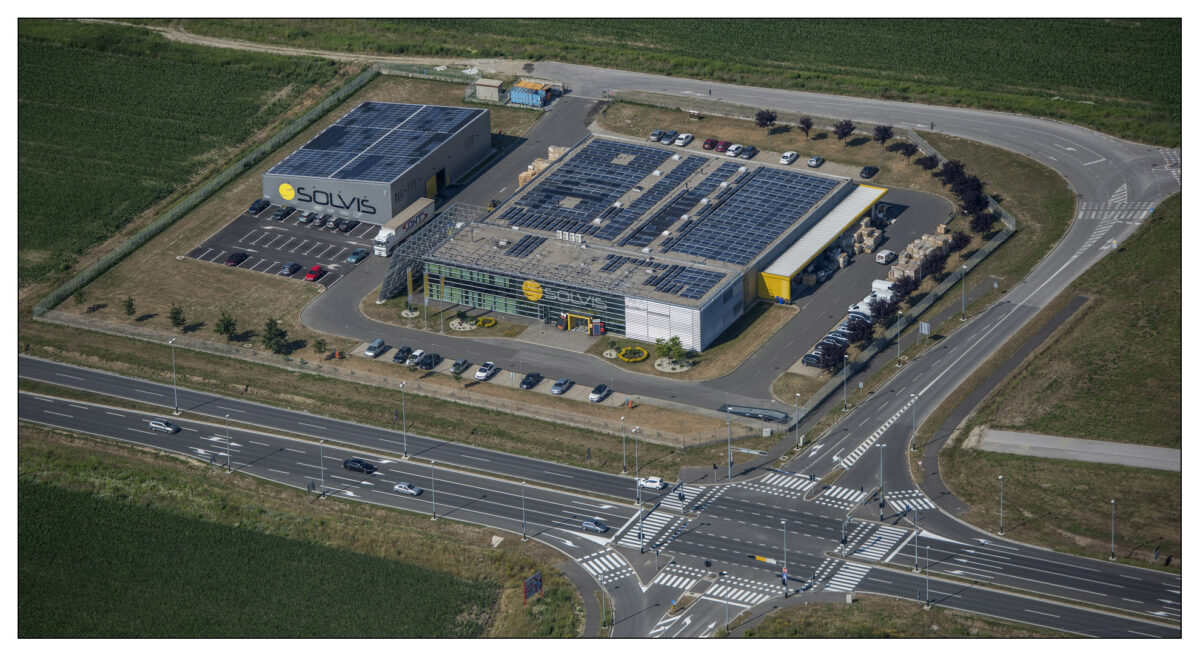
The lack of grid tariff regulation has stalled 3.5 GW of large-scale renewables, mainly solar, in Croatia, with developers such as Solvis citing a lack of stable grid connection rules as a barrier to planning and investment.
Croatian energy regulator HERA’s continued delay in setting unit connection costs for renewable energy projects with a capacity of more than 10 MW has direct consequences for the country’s large-scale PV sector. Earlier this year, the Croatian government announced €0/kW connection fees and flexible contracts to encourage investment in battery storage, but these measures have not been fulfilled.
Croatia-based solar developer Solvis, an engineering, procurement and construction (EPC) contractor, said pv magazine on October 14 that the impasse has direct consequences for its activities and the wider Croatian solar industry.
“Solvis believes that Croatia has enormous solar potential, but to fully unlock this we urgently need a transparent, timely and stable framework for grid connections,” says Jasmina Novak, project manager at Solvis. “As both an EPC provider and developer of more than 250 MWp of our own solar projects, Solvis is directly affected by the current situation with grid connection costs and the lack of clarity in defining them. These issues are significantly slowing down the development of renewable energy projects in Croatia and making it difficult for investors and EPC contractors to plan with confidence.”
Almost a month before Novak spoke pv magazineOn September 15, Renewable Energy Sources of Croatia (RES Croatia), SolarPower Europe and WindEurope wrote a letter to the European Commission urging immediate action over what they describe as urgent concerns about the situation in Croatia’s renewable energy sector.
The authors of the letter said that while the European Union is working to accelerate the deployment of renewable energy, Croatia is moving in the opposite direction. “Large-scale projects have been blocked for years, investor confidence has collapsed and systemic distortions in the balancing market undermine fair competition.”
RES Croatia’s website states that around 60 projects with a combined capacity of 3.5 GW and a total value of more than 3 million euros have been blocked, and that investors have already paid more than 25 million euros to the state in energy permits that will expire at the end of this year if no action is taken. The projects include solar, wind, geothermal and battery storage, but are mostly solar, Filip Kušević, legal advisor of RES Croatia, told pv magazine.
The letter urged the committee to call on the Croatian government to immediately unblock project development by requiring energy regulator HERA to approve a connection fee for units by September 19, 2025. “This compensation was legally supposed to be adopted as early as September 2022,” the letter said.
It added that legal uncertainty “has already led to the withdrawal of several European companies from the Croatian market” and warned that several gigawatts of renewable projects could be abandoned if unit connection fees are not introduced.
Continued stalemate
Nearly a month after the letter was sent to the European Commission, Solvis’ Novak said she had seen no change.
“High and unpredictable grid tariffs, together with long delays in obtaining connection terms, are among the main bottlenecks for the continued growth of the solar sector,” she said. “This uncertainty reduces the willingness to invest and jeopardizes the realization of many turnkey projects that could already contribute to the energy transition.”
Although Novak said Solvis is mainly project-oriented in Croatia, it is also a panel manufacturer active in several markets and has supplied more than 1 GW of solar panels (mainly building-integrated PV) to customers in more than 30 countries in Europe, North Africa and North America.
“Exports in the last ten years represent about 70% of the company’s total turnover,” says Novak, adding that although its activities in Croatia are largely project-oriented, despite Asian competition it still achieves a “certain market share in module sales, especially in EU markets that recognize EU quality and give preference to EU products through subsidies.”
Solvis has a production facility in Varaždin, Croatia, with a particular focus on building-integrated solar photovoltaics and other custom options. “Thanks to our own extensive and state-of-the-art production lines, we today have a production capacity of 350 MW, which will increase to 550 MW by the end of 2025,” said Novak.
In addition to the request for grid fees, the letter from RES Croatia, SolarPower Europe and WindEurope also requested intervention from the European Commission to open Croatian balancing markets to renewable energy producers who are currently unable to participate. The letter recommends integrating battery storage and electrification into Croatia’s national planning strategy, in line with European Union objectives.
This content is copyrighted and may not be reused. If you would like to collaborate with us and reuse some of our content, please contact: editors@pv-magazine.com.
Popular content

