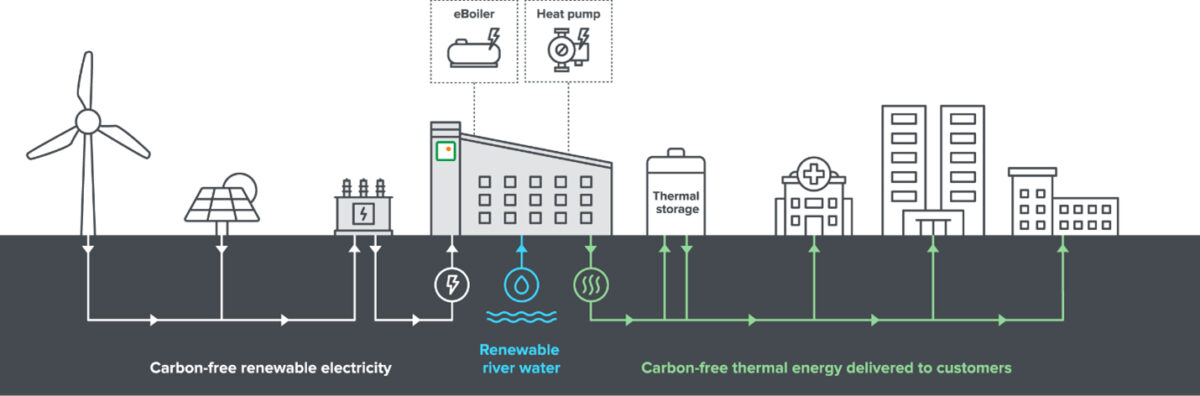
Vicinity Energy, the largest district energy supplier in the United Stateshas begun construction of a 35 MW river-based industrial heat pump complex at the Kendall Square facility in Cambridge, Massachusetts.
The complex will use renewable energy to harvest heat from the Charles River, which will be used to produce carbon-free steam for delivery through Vicinity’s 46 kilometer district energy network.
Construction is expected to continue through 2028. Once completed, the installation will have the capacity to heat more than 70 m3 of building area, according to a statement from Vicinity. The emission-free heat pump replaces a natural gas boiler and demolition is already underway.
The project is being developed in collaboration with German manufacturer Everllence, which supplies the heat pump technology, in addition to development company DCO Energy, which monitor the installation and make adjustments to the balance of the installation.
Vicinity also plans to install thermal storage technologies that can produce the company’s on-demand steam, eSteam, using renewable electricity.
The company says the net impact of the project is multi-faceted. While customers will gain access to carbon-free thermal energy, the Charles River ecosystem will benefit from lower temperatures and the citizens of Boston and Cambridge will benefit from significantly cleaner air.
Vicinity has set a goal to achieve net-zero emissions in the Greater Boston area by 2050. The company’s CEO Kevin Hagerty said this project makes the vision of decarbonizing cities a reality at scale. “We are setting the blueprint for decarbonizing an American city and will install similarly innovative electrification technologies in our district energy systems in twelve American cities,” Hagerty added.
Vicinity has already installed a 42 MW electric boiler at its Kendall facility, providing carbon-free thermal energy to its partners in Boston via steam pipes running under the city.
This content is copyrighted and may not be reused. If you would like to collaborate with us and reuse some of our content, please contact: editors@pv-magazine.com.
Popular content