

November 26, 2025
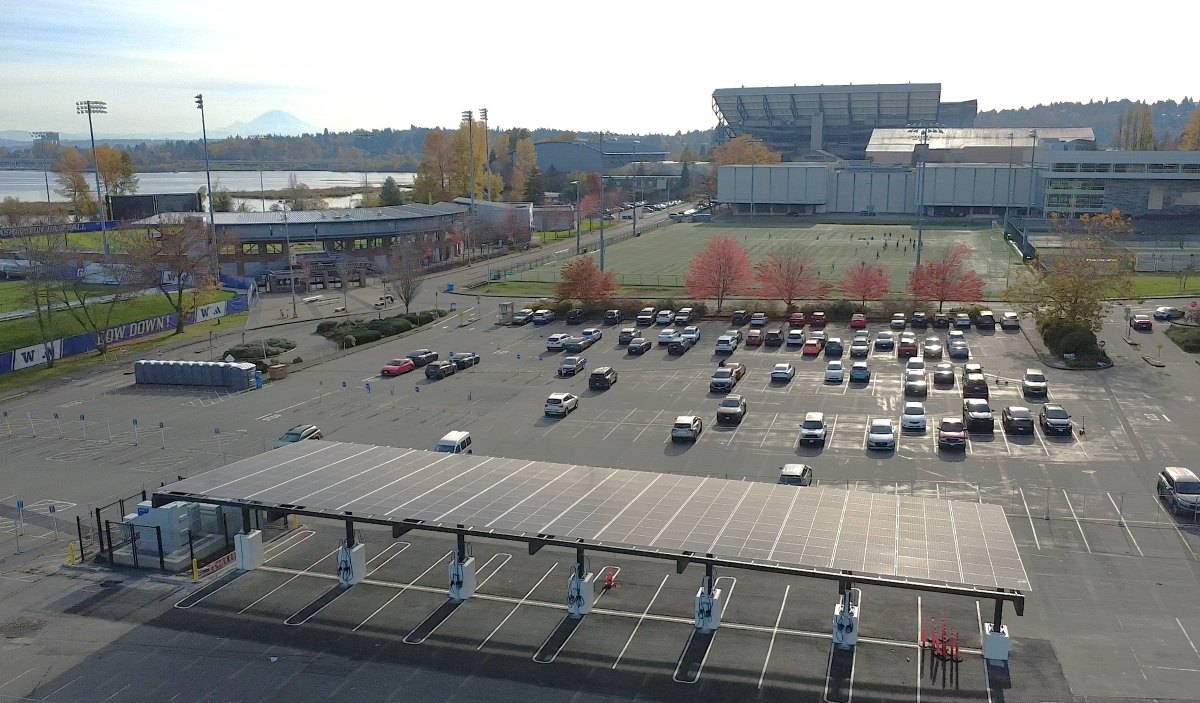
The University of Washington has deployed a 93 kW solar rooftop system in a campus parking lot. UW collaborates with Trinity energy to install the system, which will connect to the city of Seattle’s electrical grids and the university campus.
The solar canopy was installed in parking lot E18, located next to the university’s athletics and campus infrastructure, near the baseball stadium. Designed to integrate with future electrification infrastructure, the system can support on-campus and fleet EV charging, transforming an existing parking lot into a high-quality, renewable energy source without sacrificing parking capacity. By capturing avoided energy costs and producing on-site renewable energy, the project demonstrates how large campuses can convert available real estate into energy-producing infrastructure.
“Generating solar energy from a parking lot may sound modest, but the strategic value is enormous,” said Darin Leonard, president of Trinity Energy. “With the Lot E18 project at UW, we are turning underutilized space into a clean energy source while laying the foundation for campus-wide electrification. This is how institutions are redefining energy from a cost center to a strategic advantage.”
The project underlines Trinity’s commitment to enabling institutions to generate clean energy on-site and demonstrates a scalable model for renewable infrastructure in higher education and on campuses.
Template for future installations
The Lot E18 project represents more than a single solar installation; it serves as a template for institutional scalability. The canopy’s modular design allows for replication to other campus lots or similar environments, allowing universities and organizations to expand renewable energy generation without major land use compromises. In addition to the immediate carbon reduction and cost-saving benefits, the system’s grid-tied architecture also prepares the University of Washington for future energy resilience initiatives, including microgrid development and broader electrification goals.
As institutions like UW increase their reliance on digital infrastructure, electric mobility and research facilities, energy independence and reliability have become critical priorities. Projects like these allow campuses to generate power on-site, reducing dependence on the broader electrical grid and limiting exposure to outages or fluctuating energy costs. By producing renewable energy where it is consumed, the university strengthens its operational resilience and gains greater control over its energy future.
Reliable on-site energy also supports a broader transition to electrification, including fleet vehicles, building systems and in-demand research equipment. Solar canopy installations provide a consistent, distributed source of electricity that supplements grid power, ensuring uninterrupted operation while furthering sustainability goals. For Trinity Energy and its partners, these projects demonstrate how practical, scalable clean energy solutions can meet the dual demands of reliability and environmental responsibility.
Tags: carport/cover, sun canopy
