

According to the latest government figures, there was a deployed PV capacity of 20.7 GW at the end of October 2025, an increase of 10.4% in a twelve-month period. An increase in the number of Contracts for Difference (CfD) supported connections was recorded in 2025, with more major ground installation projects in the pipeline.
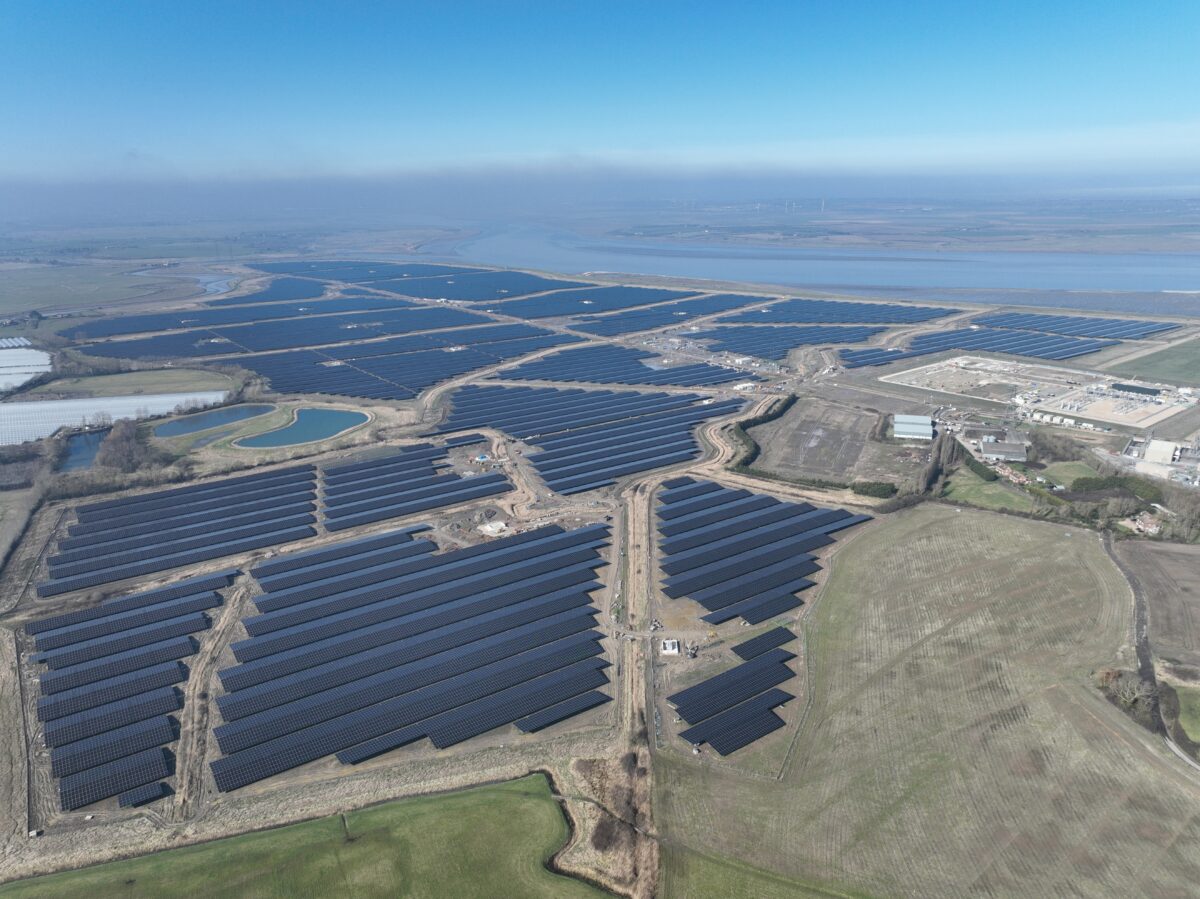
A wave of utility-scale solar projects has helped to increase deployed capacity in Britain by almost 2GW in the 12 months to the end of October 2025, including the connection of the 373MW Cleve Hill Solar Farm in July 2025 – the largest operational UK solar farm to date.
UK government deployment statistics are provisional and subject to revision, but the latest data shows that 111 MW of new capacity was added from 25,470 installations in October 2025. It brings the total added capacity in the first ten months of the year to 1.78 GW, compared to 2.12 GW for the same period in 2024. However, the 2025 figure is likely to be revised as new data becomes available.
Most PV installations in the UK are domestic, but these represent only 30% of total capacity. By the end of October 2025, at least 40% of the UK’s solar capacity – 8.2 GW – came from ground-mounted or stand-alone solar installations accredited under the UK Renewables Obligation (RO), feed-in rate or CfD schemes. It is believed that half of non-accredited capacity is ground-mounted, meaning this type of installation accounts for approximately 58% of total UK capacity.
Large-scale projects include 18 operational solar farms accredited under the government-backed Contracts for Difference (CfD) programme, 16 of which came online in 2025. Commenting on the implementation statistics, the UK Department for Energy Security and Net Zero (DESNZ) said it expects these numbers to increase.
The pipeline of utility-scale solar projects granted construction consent through the government’s Nationally Significant Infrastructure Project (NSIP) process has grown significantly since July 2024, when Energy Minister Ed Miliband signed off on the construction of gigawatts of new capacity.
The latest release of DESNZ statistics follows a UK budget that shifted some of the financial burden of historic utility-scale deployment from domestic bill payers to the public purse. Chancellor Rachel Reeves announced on November 26 that from April 2026, the Government will cover three-quarters of the cost of the Renewables Obligation levy currently applied to household electricity bills through general taxation for a period of three years.
The RO programme, launched in 2002 and open for applications until 2019, supported the early deployment of renewable energy in the UK. The latest DESNZ data shows 7.4GW of solar has been accredited under the RO scheme.
Chris Hewett, CEO of Solar Energy UK, welcomed the change, which is expected to result in savings of around GBP 100 ($132) per year for an average British household.
“The reform of the renewables obligation is both a welcome and expected move from the Chancellor,” Hewett said in a statement. “Together with the rising share of energy coming from cheap solar and other renewables, plus electricity market reforms, we can expect bills to fall further in the coming years.”
The UK government has expanded its consultation on how payments under RO and the previous feed-in tariff regime will be adjusted for inflation in the future. Industry stakeholders have until December 2, 2025 to submit their views.
This content is copyrighted and may not be reused. If you would like to collaborate with us and reuse some of our content, please contact: editors@pv-magazine.com.
