

December 8, 2025
By Mikey Heinz, CEO of Clear operations | In disaster-prone regions such as Puerto Rico, Florida and California, solar energy is often at the center of the debate. Despite rapid progress in distributed energy and storage, outdated assumptions continue to shape public opinion and even policy decisions. These misconceptions not only hold back progress, they also make communities more vulnerable during power outages, storms and grid failures.
After years of deploying solar and storage systems in real-world disaster scenarios, I’ve seen firsthand what works, what doesn’t, and what could have made a difference if the right choices had been made sooner. The stakes are high and the lessons are clear.
Here are six of the most common myths that continue to hold back adoption in at-risk areas, and the reality that must replace them.
Misconception #1: Solar energy does not work if the electricity grid goes down
This is one of the most persistent misunderstandings. In a traditional grid-tied system, solar energy stops working when the grid goes down. But that’s not the full story. When you add storage space, the equation changes completely.
In Puerto Rico, we saw homes powered by rooftop solar and batteries stay online, while surrounding neighborhoods remained in the dark. And even if the battery ran out overnight, these systems didn’t fail; they simply switched to solar power at sunrise, resuming full functionality without delay. Families ran refrigerators, fans, medical equipment and even powered entire multi-room households through solar plus storage systems during power outages that lasted for weeks.
This shift is not only technical, but also behavioral. In areas with even occasional outages, homeowners are no longer thinking of solar energy just as a way to save money on bills. They see it as a path to energy independence and peace of mind when the electricity grid cannot be trusted.
The truth: Solar and storage systems provide reliable backup power when the grid goes down, changing the stakes for communities that experience recurring power outages.
Misconception #2: Solar energy cannot withstand extreme weather
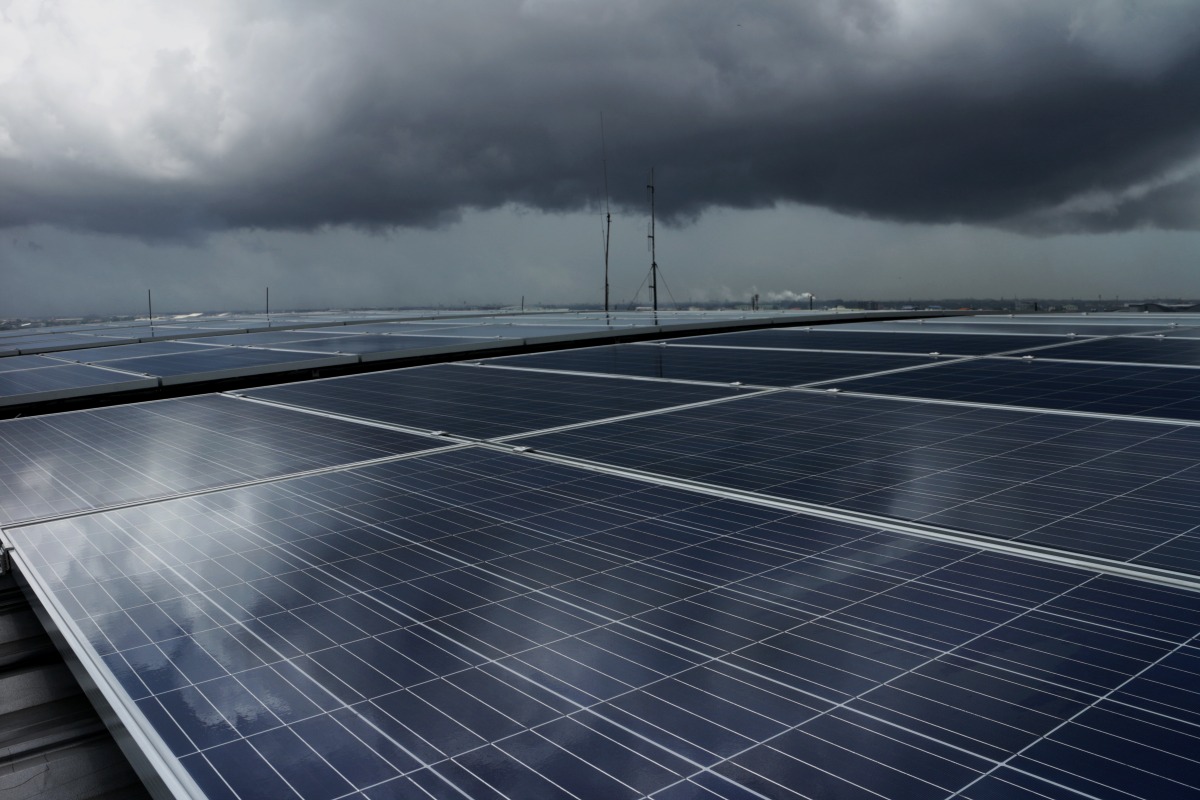
This continues to come up in conversations with policy stakeholders and even some field professionals. The reality is that modern solar panels are designed with sustainability in mind. Most systems are rated for wind speeds of 140 to 160 mph, and in many storm-prone markets, building codes require this.
But design can only get you so far. Installation quality is what makes or breaks resilience. After Hurricane Fiona, only two panels out of thousands of Bright Ops installations were damaged – a result not caused by special equipment, but by good engineering practices. We focused on proper scaffolding, solid anchoring, and adaptive layouts on the concrete roofs found throughout Puerto Rico.
This isn’t just a story about hardware. It’s about discipline in the field. Systems installed to withstand the environment can, and often do, outperform traditional infrastructure.
The truth: Properly designed and installed solar systems are built to survive extreme weather and perform reliably under pressure.
Misconception #3: Solar energy is too expensive for emergency services
Objections to costs arise all the time, especially if you work with non-profit organizations, municipalities or community organizations. But this way of thinking ignores the full life cycle costs of alternative solutions.
After Hurricane Maria, entire neighborhoods that ran on generators were dry within a few days. No fuel trucks, no emergency power supply, just silence. Meanwhile, solar energy and storage systems automatically turn back on when the sun shines. No refueling required. No fumes. No noise.
Diesel generators seem cheaper at first glance, but add fuel logistics, ongoing maintenance, noise pollution and air quality concerns that quickly tilt the economy in favor of solar energy. Additionally, with third-party ownership models, PPAs, and no-money-down leasing options, communities can now access these systems without the capital hurdle that used to hinder adoption.
The truth: Solar energy and storage often cost less than generators over time and provide uninterrupted energy when it matters most.
Misconception #4: Solar energy damages the reliability of the electricity grid
The old utility story that solar destabilizes the grid has not kept pace with reality. Current systems, especially those combined with storage, are often grid positive.
In Puerto Rico, we worked with LUMA to roll out Virtual Power Plant (VPP) programs that allow homes to store solar energy and export it back to the grid when demand peaks. These distributed energy sources reduce pressure on the system and help prevent brownouts and blackouts.
This type of infrastructure will only become more important as energy demand increases. As EV adoption accelerates and data centers expand, peak loads will increase dramatically in the coming years. Distributed solar-plus-storage poses no threat to utilities. It’s an answer.
The truth: Modern solar energy systems improve the stability of the electricity grid, reduce peak demand and turn individual homes into energy sources.
Misconception #5: Batteries are dangerous or unreliable
Battery systems sometimes make headlines when things go wrong, but these cases are the exception, not the rule. What doesn’t make the headlines are the tens of thousands of installations that run flawlessly every day.
Current battery technology includes multiple layers of protection. We work with partners like SolarEdge, who integrate security into every layer of their systems, from panel-level shutdown, real-time voltage control, remote diagnostics and firmware that can be updated without an on-site visit.
Installers and field teams also play a crucial role. If commissioning is carried out correctly and personnel are trained in the behavior of the system, battery safety is well within the risk margin accepted for everyday devices.
The truth: Batteries are among the most tested, monitored and regulated technologies in the home, and they are becoming safer every year.
Misconception #6: Solar energy is a temporary solution
In the context of emergency response, solar power is sometimes treated as a quick fix: set up panels quickly, provide short-term power, and take it all down later. But that thinking limits its long-term value.
Some of our best work in Puerto Rico has been going on for years. We partnered with local crews, trained them and delivered systems that continue to provide daily energy, reduce electricity bills and increase self-reliance in communities. These systems not only survived the last storm, they are preparing communities for the next one.
The impact is economic, educational and cultural. Once people experience what solar energy can do in an emergency situation, they begin to see what solar energy can do in the long term.
The truth: Solar energy is not an emergency solution. It is a long-term sustainable asset that builds resilience and energy sovereignty.
In disaster areas and underserved regions, solar professionals do much more than just install panels. They help stabilize communities. They keep critical facilities running. They allow families to cook, store food, stay cool and feel safe, even when everything else is dark.
This is no longer a theoretical conversation. The proof is on the rooftops. The myths fade. Now it’s time to scale up what works.
Mikey Heinz is the CEO of Bright Ops and leads a large-scale operations team supporting thousands of monthly installations across the US and Puerto Rico. With a focus on scalable execution and energy resilience, he has built one of the largest solar energy networks on the market.
Keywords: disaster recovery
