
Close Menu
  • News
  • Industry
  • Solar Panels
  • Commercial
  • Residential
  • Finance
  • Technology
  • Carbon Credit
  • More
    • Policy
    • Energy Storage
    • Utility
    • Cummunity
What's Hot

A deep learning model tracks the status of the EV battery with high precision

March 6, 2026

Mitsubishi Electric Trane announces new heat pump line for hydronic heating – SPE

March 6, 2026

Origis is developing a 413 MW solar portfolio in West Texas

March 6, 2026
Facebook X (Twitter) Instagram
Solar Energy News
Friday, March 6
  • News
  • Industry
  • Solar Panels
  • Commercial
  • Residential
  • Finance
  • Technology
  • Carbon Credit
  • More
    • Policy
    • Energy Storage
    • Utility
    • Cummunity
Solar Energy News
Home - Technology - US research maps utility-scale solar land use with new AI framework – SPE
Technology

US research maps utility-scale solar land use with new AI framework – SPE

solarenergyBy solarenergyDecember 18, 2025No Comments2 Mins Read
Facebook Twitter Pinterest LinkedIn Tumblr Email
Share
Facebook Twitter LinkedIn Pinterest Email

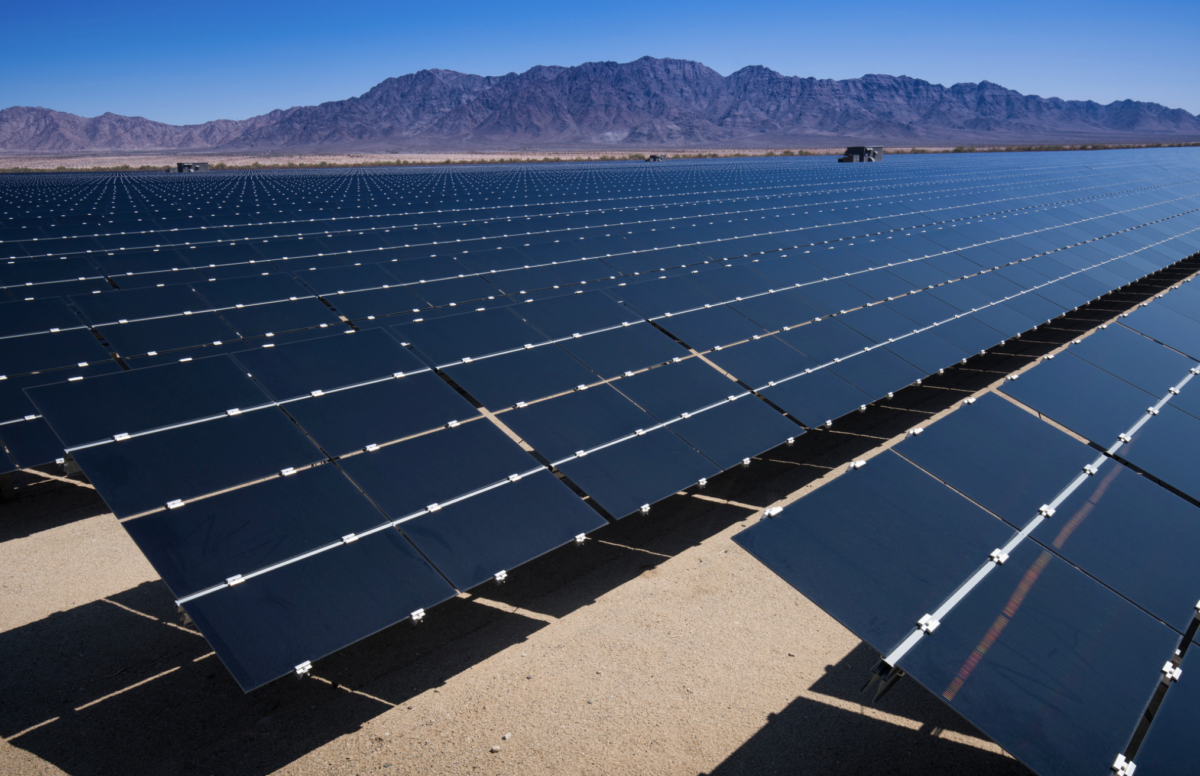
US researchers say a deep learning framework provides the most detailed view yet of how utility-scale solar uses land, revealing unexpected efficiency differences and clearer pathways for agricultural voltaics and brownfield development.

December 16, 2025
Ryan Kennedy

Image: Tom Brewster, Wikimedia Commons

By pv magazine USA

An academic article published in Communication Earth & Environment has introduced a systematic methodology that uses deep learning and high-resolution aerial imagery quantify the land required for utility-scale solar projects in the US Western Interconnection.

The study aims to resolve previous inconsistencies in land use estimates by analyzing 719 solar installations and providing crucial data for future energy system planning and life cycle assessments.

The core of the research involved training a neural network to delineate the entire project footprint – including access roads, fencing and buffer zones – rather than just the immediate panel area, a limitation in previous analyses. The resulting dataset covers more than 13 GW of installed capacity and reveals vital statistics on land efficiency.

The average capacity-based land use efficiency across the sample was quantified at 24.7 W per square meter, with significant variability between projects, the study found.

The study found that dual-axis tracking systems surprisingly exhibited lower project-level land use efficiency compared to fixed-rack or single-axis systems. The article attributes this to the need for greater spacing between tracking panels to prevent shading and allow full movement, resulting in a larger overall footprint.
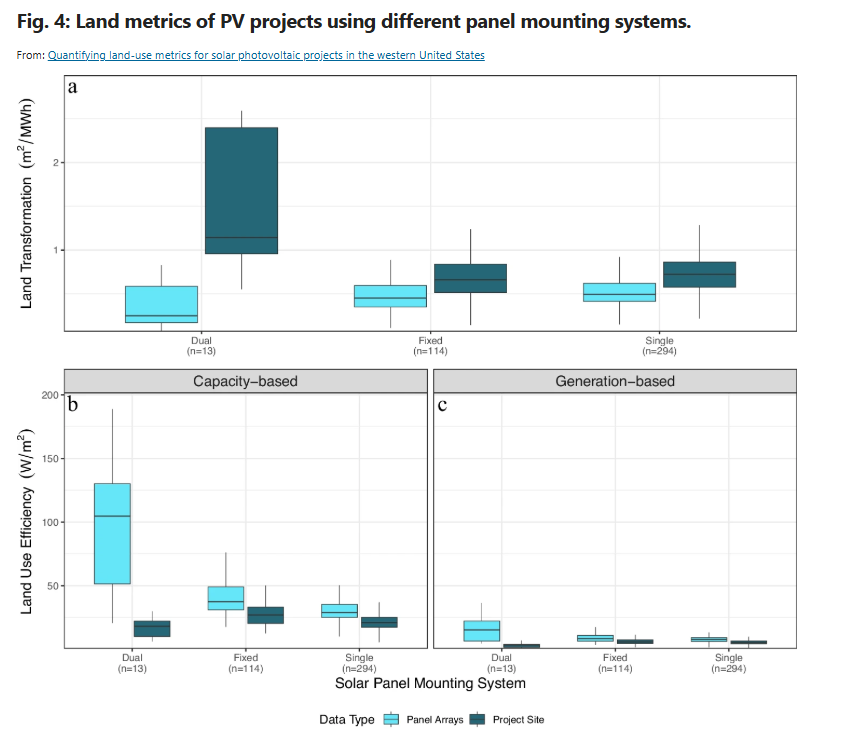
Image: Nature communication

The study also classified the land cover used by these projects. Although 65% of total installed capacity is now on ‘developed’ land, historical data indicates that 38% of these locations were previously agricultural land.

See also  Poland Pilar Arrays Pilar Arrays near Major Highway - PV Magazine International

These findings highlight the potential for ‘land-saving’ strategies. Developers can limit environmental impacts by prioritizing installation on already disturbed surfaces, such as existing roofs or brownfields.

The researchers said the prevalence of projects on former agricultural land also highlights the potential for expanding agrivoltaic energy, the dual use of land for both solar energy generation and agricultural activities, to optimize resource use. Find the full study and methodology here.

This content is copyrighted and may not be reused. If you would like to collaborate with us and reuse some of our content, please contact: editors@pv-magazine.com.

Popular content
Source link

framework Land maps Research solar SPE utilityscale
Share. Facebook Twitter Pinterest LinkedIn Tumblr Email
solarenergy
  • Website

Related Posts

Mitsubishi Electric Trane announces new heat pump line for hydronic heating – SPE

March 6, 2026

Origis is developing a 413 MW solar portfolio in West Texas

March 6, 2026

New Jersey expands state community solar program by 3 GW

March 6, 2026
Leave A Reply Cancel Reply

Don't Miss
Energy Storage

BESS successful as negative price periods increase

By solarenergyDecember 30, 20240

Energy demand in Britain has fallen by more than 20% since 2010, with improved energy…

ChatGPT can tell scientists how to build better perovksite solar cells, says study – SPE

June 25, 2024

Illinois school installs solar project between athletic fields

May 1, 2024

Michigan Solar Solutions brings crew to San Diego to show what the Midwest is made of

July 24, 2024
Stay In Touch
  • Facebook
  • Twitter
  • Pinterest
  • Instagram
  • YouTube
  • Vimeo
Our Picks

A deep learning model tracks the status of the EV battery with high precision

March 6, 2026

Mitsubishi Electric Trane announces new heat pump line for hydronic heating – SPE

March 6, 2026

Origis is developing a 413 MW solar portfolio in West Texas

March 6, 2026

New Jersey expands state community solar program by 3 GW

March 6, 2026
Our Picks

A deep learning model tracks the status of the EV battery with high precision

March 6, 2026

Mitsubishi Electric Trane announces new heat pump line for hydronic heating – SPE

March 6, 2026

Origis is developing a 413 MW solar portfolio in West Texas

March 6, 2026
About
About

Stay updated with the latest in solar energy. Discover innovations, trends, policies, and market insights driving the future of sustainable power worldwide.

Subscribe to Updates

Get the latest creative news and updates about Solar industry directly in your inbox!

Facebook X (Twitter) Instagram Pinterest
  • Contact
  • Privacy Policy
  • Terms & Conditions
© 2026 Tsolarenergynews.co - All rights reserved.

Type above and press Enter to search. Press Esc to cancel.