
Close Menu
  • News
  • Industry
  • Solar Panels
  • Commercial
  • Residential
  • Finance
  • Technology
  • Carbon Credit
  • More
    • Policy
    • Energy Storage
    • Utility
    • Cummunity
What's Hot

Mitsubishi Electric Trane announces new heat pump line for hydronic heating – SPE

March 6, 2026

Origis is developing a 413 MW solar portfolio in West Texas

March 6, 2026

New Jersey expands state community solar program by 3 GW

March 6, 2026
Facebook X (Twitter) Instagram
Solar Energy News
Friday, March 6
  • News
  • Industry
  • Solar Panels
  • Commercial
  • Residential
  • Finance
  • Technology
  • Carbon Credit
  • More
    • Policy
    • Energy Storage
    • Utility
    • Cummunity
Solar Energy News
Home - News - Germanium oxide interface increases the efficiency and stability of tin monosulfide thin film solar cells
News

Germanium oxide interface increases the efficiency and stability of tin monosulfide thin film solar cells

solarenergyBy solarenergyDecember 18, 2025No Comments3 Mins Read
Facebook Twitter Pinterest LinkedIn Tumblr Email
Share
Facebook Twitter LinkedIn Pinterest Email


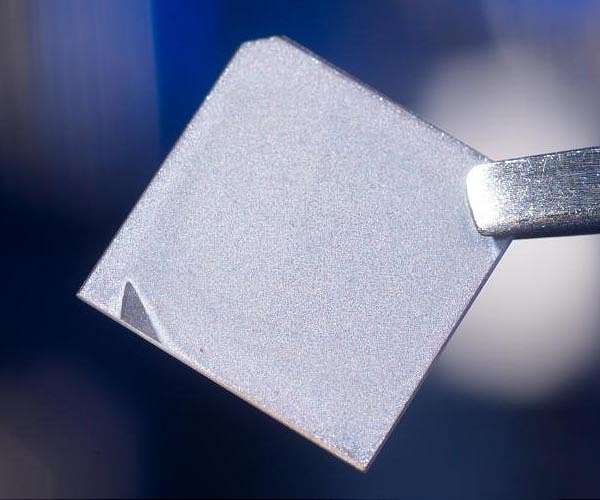
Researchers from Chonnam National University in the Republic of Korea report that a nanometer-scale germanium oxide layer can address a long-standing bottleneck in tin monosulfide thin-film solar cells by improving the rear contact surface with the metal electrode. They focused on tin monosulfide, or SnS, a non-toxic and inexpensive absorbent that uses elements abundant in the Earth and avoids indium, gallium and tellurium, while theoretically providing favorable optical and electronic properties for harvesting sunlight. In practice, measured efficiencies have fallen short of theoretical predictions due to structural defects, parasitic reactions, and atomic diffusion at the interface where SnS meets the contact with the backmetal.

The team led by Professor Jaeyeong Heo and Dr Rahul Kumar Yadav designed a device architecture that inserts an ultra-thin germanium oxide or GeOx interlayer between the molybdenum back contact and the SnS absorber. Their study, published online in Small on September 19, 2025, describes how this interface engineering strategy targets deep defects and unwanted chemical phases that form during high-temperature processing of conventional SnS cells.

To fabricate the GeOx layer, the researchers used a vapor transport deposition process that first deposits a very thin germanium film and then relies on its natural oxidation to form a controlled oxide with a thickness of about 7 nanometers. This approach is compatible with scalable, industry-oriented thin-film processing. “Despite its nanoscale thickness, this interlayer addresses several long-standing challenges simultaneously,” explains Prof. Heo. “It suppresses damaging deep defects, blocks unwanted sodium diffusion and prevents the formation of resistive molybdenum disulfide phases during high-temperature manufacturing.”

By stabilizing the rear interface, the GeOx layer improves the microstructure of the SnS absorber, creating larger and more uniform grains that facilitate charge transport. The authors report improved charge collection and lower electrical losses, increasing the overall performance of the device. In quantitative terms, the energy conversion efficiency increased from 3.71% in standard devices without the interlayer to 4.81% when the optimized GeOx passivation was implemented, one of the highest reported efficiencies for vapor-deposited SnS-based solar cells.

See also  Solar Battle of the Bands will return to Intersolar next month

The work also highlights broader implications of precise control over metal-semiconductor interfaces beyond photovoltaic devices. The researchers note that similar interface optimization can influence contact resistance and switching behavior in thin-film transistors, energy conversion performance in thermoelectric modules, charge transfer and detection sensitivity in sensors, mechanical reliability in flexible electronics, and the operation of photodetectors and memory devices. “Across all these applications, mastering the metal/semiconductor interface remains crucial for advancing next-generation devices,” says Prof. Heo. “We believe this work will open new avenues for research and contribute to the development of advanced solar cells and other key technologies.”

Research report:Optimized backside passivation of SnS thin-film solar cells using a controlled germanium oxide interlayer for improved photovoltaic performance


Source link

cells efficiency film Germanium increases interface monosulfide oxide solar stability thin Tin
Share. Facebook Twitter Pinterest LinkedIn Tumblr Email
solarenergy
  • Website

Related Posts

Origis is developing a 413 MW solar portfolio in West Texas

March 6, 2026

New Jersey expands state community solar program by 3 GW

March 6, 2026

How to address imbalance datasets in solar panel dust detection

March 5, 2026
Leave A Reply Cancel Reply

Don't Miss
Finance

End of the line for an American solar giant – SPE

By solarenergySeptember 17, 20240

From pv magazine 24/09The residential solar industry is often called the “solar roller coaster” in…

German companies launch the world’s largest plug-in PV system – SPE

November 5, 2024

The Japanese agency launches a prediction of Zonne -Surplus to improve energy efficiency -PV Magazine International

February 12, 2025

Market forecast for Carbon Credit Trading Platform will exceed $317

April 29, 2024
Stay In Touch
  • Facebook
  • Twitter
  • Pinterest
  • Instagram
  • YouTube
  • Vimeo
Our Picks

Mitsubishi Electric Trane announces new heat pump line for hydronic heating – SPE

March 6, 2026

Origis is developing a 413 MW solar portfolio in West Texas

March 6, 2026

New Jersey expands state community solar program by 3 GW

March 6, 2026

How to address imbalance datasets in solar panel dust detection

March 5, 2026
Our Picks

Mitsubishi Electric Trane announces new heat pump line for hydronic heating – SPE

March 6, 2026

Origis is developing a 413 MW solar portfolio in West Texas

March 6, 2026

New Jersey expands state community solar program by 3 GW

March 6, 2026
About
About

Stay updated with the latest in solar energy. Discover innovations, trends, policies, and market insights driving the future of sustainable power worldwide.

Subscribe to Updates

Get the latest creative news and updates about Solar industry directly in your inbox!

Facebook X (Twitter) Instagram Pinterest
  • Contact
  • Privacy Policy
  • Terms & Conditions
© 2026 Tsolarenergynews.co - All rights reserved.

Type above and press Enter to search. Press Esc to cancel.