

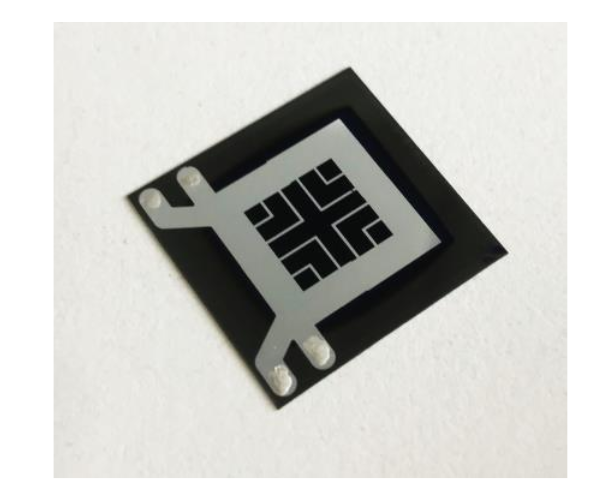
A team from Fraunhofer ISE has developed new imaging methods to measure losses in individual subcells of multi-junction solar cells based on perovskite-silicon and perovskite-perovskite-silicon combinations.
Researchers at Germany’s Fraunhofer Institute for Solar Energy Systems (Fraunhofer ISE) have developed new imaging methods to measure losses in individual subcells of perovskite-silicon tandem and perovskite-perovskite-silicon triple junction devices.
The research team noted the growing need to be able to measure the electrical and thermal effects of new functional multi-junction solar cell materials and deposition methods at the individual subcell level without necessarily having direct electrical access.
There was particular demand for emerging perovskite-silicon double junction and perovskite-perovskite-silicon triple junction solar cells.
“We found that existing characterization methods to quantify electrical losses are not satisfactory because they either compromise on measurement speed, are optimized only for single-junction solar cells, or cannot deal with the metastability of perovskites,” said Oliver Fischer, corresponding author of two recent papers on this topic. pv magazine.
In “Revealing charge carrier transport and selectivity losses in perovskite-silicon tandem solar cells”, published in Matter, an international research group led by a Fraunhofer ISE team reported the Suns open-circuit voltage (Suns-Voc) and intensity-dependent photoluminescence imaging (Suns-PLI) methods, which were specifically adapted to perovskite-silicon tandem solar cells.
A more recent article, “Image-based loss analysis for perovskite/perovskite/silicon triple-junction solar cells”, published in Solar energy materials and solar cells, detailed the measurement methods for individual subcells within triple-junction solar cells.
“We investigated the electrical losses of individual subcells in several ways. Illuminated lock-in thermography (ILIT) allowed us to attribute the origin of shunts to individual subcells. Electroluminescence imaging (EL), which is subcell selective by using appropriate optical filters in front of the camera, tells us a lot about the injection and extraction of charge carriers. This allows us to investigate the quality of electron and hole transport layers,” Fischer explains.
In the previous study, the Suns-Voc and the Suns-PL imaging methods adapted to perovskite-silicon tandem solar cells were described in detail. The implicit IV curve measurement based on the Suns-PLI method indicates the local origin of electrical losses more accurately than other spatially averaged luminescence-based measurements, the paper said. The implicit fill factor for each subcell and for the tandem itself can be determined as an average, or spatially resolved, using the imaging-based method.
In combination with the subcell-resolved Suns-Voc measurements, the two methods are suitable for determining both selectivity losses and resistance losses, according to the article.
“Both losses will be important to track in a production line as well. Therefore, we see the potential for this method to be applied for quality assurance in inline production and in R&D laboratories,” said Fischer.
For the analysis of three-junction solar cells, a combination of luminescence imaging (EL/PL) and lock-in thermography was used to determine the “lateral homogeneity of the different layers, the internal tension of the subcells and the location of shunts,” according to the related article.
“Most important was the ability to detect shunts, evaluate the homogeneity of the deposited layers and quantify the implicit open-circuit voltage of each subcell,” Fischer said.
The EL imaging used optical filters that matched the transmission range of the subcells to capture charge carrier injection and extraction data, allowing investigation of the quality of electron and hole transport layers.
“Quantitative photoluminescence imaging in turn makes it possible to access the implicit open-circuit voltage of each subcell,” Fischer said.
Illuminated lock-in thermography (ILIT) was used to attribute the origin of shunts to individual subcells. The ILIT and dark-illuminated lock-in thermography (DLIT) typically detect far-infrared (IR) radiation emitted from solar cell sites with increased non-radiative recombination. According to the research, when there are three subcells instead of two, a third light source is added to the ILIT measurement system.
To demonstrate the effectiveness of the methods, the team measured the effect of a passivation agent on iVoc in the wide bandgap perovskite top cell (WBG) and subsequent light penetration effects on triple-junction solar cells with an active area of 1 cm2. Based on the iVoc for the individual subcells, small variations in the bottom cell and middle cell were determined.
The team noted that the WBG perovskite top cell showed a 42 mV improvement in iVoc after passivation. Since this was significantly more than the total gain in iVoc, the remaining Voc improvement could be attributed to the reduction in selectivity losses upon top cell passivation. Further analysis could provide insights into issues with the passivation process.
Furthermore, the temporal evolution of Voc and of iVoc of the subcells was examined during a light soaking procedure, which, according to the researchers, provided insight into temporal changes of the selectivity losses.
These new imaging methods can be applied without limitations to other tandem and triple-junction cell technologies, including III-V compound solar cells for space applications, according to Fischer.
The lock-in thermography measurements were carried out using equipment from Germany-based Ircam GmbH. The luminescence image measurements were performed using Tandem Modulum, supplied by Germany-based Intego GmbH, with excitation light sources adjusted to match peak wavelengths and optical filters chosen to match the transmission range. Fischer noted that the instrument was originally developed at Fraunhofer ISE.
This content is copyrighted and may not be reused. If you would like to collaborate with us and reuse some of our content, please contact: editors@pv-magazine.com.
