
Close Menu
  • News
  • Industry
  • Solar Panels
  • Commercial
  • Residential
  • Finance
  • Technology
  • Carbon Credit
  • More
    • Policy
    • Energy Storage
    • Utility
    • Cummunity
What's Hot

A deep learning model tracks the status of the EV battery with high precision

March 6, 2026

Mitsubishi Electric Trane announces new heat pump line for hydronic heating – SPE

March 6, 2026

Origis is developing a 413 MW solar portfolio in West Texas

March 6, 2026
Facebook X (Twitter) Instagram
Solar Energy News
Friday, March 6
  • News
  • Industry
  • Solar Panels
  • Commercial
  • Residential
  • Finance
  • Technology
  • Carbon Credit
  • More
    • Policy
    • Energy Storage
    • Utility
    • Cummunity
Solar Energy News
Home - Technology - Remote sensing-based technology for assessing snow-induced hourly PV power losses – SPE
Technology

Remote sensing-based technology for assessing snow-induced hourly PV power losses – SPE

solarenergyBy solarenergyDecember 24, 2025No Comments3 Mins Read
Facebook Twitter Pinterest LinkedIn Tumblr Email
Share
Facebook Twitter LinkedIn Pinterest Email

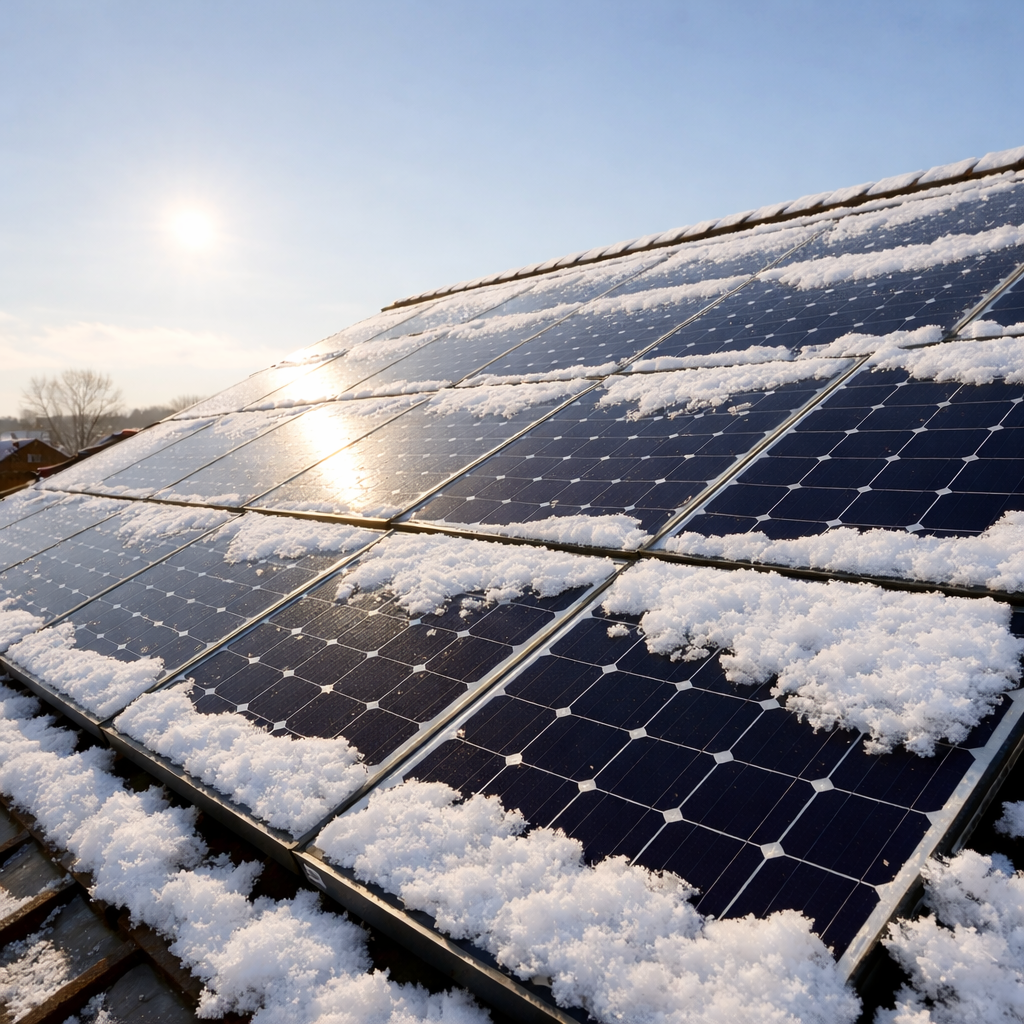
A team of researchers based in Sweden have developed a snow loss model to estimate snow-induced PV power losses on an hourly basis. The proposed approach is based solely on data from remote sensing sources such as aerial imagery, LIDAR and satellite data.

December 24, 2025
Valerie Thompson

A research team led by Becquerel Sweden has developed a generalizable snow loss model to estimate snow-induced PV power losses on an hourly basis. It is based on PV system data derived exclusively from remote sensing sources, such as aerial photographs, light detection and ranging (LIDAR), and satellite-derived radiation and weather data.

“We found that our deterministic physical PV power simulation model produced systematic errors during the winter months, which motivated us to improve its accuracy. Through detailed analysis, we identified snow accumulation on PV modules as a major factor contributing to these discrepancies. This led us to develop a special snow loss model and integrate it into our simulation framework,” Johan Lindahl, the corresponding author of the study, told us. pv magazine.

The power simulation tool was built using a modified version of the Marion snow loss model adapted for remote sensing applications. It was optimized using data from sixteen PV reference systems, including both flat and tilted systems, and validated on a further nine, all in Sweden.

The researchers found that the snow loss model’s accuracy matched that of previous Marion model fits, while relying solely on remotely sensed input. It showed consistent improvements in the coefficient of determination, mean absolute error and root mean square error. The results were similar to previous snow loss studies.

See also  Full perovskite tandem PV cell based on carboranes achieves an efficiency of 27.2% – SPE

The new snow loss model was then integrated into the Swedish Alfrödull pipeline for remote sensing and PV power simulation. “When included in a full remote sensing-based PV power simulation pipeline, the resulting average percent root mean square error was 5.7% when simulating hourly power across 40 systems,” the study said.

“The results validated our hypothesis, with the snow loss model significantly improving the overall accuracy of the model, especially when predicting power during snow-affected periods,” Lindahl said.

The researchers concluded that individual PV power generation from multiple distributed PV systems can be assessed on a large scale in cold climates, even without access to system-specific technical data. It can provide an accurate assessment of snow loss in locations where ground monitoring infrastructure is limited or unavailable.

“This makes it particularly valuable operational monitoring for large solar portfolios,” said Lindahl.

The work is described in detail in “Snow loss modeling compatible with remote sensing for PV power simulations,“published in Solar energy. The researchers involved in the study came out RISE Research Institutes of Sweden And Uppsala University.

The new model took advantage of it an earlier study that determined how to use LIDAR for more accurate modeling of solar panel orientation.

The next step for the research group is to use the tool to identify and simulate the PV power of all PV systems within the four Swedish low-voltage grids and use the results to “quantify the reduction in total peak power generation caused by different system orientations,” according to Lindahl.

See also  Moving energy via batteries on the railway – SPE

This content is copyrighted and may not be reused. If you would like to collaborate with us and reuse some of our content, please contact: editors@pv-magazine.com.

Popular content

Source link

Assessing hourly losses power remote sensingbased snowinduced SPE technology
Share. Facebook Twitter Pinterest LinkedIn Tumblr Email
solarenergy
  • Website

Related Posts

Mitsubishi Electric Trane announces new heat pump line for hydronic heating – SPE

March 6, 2026

Oleic acid anti-pollution coating for solar panels – SPE

March 5, 2026

Ground-mounted test field for Perovksite solar panels goes online in China – SPE

March 5, 2026
Leave A Reply Cancel Reply

Don't Miss
News

Europe opts for solar energy and energy autonomy

By solarenergyOctober 25, 20250

Europe opts for solar energy and energy autonomy A recently published study highlights Europe’s move…

Boviet Solar completes the outside of 3 GW US Solar Cell Plant

August 29, 2025

EagleView aerial imagery integrates with Aurora Solar

August 15, 2024

US military tests Swift Solar perovskite technology in deployable microgrid – SPE

October 28, 2025
Stay In Touch
  • Facebook
  • Twitter
  • Pinterest
  • Instagram
  • YouTube
  • Vimeo
Our Picks

A deep learning model tracks the status of the EV battery with high precision

March 6, 2026

Mitsubishi Electric Trane announces new heat pump line for hydronic heating – SPE

March 6, 2026

Origis is developing a 413 MW solar portfolio in West Texas

March 6, 2026

New Jersey expands state community solar program by 3 GW

March 6, 2026
Our Picks

A deep learning model tracks the status of the EV battery with high precision

March 6, 2026

Mitsubishi Electric Trane announces new heat pump line for hydronic heating – SPE

March 6, 2026

Origis is developing a 413 MW solar portfolio in West Texas

March 6, 2026
About
About

Stay updated with the latest in solar energy. Discover innovations, trends, policies, and market insights driving the future of sustainable power worldwide.

Subscribe to Updates

Get the latest creative news and updates about Solar industry directly in your inbox!

Facebook X (Twitter) Instagram Pinterest
  • Contact
  • Privacy Policy
  • Terms & Conditions
© 2026 Tsolarenergynews.co - All rights reserved.

Type above and press Enter to search. Press Esc to cancel.