
Close Menu
  • News
  • Industry
  • Solar Panels
  • Commercial
  • Residential
  • Finance
  • Technology
  • Carbon Credit
  • More
    • Policy
    • Energy Storage
    • Utility
    • Cummunity
What's Hot

A deep learning model tracks the status of the EV battery with high precision

March 6, 2026

Mitsubishi Electric Trane announces new heat pump line for hydronic heating – SPE

March 6, 2026

Origis is developing a 413 MW solar portfolio in West Texas

March 6, 2026
Facebook X (Twitter) Instagram
Solar Energy News
Friday, March 6
  • News
  • Industry
  • Solar Panels
  • Commercial
  • Residential
  • Finance
  • Technology
  • Carbon Credit
  • More
    • Policy
    • Energy Storage
    • Utility
    • Cummunity
Solar Energy News
Home - Technology - Scandium doping stabilizes sodium ion cathodes in new study – SPE
Technology

Scandium doping stabilizes sodium ion cathodes in new study – SPE

solarenergyBy solarenergyJanuary 2, 2026No Comments3 Mins Read
Facebook Twitter Pinterest LinkedIn Tumblr Email
Share
Facebook Twitter LinkedIn Pinterest Email

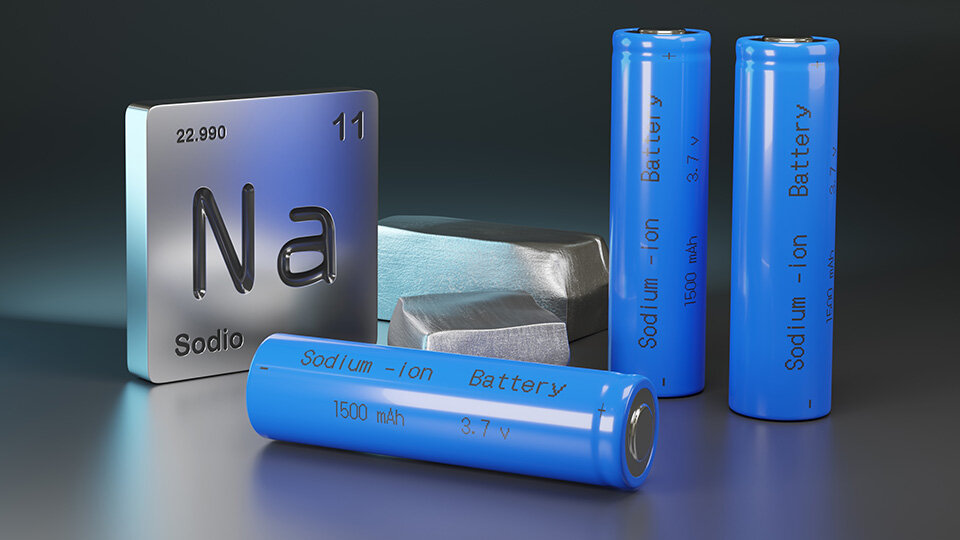
A team from Tokyo University of Science (TUS) has identified a structural mechanism by which adding small amounts of scandium to layered sodium manganese oxide cathodes slows degradation, which typically limits the life of sodium-ion batteries.

January 2, 2026
Brian Public

A new materials study from Japan shows that targeted scandium substitution in layered sodium manganese oxide can reduce the lattice voltage responsible for rapid capacity decay in sodium ion battery cathodes.

The research focuses on layered sodium manganese oxide (Na₂⁄₃MnO₂), a high-capacity cathode material that is widely studied as a cheaper alternative to lithium-ion chemistry due to its abundance of sodium. Although Na₂⁄₃MnO₂ offers strong initial performance, it is limited by rapid capacity decay during repeated charge-discharge cycles.

The study, led by Prof. Shinichi Komaba of Tokyo University of Science, investigates how replacing small amounts of scandium at manganese sites affects two structural variants of the material, known as P2 and P′2 polytypes. Capacitance loss in these cathodes is mainly caused by Jahn-Teller distortion associated with changes in the oxidation state of manganese during cycling, which causes structural stress and crystallinity loss over time.

According to the researchers, scandium doping selectively improves the cycling stability of the P′2 polytype, which exhibits cooperative Jahn-Teller deformation over long distances. Structural analysis showed that scandium-modified P′2 Na₂⁄₃[Mn₁₋ₓScₓ]O₂ retained its crystal structure during cycling, reduced particle size, and suppressed side reactions with liquid electrolytes by forming a more stable cathode-electrolyte interface.

In half-cell testing, the P′2 material with 8% scandium content provided the strongest performance, maintaining structural integrity and capacity during extended cycling. The same doping strategy did not improve the stability of the P2 polytype, indicating that the effect depends on the presence of cooperative lattice distortion rather than simple metal substitution. Doping with other cations, including ytterbium and aluminum, did not produce comparable results.

See also  CEA-Eenses unveils PV module Interconnection Tech that reduces silver use by 26%-PV Magazine International

The team also reported improved moisture resistance and additional benefits from the pre-cycling treatment. In coin-type full-cell tests, the 8% scandium-doped P′2 cathode retained approximately 60% of its capacity after 300 cycles.

The article, “Unique impact of scandium doping on the electrode performance of P′2 and P2 type Na₂⁄₃MnO₂”, was recently published in Advanced materials. It describes the mechanism by which scandium stabilizes the deformed lattice without suppressing the electrochemical activity of manganese. The findings suggest a route to longer-lasting sodium-ion batteries, although the authors note that the cost of scandium could limit large-scale deployment, the scientists said.

The study was conducted by researchers from Tokyo University of Science and supported by funding from the Japanese Ministry of Education, Culture, Sports, Science and Technology, the Japan Science and Technology Agency and the Japan Society for the Promotion of Science.

This content is copyrighted and may not be reused. If you would like to collaborate with us and reuse some of our content, please contact: editors@pv-magazine.com.

Popular content

Source link

cathodes doping ion Scandium sodium SPE stabilizes Study
Share. Facebook Twitter Pinterest LinkedIn Tumblr Email
solarenergy
  • Website

Related Posts

Mitsubishi Electric Trane announces new heat pump line for hydronic heating – SPE

March 6, 2026

Oleic acid anti-pollution coating for solar panels – SPE

March 5, 2026

Ground-mounted test field for Perovksite solar panels goes online in China – SPE

March 5, 2026
Leave A Reply Cancel Reply

Don't Miss
Policy

Canada would surpass 2024 Solar Growth with the rise in PV behind the meter PV-PV Magazine International

By solarenergySeptember 10, 20250

Canada is on its way to implement more solar energy in 2025 than in 2024,…

Component size key for scaling up high temperature heat pumps – SPE

June 25, 2024

Living on Earth: Phantom Carbon Credits

May 18, 2024

Solar Panels for Greenhouse Heating (2024)

September 17, 2024
Stay In Touch
  • Facebook
  • Twitter
  • Pinterest
  • Instagram
  • YouTube
  • Vimeo
Our Picks

A deep learning model tracks the status of the EV battery with high precision

March 6, 2026

Mitsubishi Electric Trane announces new heat pump line for hydronic heating – SPE

March 6, 2026

Origis is developing a 413 MW solar portfolio in West Texas

March 6, 2026

New Jersey expands state community solar program by 3 GW

March 6, 2026
Our Picks

A deep learning model tracks the status of the EV battery with high precision

March 6, 2026

Mitsubishi Electric Trane announces new heat pump line for hydronic heating – SPE

March 6, 2026

Origis is developing a 413 MW solar portfolio in West Texas

March 6, 2026
About
About

Stay updated with the latest in solar energy. Discover innovations, trends, policies, and market insights driving the future of sustainable power worldwide.

Subscribe to Updates

Get the latest creative news and updates about Solar industry directly in your inbox!

Facebook X (Twitter) Instagram Pinterest
  • Contact
  • Privacy Policy
  • Terms & Conditions
© 2026 Tsolarenergynews.co - All rights reserved.

Type above and press Enter to search. Press Esc to cancel.