

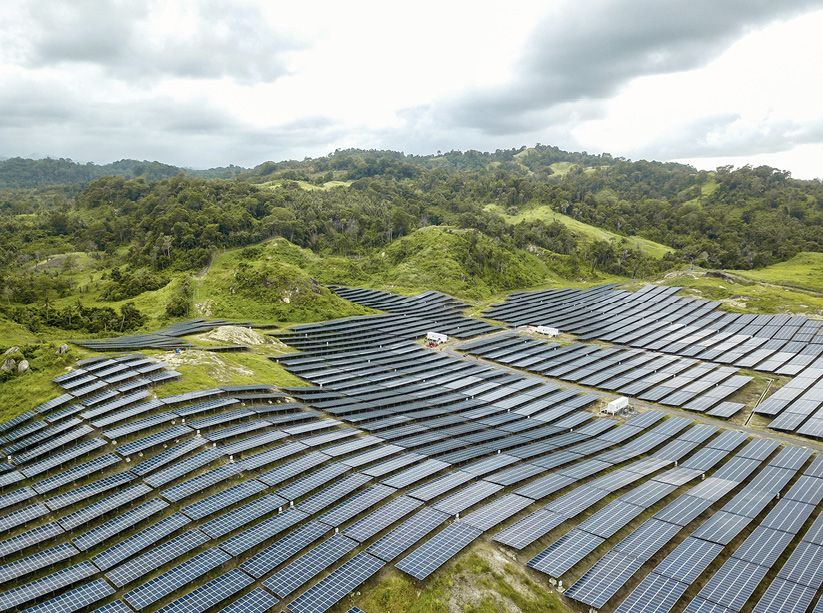
New research shows how modern technical standards, combined with broader regulations and power grid reforms, are essential to ensure system reliability in Indonesia’s electricity system as renewable capacity grows.
A Danish-Indonesian research group has analyzed the challenges Indonesia faces in implementing its energy transition and concluded that the country needs to update its grid codes (GCs) to integrate a greater share of renewable energy and meet its ambitious solar energy deployment targets.
“The lack of robust, updated grid code standards in Indonesia is indeed a major bottleneck for renewable energy deployment,” the study’s lead author Majid Ali said. pv magazine. “However, unlocking the full potential of clean energy will also require coordinated action across grid investments, regulatory reform, financing and institutional strengthening. Introducing and enforcing grid codes would be a fundamental and positive step, but it should be part of a broader systemic transformation rather than a standalone solution.”
In the study, the researchers identified the technical requirements needed to integrate large volumes of renewable generation at the distribution level and assessed the benefits and limitations of the proposed grid code. They also compared the planned Indonesian grid code with existing standards, especially those applied in Denmark and developed by the Institute of Electrical and Electronics Engineers (IEEE).
“This comparison highlights the strengths and weaknesses of Indonesia’s framework, showing how it aligns with international best practices and what adjustments are needed to support the country’s sustainable energy ambitions,” Ali said.
The proposed grid code includes reactive energy compensation and harmonic analysis mechanisms to assess grid capacity and ensure that the growing penetration of renewable energy can be managed without compromising system reliability.
It would also introduce an information and communications technology (ICT) framework to enable real-time data exchange for monitoring and control. In addition, the code would require low-voltage ride-through (LVRT) and high-voltage ride-through (HVRT) capabilities to ensure continued operation of renewable energy during temporary power outages.
Further recommendations include islanding protection systems, which allow parts of the electricity grid to operate independently in the event of a mains fault, as well as DC injection control to keep DC content below 0.5% of the rated current level.
The researchers also recommend incorporating power factor control, automatic synchronization, smart meters and energy management technologies to increase system flexibility. Controllable loads and demand side management (DSM) are seen as complementary tools to improve load control and system responsiveness.
The study also includes a case study of the energy system on the island of Lombok, which currently has an average electricity demand of 265 MW and is expected to see significant demand growth in the coming years.
The research team presented its findings in the article “Grid code requirements for the integration of renewable energy sources in Indonesia – an overview”, published in Focus on renewable energy. It included academics from Denmark’s Aalborg University, Indonesian energy company PT PLN (Persero) and
Indonesia’s national energy policy aims to reach 108.7 GW of solar capacity by 2060. Earlier this year, the Indonesian government launched an initiative to deploy 100 GW of solar energy, consisting of plans for 80 GW of 1 MW mini-grids with storage, in addition to 20 GW of centralized solar power plants.
The Institute for Essential Services Reform (IESR) estimates that Indonesia has a potential solar energy capacity ranging from 3,300 GW to 20,000 GW. The country’s cumulative solar capacity surpassed 700 MW in August 2024.
This content is copyrighted and may not be reused. If you would like to collaborate with us and reuse some of our content, please contact: editors@pv-magazine.com.
