

Silver has become one of the most important materials in the transition to clean energy. It is essential for solar photovoltaics, and solar energy is no longer a small consumer of silver. It is becoming one of the biggest drivers of demand, while at the same time ore grades are declining and supply is becoming increasingly difficult to expand quickly.
In other words, even as solar energy becomes cheaper and more efficient, the material base is tightening.
This is not just an academic concern. The price of silver reached a record high this month ($95 per troy ounce) and policymakers indicate that this is urgent. The United States recently including silver in the list of critical materials – an indicator that this metal is increasingly being treated not as a commodity, but as strategic infrastructure.
I have been working in the recycling of electronic waste and solar panels for more than ten years. The conclusion has only become stronger over time: recycling is not just a sustainability add-on. It becomes an industrial requirement.
Solar-powered silver reserves
Ten years ago my colleagues and I published what is to date my most cited article. We characterized silicon solar panels, quantified the silver content in the PV and evaluated the routes to extract it. We measured silver concentrations comparable to those of a high-grade mine – except here it is embedded in a manufactured product that is already deployed on a global scale. Even a decade ago, solar panels were comparable to primary ore as a source of silver, if you evaluate the problem through the lens that matters most: concentration, recoverability and scale. But since that article was published, a lot has changed, including what’s happening underground.
There is a pattern in natural resource extraction that is as old as mining itself: we start with the easiest material to extract and burn the best deposits first. Silver ore grades have been declining for years – researchers reported a 35% decrease between 2007 and 2016. Take the ore quality of the Fresnillo mine (Mexico) as a proxy for recent years (2015-24)next to industry reports on producer returnsthe trend shows a continued decline and the figures are currently at 150-160 ppm! In other words, there are 150 to 160 grams of silver for every ton of stone, which is about the weight of a chocolate bar spread by the weight of a small car.
That creates an uncomfortable reality: if society continues to rely solely on primary mining to meet future demand for silver, the silver we get will increasingly come from more energy-intensive, more environmentally disruptive mining.
Rising demand
Silver is not ‘just a solar material’. It is a crucial input to several industries that underpin modern life: electronics, electrical contacts, industrial manufacturing, medical applications and more. Solar energy is simply the latest huge demand center – and one of the fastest growing.
And because solar deployment has become a central strategy for global electricity decarbonization, silver demand is now tied to something bigger than price curves or market hype. It is connected to the reality of the energy transition.
More recently, my colleagues and I published another article analyzing what I consider to be one of the most revealing numbers in the entire solar supply chain: the silver learning curvethe amount of silver needed to produce a watt of solar energy and its change over time. Solar energy has a long history of improving efficiency and reducing material intensity. The industry has worked hard to deliver more watts with less silver per unit of output.
That’s the good news, and it’s real. But the learning curve doesn’t exist in a vacuum. It leads the way in deployment volume. Using the silver learning curve and solar growth trends, we estimate that with business-as-usual cell technology (then p-type), the solar industry could consume somewhere between 85% and 98% of the world’s silver reserves by mid-century.
That is not a marginal planning problem. That limits the potential to reshape the solar economy, technology roadmaps and competitive pressures between industries that all depend on the same metal. And we are not just looking at a theoretical future. We can see the trajectory taking shape in the real world as the solar industry’s silver consumption has increased over time. In some reports, solar energy was responsible ~17% of global silver demand in 2024 And 29% of total industrial demand. That’s an extraordinary number for a single industrial application – and it’s exactly why silver is no longer a ‘background material’ in the solar story. It becomes a determining variable.
Technology changes
There is another layer that makes the silver problem more complex than it seems from the outside. Yes, there is a clear trend toward using less silver per watt over time. But solar energy is not a static technology. The industry is evolving. And when it evolves, it doesn’t always evolve in a straight line.
When manufacturers make a leap in cell architecture – by switching to technologies like TOPCon or silicon heterojunction – silver use may increase, even if only temporarily. The industry then reduces the peak through process improvement, production learning and material optimization. From a distance, it may seem as if the industry is always ‘reducing silver’. From the data it looks more like this: a downward trend, then a technological leap, then a peak, and then a gradual decline again. The impact is important because the transition path itself can create periods in which the industry becomes even hungrier for silver – exactly when the use of solar energy is also accelerating. This is how limitations arise in success stories.
To be clear, the industry is not ignoring this problem. Manufacturers have steadily reduced silver intensity over time, and newer approaches – such as further metallization optimization and copper-based alternatives – could reduce dependence on silver in the long term. But transitions in solar energy production do not happen overnight. Affordability, reliability and scale matter, and technological shifts can temporarily increase demand for silver before process learning reduces it. Meanwhile, implementation continues to accelerate. That mismatch – rapid growth now, material replacement later – is where limitations arise.
New paradigm
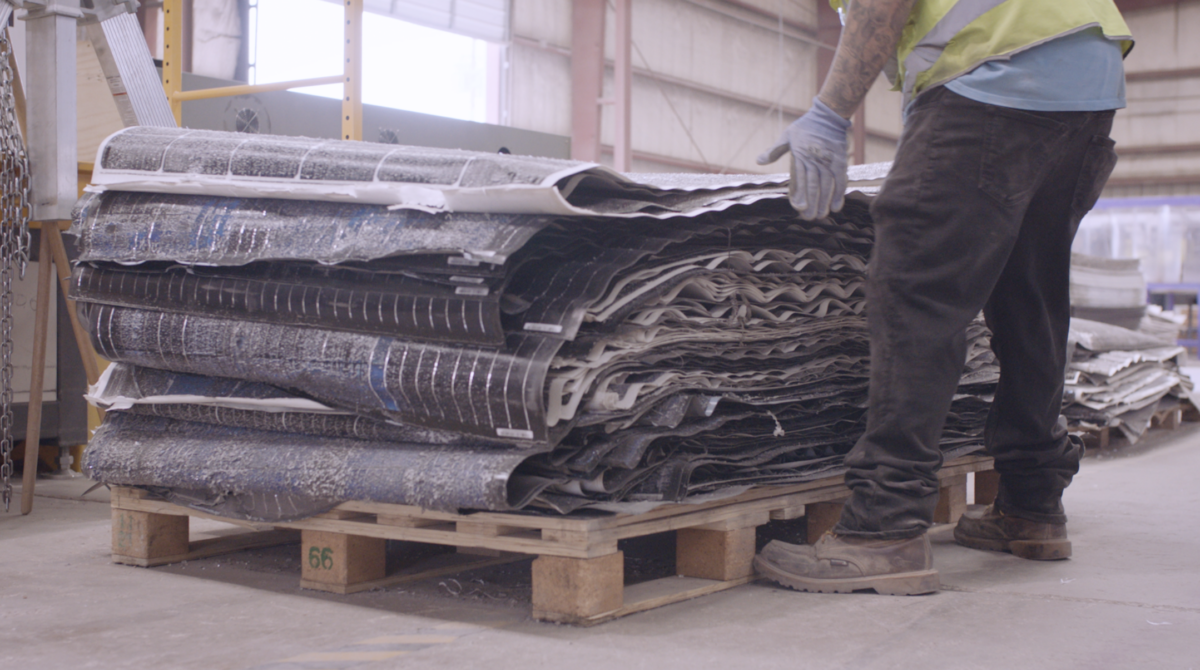
Here’s the part that still catches people off guard: Modern solar panels often contain silver in concentrations comparable to – or higher than – many mined silver ores. Today’s modules typically fall in the range of about 300 to 400 ppm silver, and that has been the average range in recent years. We deploy silver in the field on a massive scale, embedded in products with known lifespans, predictable retirement periods and increasingly standardized formats. That’s not a waste. That’s inventory.
It becomes even more striking if you treat panels like any serious metallurgist treats ore: you concentrate the valuable fraction. Solar panels are systems made with different components. The silver is in the cell layer, while other components such as glass, aluminum frames and junction boxes are not. These latter components dominate the mass fraction, so when recycling processes remove and separate these non-cellular materials, the remaining fraction becomes dramatically more concentrated. In advanced recycling streams, that concentrated material can exceed 1,000 ppm and in some cases even reach more than 2,000 ppm. At that point, “recycling” starts to look less like waste management and more like metallurgy.
We are now faced with the choice between two routes to the same metal. One of these is primary mining: blasting rock, moving earth on a large scale and processing material of increasingly lower quality, usually with high energy consumption and a significant impact on the environment. The other is an above-ground resource that we have already manufactured and deployed: solar panels in the field. These panels are essentially a temporary storage facility for critical materials. When they retire, they become a dumping ground or resource. The difference between these outcomes is not theoretical. It’s infrastructure. It is the decision-making of renewable energy leaders.
Recycling infrastructure
This is where the solar recycling industry needs to evolve. Recycling cannot remain a small, fragmented end-of-life service that only becomes visible when a project is restarted or a warehouse becomes full of damaged modules. It must be an industrial infrastructure, built for consistent throughput, high recovery yields, and reliable output streams that downstream manufacturers can actually tap into. If silver becomes a binding restriction, then recovering silver from waste solar energy is preferable not only from an environmental perspective. It is one of the clearest ways to reduce the pressure on the primary energy supply and at the same time keep the development of the energy transition realistic.
Silver won’t run out tomorrow, but restrictions don’t wait for exhaustion. The point here is not to claim that silver will disappear. Constraints don’t have to be exhausted to become disruptive. They arise from price volatility, supply friction, and competition between industries that all depend on the same metal. Solar energy has already proven that it can provide cheaper electricity year after year. The next challenge is whether the materials supply chain can scale with the same confidence. The irony is that one of the most concentrated silver resources available to the solar industry may not be underground at all. But instead already deployed in the field.
Dr. Pablo Ribeiro Dias is co-founder and Chief Technology Officer at SOLARCYCLE, an advanced solar energy recycling company and circularity platform producing sustainable and household materials at scale. He is a world-renowned researcher in the field of PV module and e-waste recycling, conducting leading research into innovative processes and methodologies for high-quality, low-cost PV recycling. He has written numerous influential articles and holds several patents in this field.
The views and opinions expressed in this article are those of the author and do not necessarily reflect those of the author pv magazine.
The views and opinions expressed in this article are those of the author and do not necessarily reflect those of the author pv magazine.
This content is copyrighted and may not be reused. If you would like to collaborate with us and reuse some of our content, please contact: editors@pv-magazine.com.
