

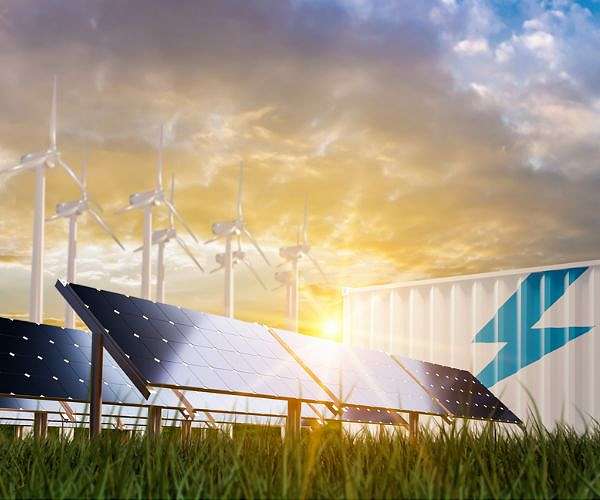
Planned or under-construction solar and wind power projects slowed last year, analysis showed Tuesday, casting doubt on whether countries will meet the target of tripling renewable capacity by the end of the decade.
Dozens of countries agreed in 2023 to triple renewable energy capacity by 2030 as part of efforts to limit global warming.
But announcements and construction starts of new wind and solar projects grew 11 percent in 2025 – up from 22 percent the previous year, as wind development projects faced hurdles, according to the Global Energy Monitor (GEM).
“Wind developers faced political barriers and a series of failed wind energy auctions in rich countries,” said GEM research analyst Diren Kocakusak.
US President Donald Trump has blocked wind energy projects and made no secret of his antipathy to renewables, although the global slump was not the fault of any one country, Kocakusak said.
GEM’s research also found that only a small part of the growth in wind and solar energy came from the wealthy G7 countries, with the ‘center of gravity’ now ‘shifting decisively towards emerging and developing economies’.
As has been the case for years, China is expanding renewable capacity on a scale unparalleled elsewhere.
It was responsible for about a third of global capacity growth in 2025 – 1.5 terawatts – more than the growth in the next six countries combined.
But that wasn’t enough to put the world on track to meet the 2030 target.
– ‘Disappointing developments’ –
Even if all currently announced and under construction projects went ahead, the world would still fall short.
GEM’s research has shown that almost 40 percent of planned projects start after the announced start date, or are postponed or scrapped.
However, Kocakusak said that did not mean the goal was out of reach.
“The momentum seems to be slowing down, but that is not due to a lack of potential,” he told AFP.
There is still “plenty of time” for countries to ramp up capacity, and solar projects not yet announced could be completed before 2030, he said. It may take longer for wind projects to start.
More than 3.5 terawatts of wind and solar projects have also been announced without a confirmed start date, and these could help meet the 2030 target if they come online quickly enough.
Some rich countries are supporting sustainable growth, with Japan seeking to revise wind auction guidelines and Britain boosting investment.
However, this policy comes with “disappointing developments,” such as reports that Germany could limit grid priority for renewables, Kocakusak said.
“Whether the goal of tripling by 2030 is achieved will depend on the level of commitment and implementation of countries and developers,” he said.
