

Researchers reviewed 110 studies on cold thermal energy storage in liquid air energy storage and found that cold storage performance has a much greater impact on system efficiency than previously thought. Although phase change materials offer high theoretical efficiency gains, simpler, packed-bed sensitive thermal systems are currently the most mature and cost-effective option, with further experimental validation required to bridge the gap to large-scale implementation.
An international group of researchers has conducted a critical literature review on the use of cold thermal energy storage (CTES) in liquid-air energy storage systems (LAES).
The role of a CTES within a LAES system is to recover cryogenic exergy during air regasification and reuse it during the liquefaction phase, significantly improving return efficiency.
“This is the first comprehensive and critical synthesis of CTES for LAES,” said corresponding author Alessio Tafone pv magazine. “Rather than just reviewing existing research, we systematically evaluate different CTES technologies, materials and system configurations using thermodynamic and techno-economic criteria. This allows us to identify optimal design strategies, highlight consistent performance trends and clearly map current research gaps and future development pathways.”
“While the review focuses on LAES, many of the insights are directly relevant to thermal energy storage systems for cryogenic applications more broadly, which is a key technology for exploiting, storing and reusing low-temperature thermal resources in the power, industrial and refrigeration sectors, liquefied natural gas (LNG) regasification terminals and the industrial gases sector,” Tafone continued.
The group’s research involved the analysis of 110 publications, covering a wide range of CTES configurations, including sensitive heat systems, latent heat systems using phase change materials, hybrid and cascade designs, and advanced geometries. “One of the most striking findings is how dominant cold storage performance is to overall LAES efficiency. Literature shows that cold storage losses can have up to seven times greater impact on return efficiency than heat losses, which is often underestimated,” said Tafone.
The reviewers also noted that while many high-efficiency CTES concepts show strong performance in simulations, their benefits diminish once realistic operating conditions – such as cyclic, standby losses and part-load operation – are taken into account. Simpler and more robust CTES designs often perform better from a techno-economic perspective, indicating that scalability and operational reliability currently outweigh theoretical peak efficiency.
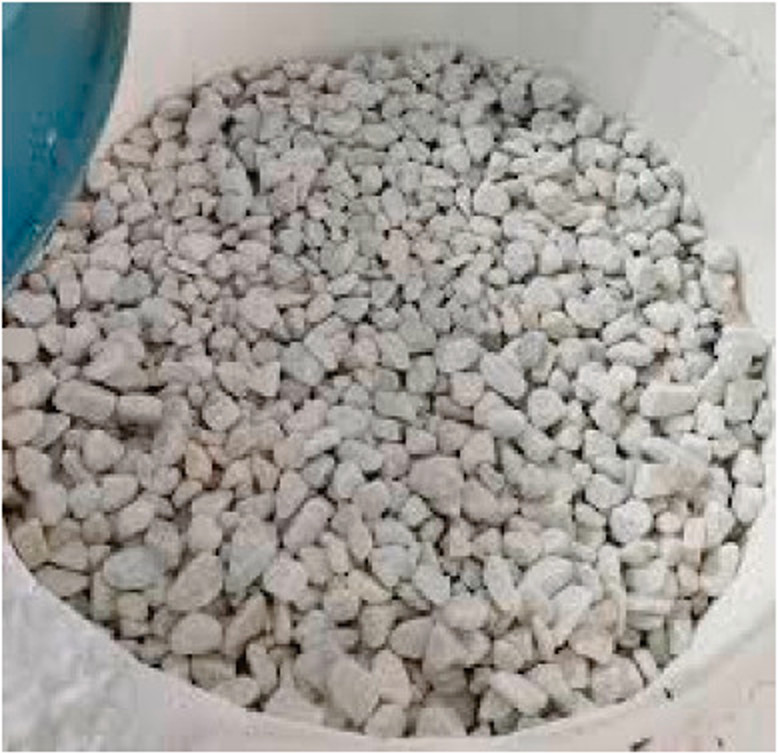
“Our analysis shows that packed beds with sensitive heat materials are the most mature and cost-effective option, while phase change material-based systems offer higher efficiency potential – achieving efficiency improvements of up to 55% – but face challenges in material costs, availability and scalability,” the team said. “Hybrid and cascade configurations show promise in simulations, although experimental data remain limited.”
Concluding their research, the team said that while CTES research for LAES has advanced significantly in recent years, it remains fragmented. “Closing this gap will require a more coordinated and interdisciplinary research effort, combining thermal engineering, materials science, control systems and economic modeling,” she added.
Tafone said his team is now “focusing on moving beyond idealized modeling to experimentally validated and dynamically operated CTES systems. In particular, we are interested in hybrid sensible-latent storage concepts, different geometries, long-term cycling behavior and techno-economic life cycle assessment under realistic operating conditions. The goal is to bridge the gap between academic concepts and deployable industrial solutions for large-scale energy storage.”
The review appeared in “Progress and Prospects of Cold Thermal Energy Storage for Liquid Air Energy Storage Systems – A Critical Review”, published in Renewable and sustainable energy assessments. The review was conducted by researchers from Singaporean research platform Tumcreate and Nanyang Technological University, Spain’s University of Lleida, Ireland’s University College Dublin, Denmark’s Technical University, Britain’s University of Birmingham and Poland’s Warsaw University of Technology.
This content is copyrighted and may not be reused. If you would like to collaborate with us and reuse some of our content, please contact: editors@pv-magazine.com.
