

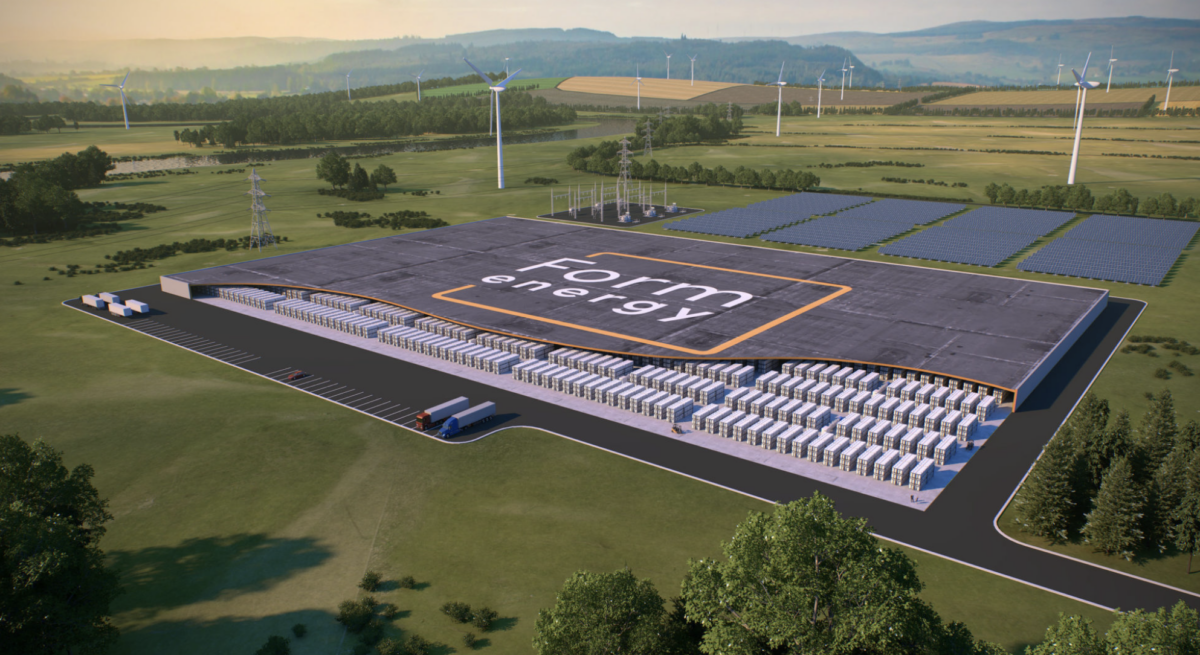
Researchers at TU Berlin say early demand for 24-hour carbon-free electricity could help bring advanced energy technologies to market faster through technology learning effects. The grant for the research was provided by Google, which has since announced plans to build the world’s largest iron-air battery.
Early adoption of 24/7 carbon-free energy purchasing could quickly reduce the costs of new energy generation and storage technologies, potentially accelerating deployment and making 24-hour clean energy commercially viable, according to researchers from TU Berlin and Princeton University.
The research suggests that a virtuous circle of innovation can be activated if a relatively small number of companies and governments commit to 24/7 carbon-free electricity. Learning from accelerated, early implementation could have a multiplier effect on cost savings for emerging technologies.
Corporate carbon accounting frameworks vary widely in quality and approach. Amid growing calls for purchasing approaches that better align electricity generation and consumption over time, the most ambitious corporate buyers worldwide are pursuing 24/7 clean energy purchasing, including tech giants like Google, which provided grant funding for the research. Such commitments could help bridge the “valley of death” – the gap between early investments and commercial viability – for emerging clean energy technologies, as Iegor Riepin, a postdoctoral researcher at TU Berlin, explained.
“If you really want to squeeze the last percent of CO₂ out of your portfolio, advanced energy technologies end up in the cost-optimal portfolio,” Riepin told pv magazine. One of the co-authors of ’24/7 CO2-free electricity matching accelerates the adoption of advanced clean energy technologies’, published in JouleRiepin said achieving very high carbon-free energy scores of 98% to 100% in certain locations could result in a significant cost increase if relying primarily on mature technologies such as solar energy storage, wind energy and lithium-ion batteries.
Instead, customers who make early commitments to 24/7 clean energy are incentivized to invest in newer energy generation and storage technologies, which provide much-needed revenue and real-world operational data. This could lead to a “virtuous cycle” of investment and technological learning, which Riepin and colleagues have quantified.
Subscribe to pv magazine Global
More expert analyzes of 24/7 matching can be found in the March issue of pv magazine Global.
Subscribe here to secure your monthly copy.
“By using a number of technology learning models, we can estimate how much dollar investment can make 24/7 carbon-free electricity cheaper, making earlier adoption of advanced technologies more affordable,” Riepin said. These dynamics may apply to a range of emerging energy technologies with uncertain learning rates, including long-term energy storage and advanced geothermal generation.
The 24-hour purchase of clean energy directly reduces emissions, provides learning opportunities for advanced technologies and in turn helps these technologies become more cost-competitive, according to the study in Joule.
For their model, the researchers analyzed how additional implementation experience, driven by 24/7 purchasing, could reduce the costs of two technologies: an Allam-cycle generator with carbon capture and storage (CCS), a proposed type of near-zero emissions energy system, and an iron-air battery that represents long-term energy storage.
The mathematical model applies a learning rate for each technology based on the cost savings resulting from each doubling of cumulative implementation experience. The numbers observed in the real world range from almost zero for nuclear power and hydropower to about 21% for lithium-ion batteries, the study said.
For the Allam generator and the iron-air battery, the model revealed that even over a wide range of possible cost outcomes, early deployment, driven by 24/7 carbon-free energy commitments, “could substantially reduce technology costs.” The researchers found that the multiplier effect of falling costs and increasing experience accelerates to the point where the technologies become cost-competitive options for the broader electricity system.
The study provides an illustrative example of how relatively small 24/7 CO2-free electricity commitments can influence the deployment of technology. For iron-air batteries, the researchers estimate that commitments worth around 3% of German corporate electricity demand could be enough to bring long-term storage of iron-air batteries to economic break-even by 2030.
Since the research work was conducted, Google has announced plans to deploy it around the worlds largest iron-air battery to support a new data center in the United States.
The full document is available at Joule.
This content is copyrighted and may not be reused. If you would like to collaborate with us and reuse some of our content, please contact: editors@pv-magazine.com.
