

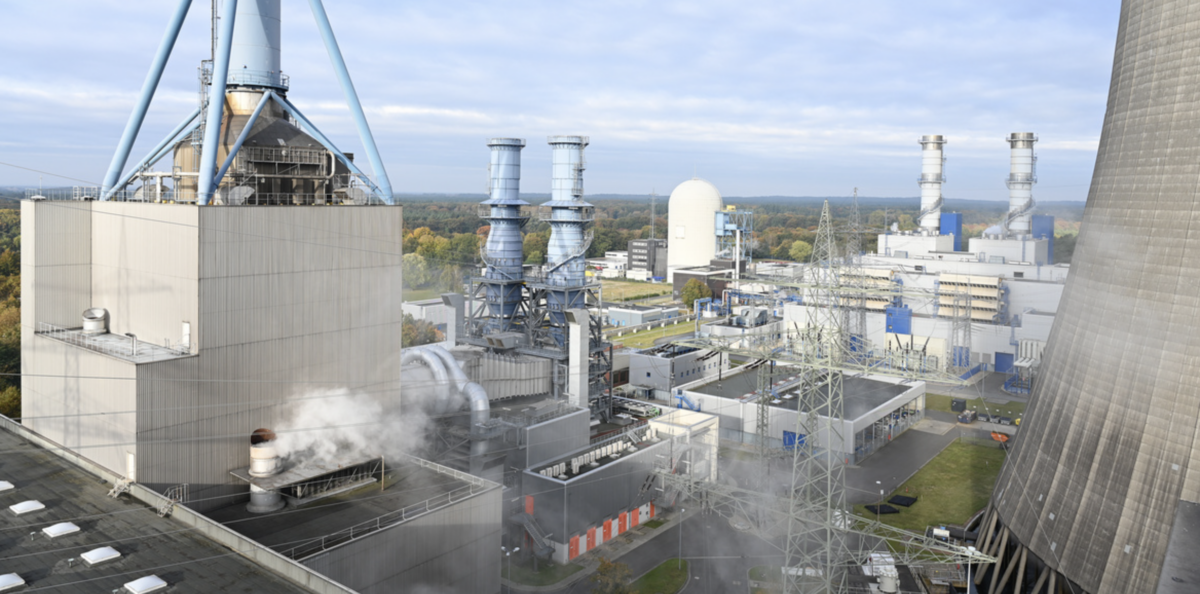
A study by Forum Ökological-Soziale Marktwirtschaft (FÖS), commissioned by Green Planet Energy, shows that electricity from gas-fired power stations can reach €0.67 per kWh, largely due to external costs, while renewable-based backups remain much cheaper.
For a built gas-fired power plant with a capacity of 500 MW and 1,000 full load hours – a realistic assumption for backup operation – the levelized electricity costs are approximately €0.192/kWh, of which €0.068/kWh relates to gas, the most volatile component. If we add €100 per tonne of CO₂ in the context of emissions trading, the costs will rise to €0.23/kWh. Including the externalized costs – which are not borne by the plant operator – the total amounts to €0.35 to €0.67/kWh. Geopolitical crises can drive up costs even further.
The short study, prepared by Berlin-based energy think tank FÖS f0r Green Planet Energy, says that gas-fired power plants, planned by the German federal government as a backup for an increasingly sustainable grid, are “one of the most expensive options for security of supply.”
The study compares the levelized costs of gas-fired power stations, including emissions trading, with wind and solar energy, which remain below €0.10/kWh even under conservative assumptions. It also takes into account renewables-based backup options, which could avoid costs such as CO₂ and methane climate damage, government subsidies, crisis-related costs and long-term dependence on fossil imports.
Price spikes caused by the war in Iran show how quickly gas can become a cost risk in electricity generation. Crisis events, such as the Russian invasion of Ukraine, could increase the levelized cost of natural gas to €0.53/kWh, excluding climate damage.
Subsidies are also needed; without these, new gas-fired power stations are not profitable. The study estimates that the 10 GW of gas capacity initially planned by the federal government would entail approximately 6.6 billion euros in support costs. Florian Zerzawy, lead author and head of energy policy at FÖS, noted that Germany already heavily subsidizes natural gas, from billions in subsidies for storage and LNG terminals to tax exemptions for electricity generation. These subsidies artificially reduce the electricity costs of gas and distort competition with renewable energy sources.
The climate impact of gas is systematically underestimated. Each new factory emits up to 8.4 million tons of CO₂ during its lifetime, causing up to 7 billion euros in climate damage, which is not covered by the CO₂ price. For Germany, which imports 95 percent of its gas, a large portion of these emissions occur abroad during extraction and transport. Depending on the source and transportation, natural gas can be more damaging to the climate than coal.
In contrast, storage, bioenergy and green hydrogen can provide electricity at comparable or lower costs than natural gas. Sönke Tangermann, board member at Green Planet Energy, said these renewable options avoid the geopolitical price spikes that repeatedly drive up the cost of fossil fuels. The organization added that it advocates technology-neutral procurement, stable investment conditions for renewable energy sources and stronger grid flexibility.
The study “Teure Option für die Versorgungssicherheit: Die wahren Kosten von Strom aus Erdgas” is available free of charge download as PDF.
This content is copyrighted and may not be reused. If you would like to collaborate with us and reuse some of our content, please contact: editors@pv-magazine.com.
