

March 31, 2026
The Hawaii Public Utilities Commission (PUC) has approved the Kaawanui Solar and Energy Storage Project on Kaua’i, furthering the island’s efforts toward 100% renewable generation.
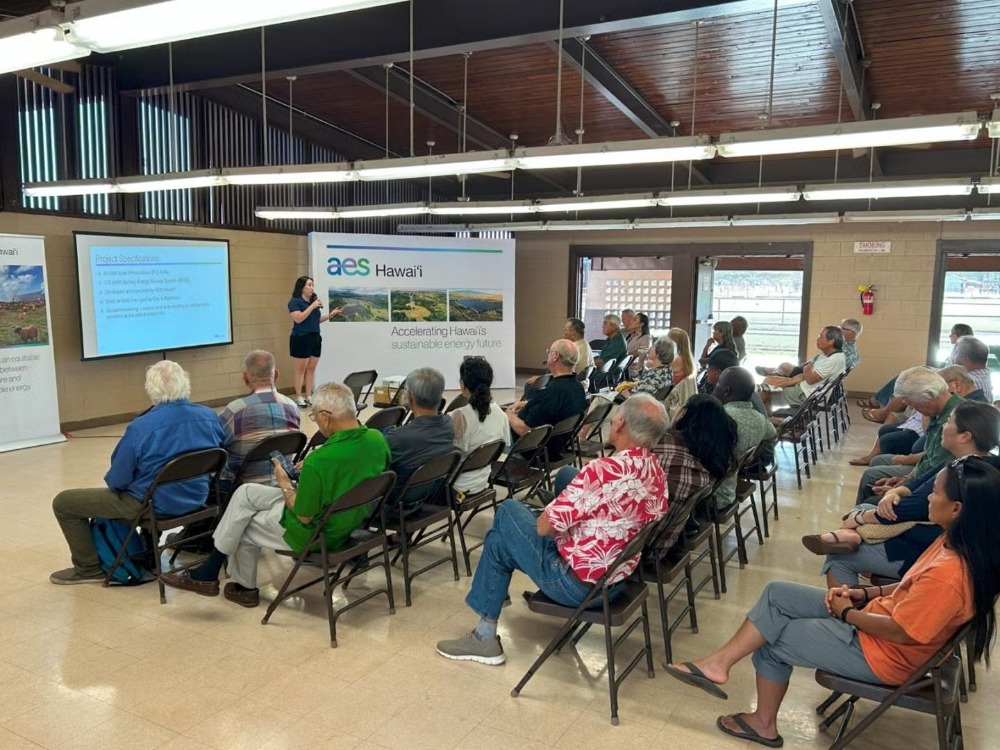
Led by AES Hawaiithe Kaawanui solar energy The project includes a 43 MW solar array and four-hour battery storage capacity. In total, the battery can store up to 172 MWh of electricity for use during periods without solar power.
David Bissell, president and CEO of the Kaua’i Island Utility Cooperative (KIUC)says once powered, the project would power the equivalent of 16,000 homes per year. That would account for 17.5% of the island’s total energy needs and would offset more than 179 million liters of fossil fuel over 25 years – avoiding around 2.3 million tonnes of CO2 emissions.
Bissell adds that the storage aspect of the new project is key to achieving Kaua’i’s renewable generation goals.
“KIUC routinely runs on 100% renewable energy on sunny days,” says Bissell. “Our key challenge in achieving the state’s 100% renewable energy mandate by 2045 is eliminating our use of fossil fuels during periods without solar power. Projects like this are critical to achieving that goal.”
AES is proud to continue the partnership, said Nick Molinari, the company’s senior director of development. He called the approval “an important milestone” for both AES and KIUC in their pursuit of sustainable energy generation across the island, which is a by-product of their many years of collaboration.
Connecting Kaawanui to the electrical grid
The proposed project will be AES and KIUC’s third in the Rainbow State, officials say, with the two dating back to 2019 and the Lāwa’i Solar + Storage Project. At the time, that project was the largest solar and storage system in the world. Two years later AES, KIUC and de US Navy collaborated on the Kekaha Solar + Storage project, also known as the AES PMRF project.
The project’s interconnection with the broader Hawaiian power grid will require a new switching station, which will be constructed adjacent to the Kaawanui solar field itself. This new structure will enable KIUC to dismantle its Kaumakani and Kekaha electrical substations and replace them with a single location.
The electricity generation and climate-related benefits of the Kaawanui Solar project speak for themselves, but the project’s construction brings a host of other benefits, representatives say. The project will deliver an estimated $365 million in savings to KIUC through a power purchase agreement with AES, allowing residential customers to save up to $21.08 per month over the 25-year operating period.
Additionally, the project blueprints include a “compatible agriculture” component. AES hopes to partner with a local company with expertise in land management, livestock farming and sustainable agricultural colocation practices.
“KIUC has set and continues to meet aggressive renewable energy goals, well ahead of state mandated goals, and at a pace that puts the state at the forefront of achieving the ultimate goal of 100% renewable energy,” said Hawaii State Senate chairman Ron Kouchi. “I am very pleased that the PUC and Consumer Advocate worked with KIUC to grant timely approval so that the project can be completed in a manner that provides maximum benefit to the cooperative’s members while supporting our agricultural goals for Kaua’i.”
Tags: energy storage, Hawaii, project, storage, The AES Corporation
