
Close Menu
  • News
  • Industry
  • Solar Panels
  • Commercial
  • Residential
  • Finance
  • Technology
  • Carbon Credit
  • More
    • Policy
    • Energy Storage
    • Utility
    • Cummunity
What's Hot

Fraunhofer ISE develops colored film technology for patterned solar panels

April 23, 2026

Thermoacoustic heat pumps are on the verge of commercial breakthrough – SPE

April 23, 2026

The federal court has halted Trump administration orders that hinder solar and wind energy development

April 23, 2026
Facebook X (Twitter) Instagram
Solar Energy News
Thursday, April 23
  • News
  • Industry
  • Solar Panels
  • Commercial
  • Residential
  • Finance
  • Technology
  • Carbon Credit
  • More
    • Policy
    • Energy Storage
    • Utility
    • Cummunity
Solar Energy News
Home - Technology - How you can generate hydrogen at home with recycled solar panels – SPE
Technology

How you can generate hydrogen at home with recycled solar panels – SPE

solarenergyBy solarenergyApril 14, 2026No Comments3 Mins Read
Facebook Twitter Pinterest LinkedIn Tumblr Email
Share
Facebook Twitter LinkedIn Pinterest Email

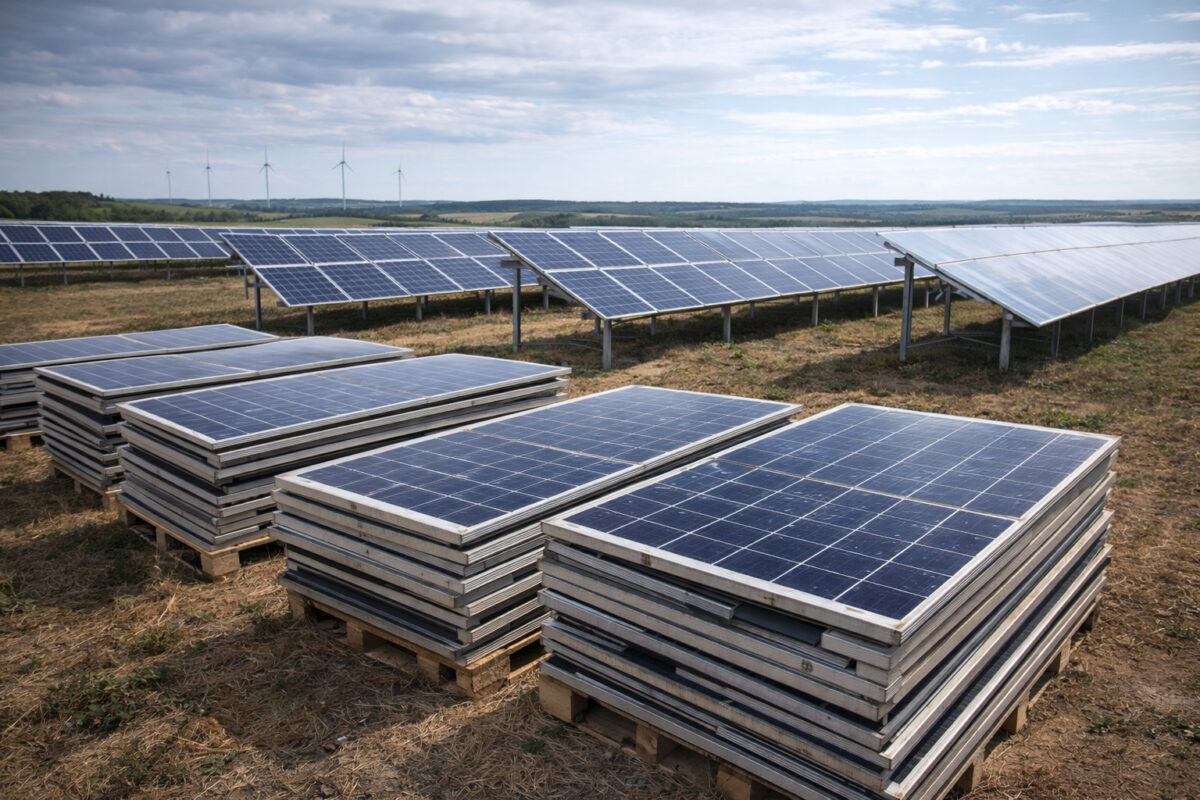
Scientists in Spain have developed a cheap, easy-to-deploy hydrogen system powered by discarded solar panels. The residential solution reportedly achieves a levelized hydrogen price of approximately $5.8/kg.

April 14, 2026
Pilar Sanchez Molina

A Chilean research team has developed a residential-scale system to produce green hydrogen using discarded photovoltaic modules.

The proposed solution combines end-of-life solar panels, which still retain 80% to 90% of their original capacity, with a proton exchange membrane (PEM) electrolyzer. Unlike conventional systems, which rely on power electronics such as inverters or maximum power point trackers, this approach uses internal reconfiguration of the PV module to tailor the current-voltage curve to the electrolyzer’s requirements. This eliminates the need for additional components and reduces system complexity, the scientists explained.

The system configuration changes the electrical architecture of the panel by connecting subsets of cells in parallel, allowing for more efficient coupling to the electrolyzer. “By accessing internal busbars to create custom parallel substrings, this voltage matching strategy can be generalized to other standard architectures, such as 60- or 96-cell modules,” the research team said. “This flexibility allows the system to overcome the heterogeneity of waste panels, enabling customized voltage tuning and the isolation of localized cell faults in different PV technologies.”

According to the researchers, the system achieves an annual energy yield equal to 88% of the yield obtained with power electronics-based optimization, while maintaining operational simplicity, which is a key advantage for residential use.

Experimental results, validated under real conditions, show a daily hydrogen production of approximately 345 liters. This significantly exceeds the estimated basic requirement for basic household uses such as cooking or heating, which is approximately 120 liters per day. The system achieves a solar hydrogen efficiency of approximately 7%, utilizing more than 70% of the theoretical maximum for simplified configurations.

See also  BIPV for pilot projects with prefabricated net-zero homes in Australia – SPE

From an economic perspective, the system delivers a levelized hydrogen cost (LCOH) of approximately $5.8/kg, representing an 18% reduction compared to more complex reference systems. The cost benefit is mainly due to the elimination of power electronics and the reuse of existing PV modules.

The researchers say the concept could help tackle two challenges at once: the growing amount of photovoltaic waste and the high cost of green hydrogen. Reusing panels extends their lifespan and reduces pressure on raw material supply chains.

However, the authors note limitations, including lower efficiency compared to systems with advanced electronic controls and dependence on variable solar radiation. Nevertheless, they believe that the system’s simplicity, low cost and ease of integration make it a promising option for decentralized applications.

The work, entitled “Green hydrogen production using discarded photovoltaic panels for household applications”, was published in Energy conversion and management.

This content is copyrighted and may not be reused. If you would like to collaborate with us and reuse some of our content, please contact: editors@pv-magazine.com.

Popular content

Source link

generate home hydrogen panels recycled solar SPE
Share. Facebook Twitter Pinterest LinkedIn Tumblr Email
solarenergy
  • Website

Related Posts

Fraunhofer ISE develops colored film technology for patterned solar panels

April 23, 2026

Thermoacoustic heat pumps are on the verge of commercial breakthrough – SPE

April 23, 2026

The federal court has halted Trump administration orders that hinder solar and wind energy development

April 23, 2026
Leave A Reply Cancel Reply

Don't Miss
Technology

Inlyte proves first full iron-sodium battery system in factory testing – SPE

By solarenergyDecember 12, 20250

According to Inlyte, the tested unit contains what it describes as the world’s largest sodium…

Belgian startup raises $2.5 million for grid orchestration software – SPE

December 13, 2024

First attempt to build tandem solar cells based on perovskiet, transition metal dichalcogenide

July 8, 2025

North -American VPP -Market reaches 37.5 GW Flexible capacity

September 17, 2025
Stay In Touch
  • Facebook
  • Twitter
  • Pinterest
  • Instagram
  • YouTube
  • Vimeo
Our Picks

Fraunhofer ISE develops colored film technology for patterned solar panels

April 23, 2026

Thermoacoustic heat pumps are on the verge of commercial breakthrough – SPE

April 23, 2026

The federal court has halted Trump administration orders that hinder solar and wind energy development

April 23, 2026

Zendure launches battery ranges for residential PV – SPE

April 23, 2026
Our Picks

Fraunhofer ISE develops colored film technology for patterned solar panels

April 23, 2026

Thermoacoustic heat pumps are on the verge of commercial breakthrough – SPE

April 23, 2026

The federal court has halted Trump administration orders that hinder solar and wind energy development

April 23, 2026
About
About

Stay updated with the latest in solar energy. Discover innovations, trends, policies, and market insights driving the future of sustainable power worldwide.

Subscribe to Updates

Get the latest creative news and updates about Solar industry directly in your inbox!

Facebook X (Twitter) Instagram Pinterest
  • Contact
  • Privacy Policy
  • Terms & Conditions
© 2026 Tsolarenergynews.co - All rights reserved.

Type above and press Enter to search. Press Esc to cancel.