

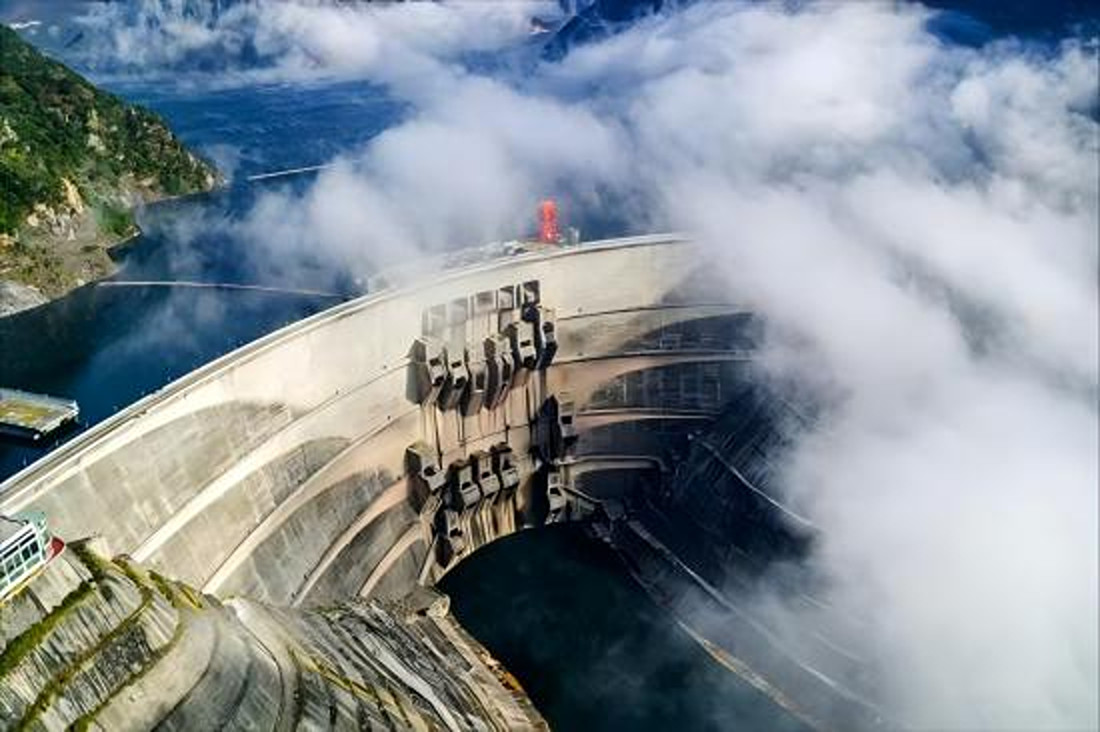
Huaneng has commissioned the 5.43 GW Xiaowan Hydropower-Solar Hybrid Project in Yunnan, combining 4.2 GW of hydropower and 1.23 GW of solar energy under a coordinated “hydro-solar intelligent control” system that integrates 16 PV installations.
China’s state-owned energy company Huaneng Group today awarded the contract for the Huaneng Xiaowan Hydropower-Solar Hybrid Project in Yunnan Province, southwest China.
The facility is operated by the company’s subsidiary Huaneng Lancang River Hydropower Co., Ltd. at the Xiaowan Hydropower Station. It has a total installed capacity of 5.43 GW, including 4.2 GW hydropower and 1.23 GW solar energy.
Huaneng said the project introduces an innovative “hydro-solar intelligent coordination” control technology that integrates electricity from 16 solar power plants through a single collection station and then transmits the combined output in addition to hydropower generation from the Xiaowan Hydropower Plant.
“By utilizing the reservoir’s large energy storage capacity and the hydropower plant’s millisecond responsiveness, the system enables coordinated operation of hydropower and solar energy and integrated storage and transmission,” the company said in a statement.
The project is reported to have overcome key technical challenges in coordinated stability control of hydro-solar energy. Based on a fully domestic controlled system for the hydropower plant, it has also achieved full localization of core equipment, including photovoltaic station monitoring systems, security equipment and static synchronous compensators (STATCOMs), Huaneng said.
The Xiaowan Dam is a 292-meter high double-curvature arch dam on the Lancang River in Yunnan. Completed in 2010, it is one of the tallest of its kind in the world. The installed power comes from six 700 MW Francis turbines.
With a huge reservoir capacity of approximately 15 billion m³, the dam plays an important regulatory role in the cascade system, enabling multi-year water storage, flood control, sediment retention and stable downstream management. Functioning as a giant natural battery, it is also essential for coordinating hydropower production with large-scale renewable energy generation throughout Yunnan province.
This content is copyrighted and may not be reused. If you would like to collaborate with us and reuse some of our content, please contact: editors@pv-magazine.com.
