

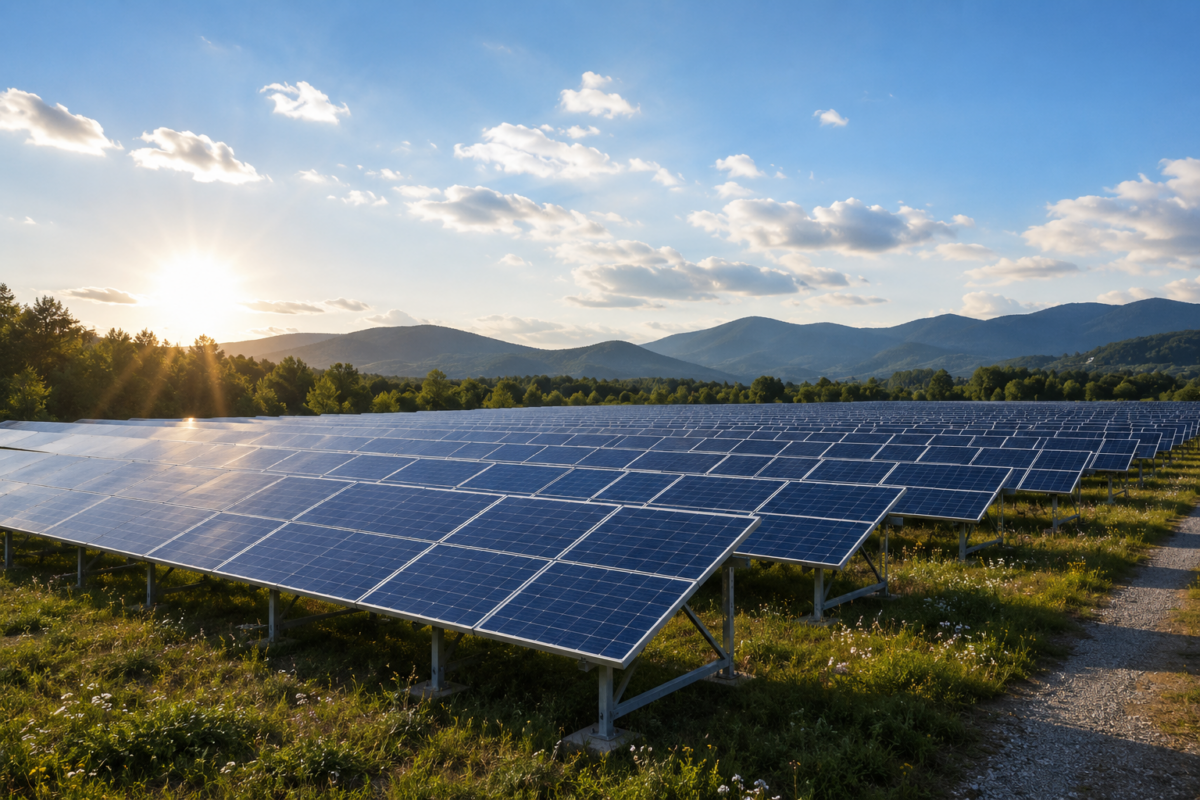
A China-based research team conducted a systematic review and meta-analysis of 147 studies on how solar PV systems change land surface processes, covering 609 installations worldwide and 11 key climate variables. The results show mixed but mostly significant environmental effects, including reduced wind speed, albedo and land surface or soil temperatures, in addition to increased soil moisture, while changes in air temperature remained largely insignificant.
A research team from China conducted a systematic review and meta-analysis of land surface process changes associated with solar PV systems.
“The key questions addressed in this systematic review are: (1) Which climate variables are affected by changes in land surface processes caused by PV systems, and are these changes significant? (2) At what scale do these changes occur, and what mechanisms underlie them? (3) What future research directions emerge from existing studies?” said the authors.
The review started with 4,909 publications related to land surface PV systems and processes. After removing reviews, reports, non-English articles, and studies that lacked direct comparisons between PV and non-PV climate conditions, the researchers screened 90 full-text articles. An additional 30 studies were identified from reference lists, in addition to 27 newly published and highly cited studies. The final dataset consisted of 147 studies.
These studies covered 609 operational PV systems worldwide and used three main methodologies: field observations, remote sensing and numerical simulations.
For the meta-analysis, the team evaluated eleven climate variables: daytime, daytime and nighttime air temperature; wind speed; relative humidity; albedo; daily, diurnal and nightly land surface temperature; soil temperature; and the groundwater content.
“A clear geographic bias was observed, with 93.6% of PV systems located in the Northern Hemisphere,” the researchers noted. “China (316 systems), the United States (104) and India (44) account for the largest shares.”
In terms of land cover, most of the PV systems examined were on grassland (208 systems), followed by bare land (173) and cropland (159). Dry areas dominated the sample, with 27.3% and 31.7% of systems in the BS (semi-arid steppe) and BW (arid desert) climate zones, respectively.
For temperature-related variables, the authors used the mean difference (MD) to quantify the absolute changes between PV and non-PV locations. For wind speed, relative humidity, albedo and groundwater content, they applied the ratio of means (ROM) to assess the percentage changes.
Overall, PV systems were associated with small, non-significant increases in daily air temperature (+0.03 C), daytime air temperature (+0.34 C), nighttime air temperature (+0.18 C), and relative humidity (+1.77%).
In contrast, several significant effects were observed, including a decrease in wind speed (−29.96%) and albedo (−17.49%), as well as a decrease in daily land surface temperature (−0.44 °C), daytime land surface temperature (−0.90 °C) and soil temperature (−2.42 °C), in addition to a significant increase in groundwater content (+38.60%). The nighttime land surface temperature showed a slight, non-significant decrease (-0.08 C).
Based on the findings, the team proposed an integrated framework to assess PV-induced process changes on the land surface. “The core structure consists of five modules: underlying surface, research method, climate variable, land surface process and research scale,” they explained.
They added that the framework is intended to support stakeholders including researchers, PV technology developers, environmental impact assessors, site planners, energy agencies, manufacturers and other industry participants.
Their results are presented in “Land surface process changes induced by solar photovoltaic systems: a systematic review and future framework based on global evidence”, published in Geography and sustainability. Researchers from China’s Beijing Normal University and Tianjin University participated in the study.
This content is copyrighted and may not be reused. If you would like to collaborate with us and reuse some of our content, please contact: editors@pv-magazine.com.
