

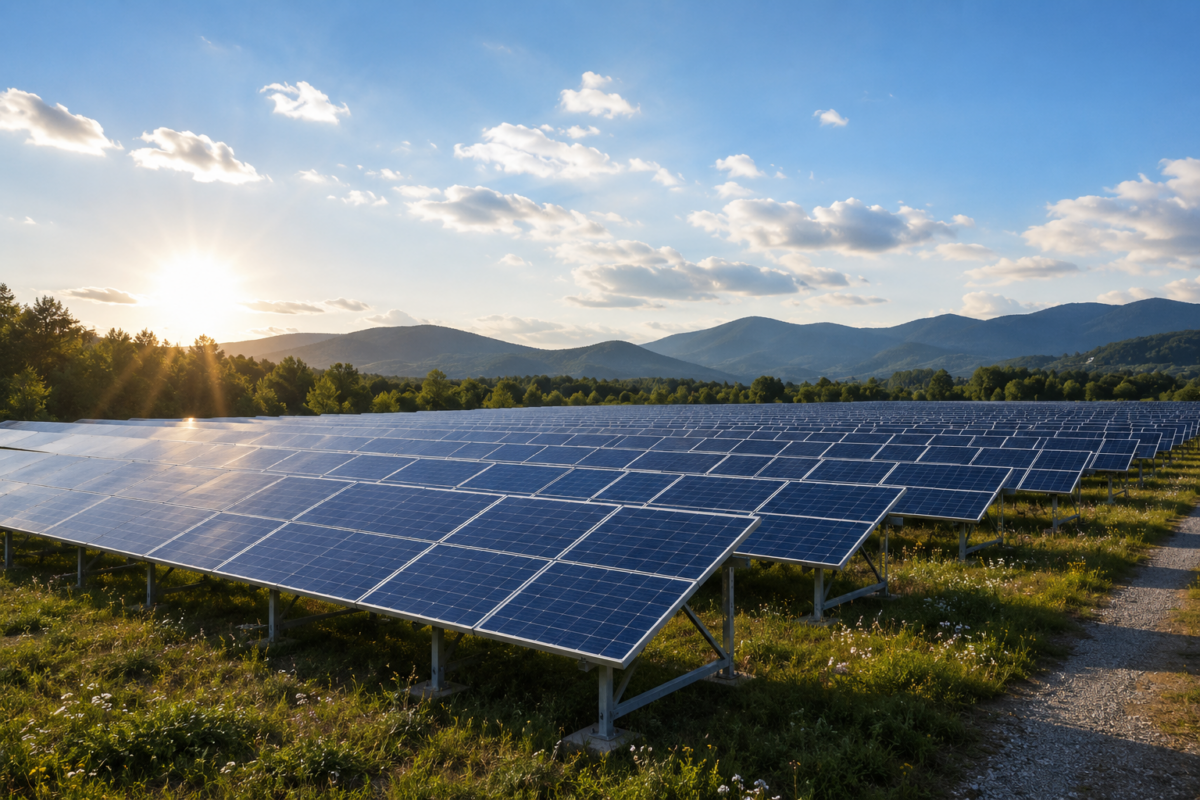
Since early March, European solar photovoltaics have generated enough electricity to avoid an estimated €10 billion in gas imports, saving an average of €110 million per day, according to SolarPower Europe.
According to calculations by the European PV association SolarPower Europe, since the escalation of the conflict in the Middle East in early March, European photovoltaic systems have supplied enough electricity to theoretically avoid additional gas imports worth 10 billion euros. In March, estimated savings averaged around €110 million per day.
Gas prices have increased noticeably due to the blockade of the Strait of Hormuz and damage to fossil fuel infrastructure. For example, European gas futures peaked in March at over €60/MWh – double the average of previous months. By mid-April, prices had fallen to around €38/MWh, before rising again to around €52/MWh.
SolarPower Europe notes that €10 billion would be enough to install around 8 GW of photovoltaic capacity in the EU, equivalent to around 12% of the total new capacity installed in 2025.
“While the full cost of the energy crisis has yet to be determined, one thing is already clear: this is a price that Europe should not have to pay,” said Walburga Hemetsberger, CEO of SolarPower Europe. She added that the energy crisis caused by Russia’s invasion of Ukraine has cost the EU a total of €1.7 trillion so far.
In 2025, solar photovoltaics met 12.5% of Europe’s electricity demand, up from 10.3% the year before, according to the latest annual report from the Copernicus Climate Change Service, part of the EU’s Copernicus Earth Observation Programme. The report describes how the climate in Europe and the Arctic has changed over the past year and increasingly also tracks the climate-related transformation of the energy system.
Copernicus experts attribute the increase mainly to the expanded photovoltaic capacity, which reached 65 GW in 2025. This was supported by above-average solar radiation in north-west, central and eastern Europe, partly offset by below-average levels in much of southern and northern Europe. The Copernicus Climate Change Service also cites lower concentrations of aerosol in the atmosphere as a contributing factor, reflecting the impact of air quality regulations.
In 2025, renewable energy sources collectively met 46.4% of Europe’s electricity demand, a similar level to the previous year. The contribution of wind energy fell from 18.4% to 18%. Combined, however, wind and solar energy generated more electricity than coal and gas-fired power stations for the first time.
This content is copyrighted and may not be reused. If you would like to collaborate with us and reuse some of our content, please contact: editors@pv-magazine.com.
