

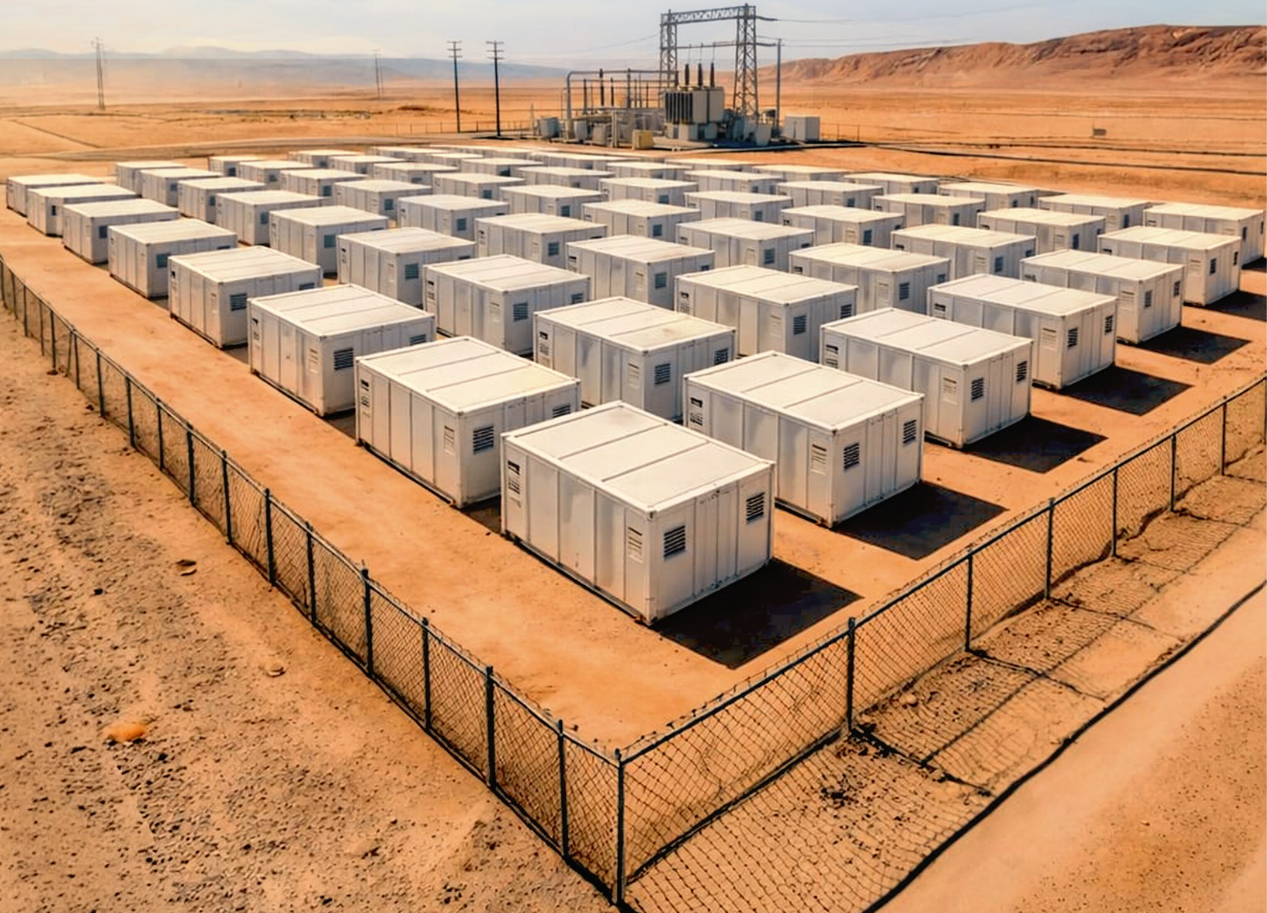
India immediately needs about 10 GWh of battery storage to stop renewable energy curtailment when its coal fleet cannot fall below the technical minimum, according to a new analysis from energy think tank Ember.
With solar power flooding the grid around noon, several coal-fired power plants are having to operate at or even below their minimum technical load (MTL) – the lowest level at which they can safely operate. As a result, grid operators are limiting clean electricity to keep coal-fired power plants online for the overnight surge in demand and to provide necessary reserves.
Ember’s analysis found that in the 2025-2026 financial year, which runs from April 1, 2025 to March 31, 2026, approximately 2.1 TWh of renewable electricity generation, equivalent to 1.3% of total renewable electricity generation, was curtailed to run coal-fired power stations at their minimum technical load. The report estimates that around 10 GWh of energy storage, charged during peak solar hours, would have been sufficient to absorb this surplus of renewable generation, keep coal-fired power stations above their minimum technical load and avoid curtailment altogether.
“The curtailment of solar and wind energy is becoming a visible part of India’s real-time grid balancing, and volumes are already noticeable and rising,” said the report’s author, Neshwin Rodrigues, Senior Energy Analyst at Ember. “Without sufficient flexibility, including storage, this could become a constraint on the next phase of renewable energy growth.”
The report highlights that the core problem is that coal still provides almost all the flexibility of the electricity grid, including additional reserves. As solar power capacity has grown, coal is moving from almost full production at night to its lowest point around noon every day.
For example, on March 6, 2026, solar and wind reached 41% of the generation mix around noon, causing coal generation to drop by about 49 GW in six hours before having to rise again by 51 GW in the evening as solar collapsed. “Coal was built for sustained high production, not for this daily deep cycle,” says Rodrigues.
Once coal-fired power plants reach their minimum technical load – around 55% of rated capacity – they can no longer provide downward reserves, and renewable energy generation would have to be curtailed to keep the fleet at this technical minimum. In April 2026, coal exceeded this floor in more than half of all afternoon shipping intervals. Restrictions on renewables accounted for 37% of regulatory downturns that month, compared to almost zero a year earlier.
“This is a restriction that is purely necessary to keep the coal-fired power stations at their MTL,” says Rodrigues. “Before the system even takes into account reserve requirements or grid limitations, renewable energy is being cut back simply to make room for coal to remain useful. The limitation is structural.”
As solar capacity increases, the report highlights that curtailment of clean electricity is increasing as the country fails to deploy alternatives such as battery storage for grid flexibility. India added about 24 GW of solar capacity between October 2025 and April 2026, reaching about 154 GW. Peak hour curtailment had returned to 4% of solar and wind generation by April 2026, similar to the most curtailed months in late 2025, despite April falling outside the worst seasonal window.
