

Industrial electrification is being held back by electricity costs in Britain, speakers at the Clean Power 2030 Summit in London said.
Ben Westerman, director of policy and advocacy at Electrify Britain, said British electricity prices are “cripplingly high” compared to the rest of the G7 and most of Europe, creating a barrier to companies’ plans to decarbonize the economy.
The conversation around electrification tends to focus on a selection of energy-intensive manufacturing industries such as steel, chemicals and concrete, but the “vast, vast majority of decarbonization comes from companies that are not considered energy intensive,” Westerman added.
He said this vision “of the economics of a politician’s imagination” does not reflect the reality of industrial electrification and decarbonisation in Britain, where these energy-intensive industries are largely in decline and play an increasingly diminishing role in the country’s economy. The clusters of energy-intensive industries on the British coast are currently the focus of electrification policy, but Professor Peter Taylor, professor of sustainable energy systems at the University of Leeds, said: “We really don’t have a policy for the rest of the industry.”
Solving this, Taylor says, requires shifting the emphasis from supply to demand, to “understanding what the demand for electrification might be” if electricity prices were “appropriate,” and then developing ways for businesses to choose electrification.
Westerman said no country that has successfully implemented large-scale electrification has done so without effectively subsidizing electricity for businesses. For Britain, most of this is largely low-intensity industries.
The demand for data centers is a hot topic in the sector, but the extent to which this will influence future electricity demand is unclear. Westerman suggested a balance needs to be struck for data centers that do come online in Britain, as some companies choose to move away from the grid and use behind-the-meter generation to power their operations. “We can’t just subsidize Google’s energy,” he said, but added that behind-the-meter generation poses system cost and social backlash issues, so a considered approach to data center electrification and load management will be needed.
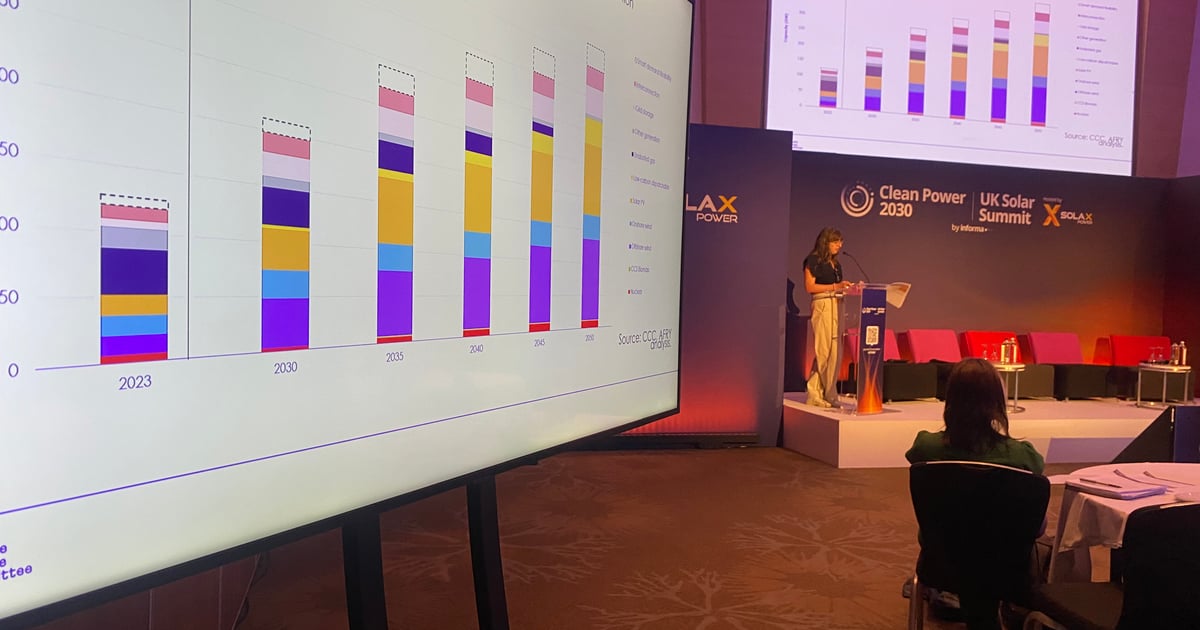
The panel discussion followed a presentation by Rachel Hay, head of energy supply at the Climate Change Committee, who said cutting the price of electricity was “key” to continuing the UK’s reduction in carbon emissions. She added that further reductions on top of achievements to date will come from electrification, rather than just replacing current electricity generation with renewable energy sources.
