

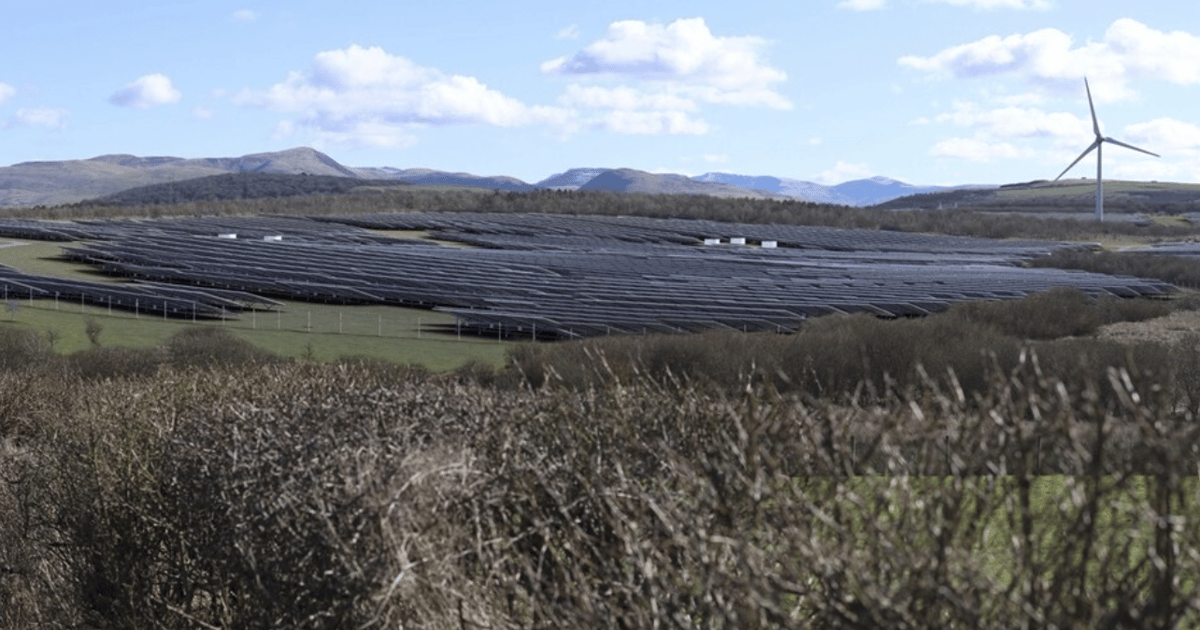
The Department for Energy Security and Net Zero (DESNZ) has granted a development consent (DCO) to Firma Energy and ib vogt’s 150MW Dean Moor solar project, which is expected to be built between Gilgarran and Branthwaite in Cumbria.
The project will be developed by FVS Dean Moor Ltd, a joint venture between Leeds-based solar developer Firma Energy and the UK arm of German solar developer ib vogt. The company has not given a timetable for when it expects to complete the construction work, but has indicated in documentation accompanying the project application that it expects Dean Moor to continue operating for 40 years.
“Dean Moor will make a meaningful contribution to Britain’s clean energy transition, and we look forward to moving on to the next phase of delivery,” said Daniel Kiremidjian, head of UK and Scandinavia at ib vogt.
“We are accelerating our drive to homegrown clean energy that we control to protect the British people and cut bills for good,” added Energy Secretary Michael Shanks, who pointed to the need to secure “energy independence” as a key benefit of renewable energy projects such as Dean Moor.
“It is crucial that we learn the lessons from the conflict in the Middle East – solar energy is one of the cheapest forms of energy available and is the way we can get off the rollercoaster of international fossil fuel markets and secure our own energy independence,” Shanks said.
Building a strong portfolio of domestic clean energy generation has been a priority for the current administration, which has now approved 29 Nationally Significant Clean Energy Infrastructure Projects (NSIPs) since taking office. Solar projects with a capacity of more than 100 MW qualify as NSIPs. The Dean Moor project is the second solar NSIP to receive a DCO this week, following DESNZ’s approval of the 320 MW Peartree Hill project.
The Peartree Hill project is the 15the solar NSIP receives a DCO from the current government, and the award comes almost exactly a year after Cleve Hill, the country’s first solar NSIP, went into commercial operation.
Battery energy storage systems (BESS) are often used to improve the resilience of sustainable energy projects:RWE acquired a DCO last year for a co-located solar-plus-storage NSIP– but the BESS component of the Dean Moor project was removed during the consultation phase of the development.
In 2025, members of the public raised concerns about the safety of the BESS during the statutory consultation process, and although the project documentation expresses confidence that “the safety issue could have been addressed through an agreement with the Cumbria Fire and Rescue Service (CFRS)”, the developers ultimately decided to remove the BESS component.
