

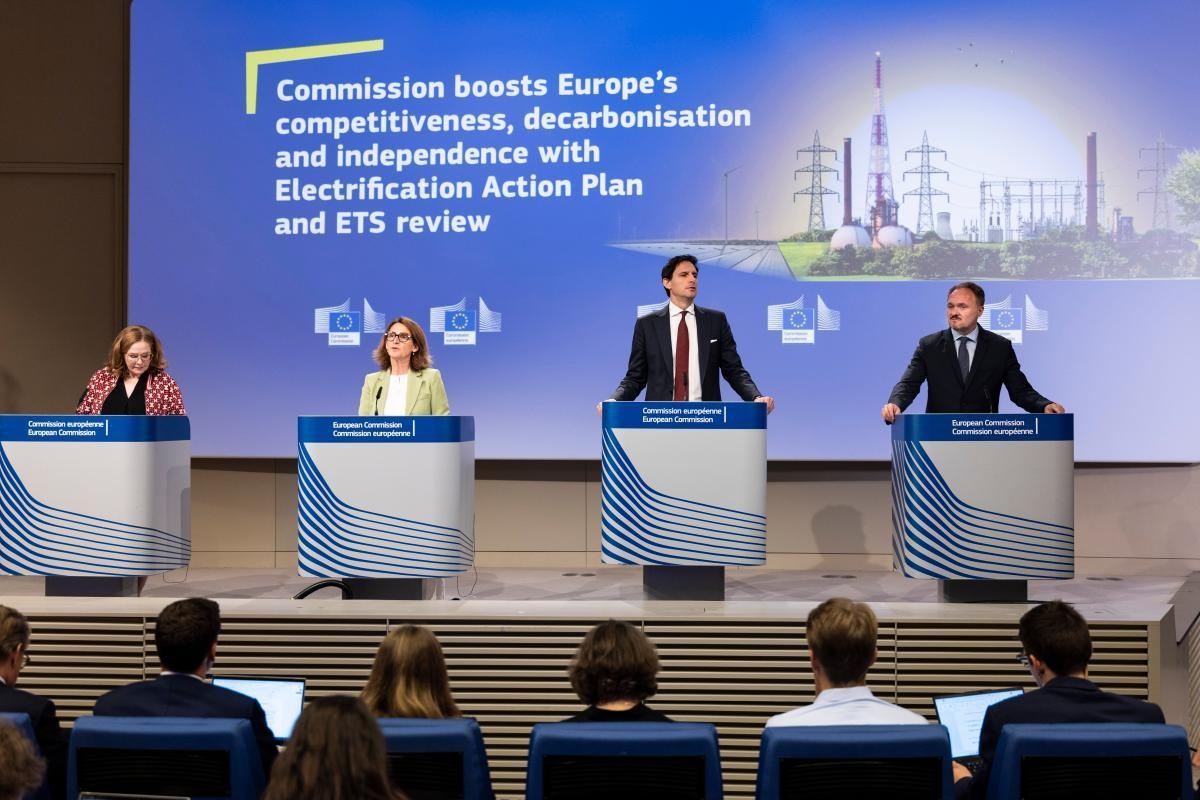
The European Commission published its electrification action plan on Friday, which aims to reduce Europe’s dependence on imported fossil fuels – a key driver of higher energy prices for households and industry in recent years.
Although renewable electricity now accounts for 70% of the EU’s energy mix, electrification of final energy demand has remained at 23% over the past decade. “We must therefore accelerate the electrification of energy-consuming sectors, especially industry, transport and buildings,” the European Commission said.
As part of the post-2030 Energy Union package, the Commission will set an indicative electrification target of 46% by 2040. It estimates that achieving this goal could reduce annual fossil fuel import costs by €240 billion ($274.5 billion) by 2040.
The Commission recognized that significant barriers remain. Electricity prices are often three times higher than gas prices, approval of grid connections can take years and companies still lack sufficient incentives to replace fossil fuels with electric technologies.
The action plan aims to address these challenges by reducing the price gap between electricity and fossil fuels, thereby encouraging the deployment of heat pumps, electric vehicles and battery energy storage systems.
“The action plan aims to create a level playing field between electricity and gas. The price difference between the two often discourages a switch to cleaner options such as heat pumps, electric vehicles and electric industrial processes,” the Commission said.
A key proposal would allow Member States to reduce grid charges for specific consumer groups and lower taxes for energy-intensive industries, while also encouraging faster deployment of smart meters. The Commission also wants to ensure that electricity is no longer taxed more heavily than gas. In addition, the plan includes measures to reduce the upfront costs of electrification technologies in the building, transport and industrial sectors.
Accelerating network expansion is another key priority. The Commission said long waiting times for grid connections and inefficient use of existing networks continue to slow electrification. It urges EU co-legislators to adopt the proposed network package before the end of the year to accelerate network development.
The plan also aims to accelerate the deployment of innovative clean energy technologies by supporting investment projects and expanding production capacity across the entire value chain. According to the Commission, the strategy could create hundreds of thousands of high-quality jobs.
To support industrial electrification, the Commission also plans to reform the EU Emissions Trading System (EU ETS). Proposed changes include adjusting the linear reduction factor for emissions allowances and, from 2030, more closely linking the free allocation of allowances to companies’ investments in decarbonisation.
The Bank for Industrial Decarbonization will also receive €100 billion to support industrial projects across Europe. The funding is expected to be channeled through the EU ETS Innovation Fund, which will support the first commercial deployment of innovative clean technologies across multiple sectors.
“Today we propose to make Europe the first electrically powered continent in the world,” said European Commission President Ursula von der Leyen. “From lowering electricity prices to adapting our carbon market to changing global realities, this is also a plan for investment and independence.”
