
Close Menu
  • News
  • Industry
  • Solar Panels
  • Commercial
  • Residential
  • Finance
  • Technology
  • Carbon Credit
  • More
    • Policy
    • Energy Storage
    • Utility
    • Cummunity
What's Hot

Dutch solar owners asked to switch off during peak periods to ease the distribution crisis

June 7, 2026

The hydrogen flow: Toyota demonstrates its racing prototype on liquid hydrogen

June 7, 2026

Era of electrification exposing Australia’s weakest link

June 6, 2026
Facebook X (Twitter) Instagram
Solar Energy News
Sunday, June 7
  • News
  • Industry
  • Solar Panels
  • Commercial
  • Residential
  • Finance
  • Technology
  • Carbon Credit
  • More
    • Policy
    • Energy Storage
    • Utility
    • Cummunity
Solar Energy News
Home - Policy - BNEF Summit highlights sluggish trade in low-carbon hydrogen and derivatives – SPE
Policy

BNEF Summit highlights sluggish trade in low-carbon hydrogen and derivatives – SPE

solarenergyBy solarenergyJune 5, 2024No Comments3 Mins Read
Facebook Twitter Pinterest LinkedIn Tumblr Email
Share
Facebook Twitter LinkedIn Pinterest Email

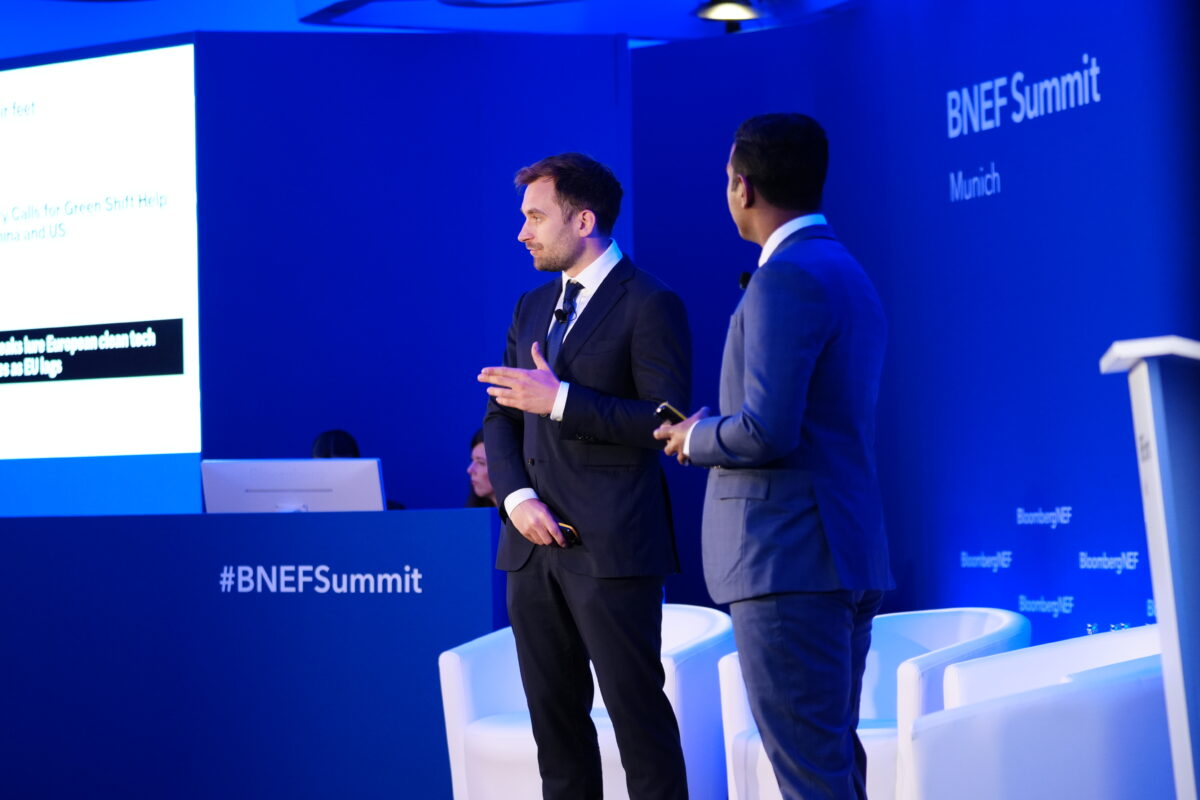
Analysts at the recent BNEF summit in Munich discussed delays in hydrogen adoption in European countries, noting that locations are crucial for predicting which hydrogen production plans will move forward. Projects in areas with large amounts of renewable energy have an advantage.

June 5, 2024 Sergio Matalucci

“The volumes for green hydrogen are very small today,” said Kajsa Ryttberg-Wallgren, executive vice president of H2 Green Steel, adding that the low-carbon steel is still a niche market.

Experts at the summit agreed that market segmentation is a key process for selecting potential customers for low-carbon hydrogen or low-carbon products.

“There are some customers who don’t need to dramatically change their production systems,” Ryttberg-Wallgren said, adding that a faster way to increase global demand for hydrogen would be to directly import more valuable products made with low-carbon hydrogen.

A significant difference between panelists had to do with the best way to handle blue hydrogen. According to Ryttberg-Wallgren, betting on the greenest options would be better. Bart Pescio, commercial director for Europe at OCI, says it would be more beneficial to focus on a portfolio of hydrogen projects, including blue hydrogen.

“OCI has started commercializing green ammonia, which we produce in Egypt,” Pescio said, adding that applications are limited and fragmented for now. “We focused on different value chains.”

Pescio claimed that the Carbon Border Adjustment Mechanism (CBAM) will help the European Union avoid costs associated with the energy transition. “It’s a matter of time.”

Most analysts pointed the finger at the legislation.

“There are some bumps in the road. Another factor is regulation and the predictability of regulation,” said Werner Ponikwar, CEO of thyssenkrupp Nucera, the largest electrolyzer manufacturer in 2024. “We are still struggling with it.”

See also  Thornova Solar starts solar cell and module production in Indonesia – SPE

Ponikwar said a jump in demand could create bottlenecks in the coming years.

Different environments

Several experts emphasized the importance of the location, as a high share of renewable energy sources is needed to meet regulations supporting hydrogen development. Many laws have been passed but not yet implemented, and the few projects that are making progress are mainly in areas with a high share of green energy.

“The real question will come when we see the implementation of the regulation,” said Josche Muth, head of regulation and public affairs at Orsted.

Muth noted that Europe’s 2030 hydrogen targets are not binding, and said the European Union will most likely miss them. He claimed that the shipping sector will lead demand after the EU Emissions Trading System (EU ETS) is extended to maritime transport emissions. Similar considerations apply to the aviation sector.

For the time being, low-carbon hydrogen will mainly be used by refineries and in the production of steel and ammonia. But not all prospects are bleak. Europe has an advantage in the private sector, according to Allen Tom Abraham, head of sustainable materials at BloombergNEF.

“These companies are committed to achieving Net Zero, despite the difficulties,” Abraham said, adding that the series of adopted policies will help some European companies stay competitive. “Carbon prices in the bloc could rise to almost €200 per tonne by 2035, but CBAM will help them not lose their competitiveness on a global scale.”

However, Antoine Vagneur-Jones, head of trade and supply chains at BloombergNEF, said many European companies are moving elsewhere.

See also  Vertical bifacial PV outperforms tilted PV systems in Britain – SPE

“Where the action is really happening is across the Atlantic,” Vagneur-Jones said.

This content is copyrighted and may not be reused. If you would like to collaborate with us and reuse some of our content, please contact: editors@pv-magazine.com.

Source link

BNEF derivatives Highlights hydrogen lowcarbon sluggish SPE Summit trade
Share. Facebook Twitter Pinterest LinkedIn Tumblr Email
solarenergy
  • Website

Related Posts

Dutch solar owners asked to switch off during peak periods to ease the distribution crisis

June 7, 2026

The hydrogen flow: Toyota demonstrates its racing prototype on liquid hydrogen

June 7, 2026

Era of electrification exposing Australia’s weakest link

June 6, 2026
Leave A Reply Cancel Reply

Don't Miss
News

Solar and wind energy generation will deliver billions in air quality health benefits between 2019 and 2022

By solarenergyMay 29, 20240

A new study published The peer-reviewed journal Cell Reports Sustainability, which focuses on the air…

Dual-Component Controller for three-phase Sun Surface to a exceeding to less than 0.33%-PV Magazine International

March 24, 2025

Korean scientists improve the performance of tin monosulfide cells with new post-treatment

January 31, 2026

Massachusetts offers increased demand costs to stimulate energy storage – PV Magazine International

February 21, 2025
Stay In Touch
  • Facebook
  • Twitter
  • Pinterest
  • Instagram
  • YouTube
  • Vimeo
Our Picks

Dutch solar owners asked to switch off during peak periods to ease the distribution crisis

June 7, 2026

The hydrogen flow: Toyota demonstrates its racing prototype on liquid hydrogen

June 7, 2026

Era of electrification exposing Australia’s weakest link

June 6, 2026

‘Come out from behind your screen, our industry is ultimately about people’

June 6, 2026
Our Picks

Dutch solar owners asked to switch off during peak periods to ease the distribution crisis

June 7, 2026

The hydrogen flow: Toyota demonstrates its racing prototype on liquid hydrogen

June 7, 2026

Era of electrification exposing Australia’s weakest link

June 6, 2026
About
About

Stay updated with the latest in solar energy. Discover innovations, trends, policies, and market insights driving the future of sustainable power worldwide.

Subscribe to Updates

Get the latest creative news and updates about Solar industry directly in your inbox!

Facebook X (Twitter) Instagram Pinterest
  • Contact
  • Privacy Policy
  • Terms & Conditions
© 2026 Tsolarenergynews.co - All rights reserved.

Type above and press Enter to search. Press Esc to cancel.