

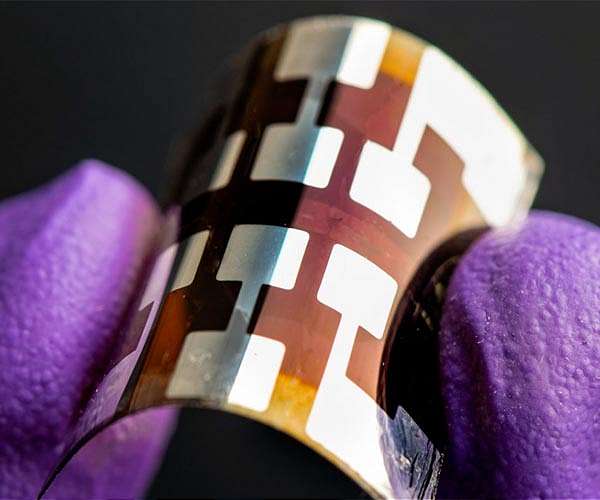
NREL is exploring long-term strategies for sustainable perovskite solar panels
Researchers at the National Renewable Energy Laboratory (NREL) are exploring the future of perovskite solar panels, focusing on scaling, deploying and designing panels that are recyclable.
Perovskite solar panels could play a key role in global efforts to reduce greenhouse gas emissions. With the technology still in its development stages, researchers emphasize the importance of designing these panels to minimize environmental impact.
“If you have a technology at a very early stage, you can design it better. It’s a cleaner slate,” said Joey Luther, a senior research fellow at the U.S. Department of Energy’s (DOE) National Renewable Energy Laboratory (NREL). ). ) and co-author of the newly published article in the journal Nature Materials. “It makes more sense at this stage to push perovskite PV towards greater sustainability. We are thinking about how we can ensure we have a sustainable product now, rather than facing sustainability issues at the end of its practical life to get.”
The article highlights the influential position of the PV research community to prioritize efforts in remanufacturing, recycling and reliability, with the aim of making perovskite PV one of the most sustainable energy sources available.
“Perovskites could unlock the next evolution of high-efficiency PV, and it is our responsibility to ensure they are sustainably manufactured, used and recycled,” said the study’s lead author Kevin Prince, a former graduate researcher at NREL who now conducts research into perovskites at the Helmholtz Zentrum Berlin in Germany.
While silicon solar panels dominate the industry and cadmium telluride (CdTe) panels have established recycling programs, perovskites are at a critical point where sustainability issues can be addressed from the start.
The most effective circular economy starts at the design stage, taking into account material sourcing, product lifespan and end-of-life management. Researchers propose to assess environmental impacts by looking at carbon emissions during production, embodied energy, sustainable material sourcing and the circularity of modules.
The journal article identifies critical sustainability issues for each component of a perovskite solar panel. For example, lead can be diluted with metals such as tin to reduce lead levels, although this can affect the efficiency and sustainability of solar energy. Expensive precious metals such as silver and gold can be replaced by cheaper alternatives such as aluminum, copper or nickel. Fluorine tin oxide is recommended over the scarcer indium tin oxide for front electrodes.
“We want to have the lowest amount of embodied energy in manufacturing,” Luther said. “We want to have the lowest amount of emissions in production. At this stage this is the opportunity to look at those components. I don’t think we need to change anything. It’s more a matter of what decisions need to be made, and these arguments certainly need to be discussed.”
The authors discuss several ways to improve the circularity of perovskite panels. Remanufacturing involves reusing parts from old modules to make new ones, while recycling converts waste materials into raw materials for reuse. Attention is needed to the specialized glass used in perovskite modules, which is crucial for structural support and protection while allowing maximum sunlight penetration. Setting up a recycling process for this glass will be essential as the use of PV increases.
Silvana Ovaitt, a PV researcher and co-author of the paper, noted that cleaner electricity grids will lead to cleaner manufacturing processes, further reducing emissions.
“Another concern is the transportation of the final modules and raw glass, as these are the heaviest items,” Ovaitt said. “Local production will be a great way to reduce carbon impact.”
The researchers explain that increasing the sustainability of PV modules, thereby extending their lifespan, is a more effective approach to reducing net energy, energy payback and CO2 emissions than designing solely for circularity. A longer lifespan means that panels need to be recycled less often.
“Ultimately we want to make them as sustainable as possible,” Luther said. “But we also want to take into account the aspects when that time comes. We want to be deliberate about how we can take them apart and reuse the critical components.”
Research report:Sustainability pathways for perovskite photovoltaics
