In a new weekly update for pv magazineSolcast, a DNV company, reports that smoke from wildfires in Canada and the US West Coast had a significant impact on radiation across North America throughout July, while Hurricane Beryl and higher atmospheric conditions created unstable cloud conditions. in the central and eastern United States.
Throughout July, smoke from wildfires in Canada and the west coast of the US had a significant impact on radiation emissions across North America, while Hurricane Beryl and higher atmospheric conditions created unstable cloud cover in the central and eastern United States. States cared.
Analysis using the Solcast API shows that the combined effects of reduced clear-sky radiation from smoke-related aerosols and cloud cover led to irradiance levels as low as 80% of long-term averages in July along the Gulf Coast, East Coast, and Midwest. In contrast, stable atmospheric conditions on the West Coast resulted in increased insolation, extending across the Rockies into West Texas.
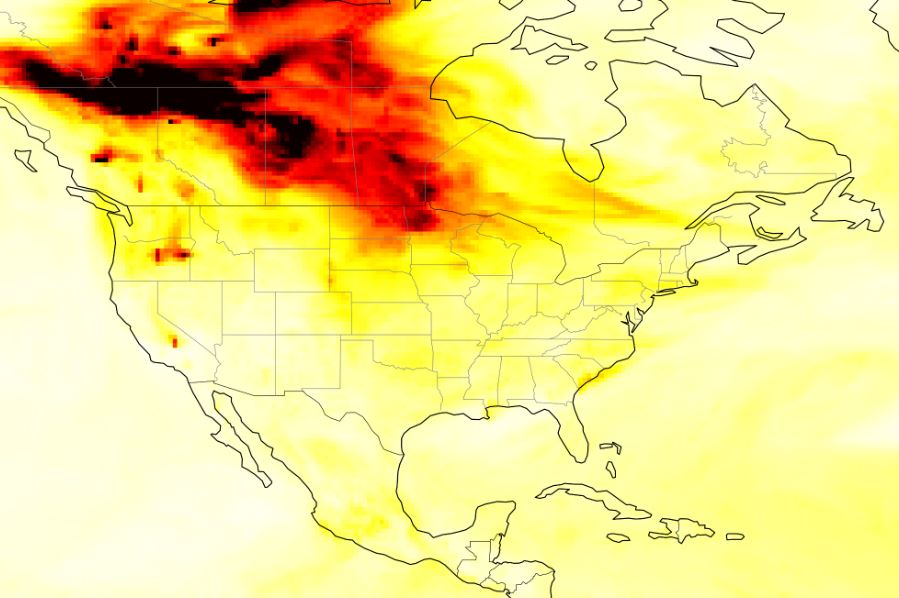
As the fires have raged, atmospheric aerosols have blown east and south across the continent. Aerosols affect radiation by scattering and absorbing radiation in the atmosphere, reducing solar generation even on a day without cloud cover. The peak ‘aerosol optical depth’, a measure of the impact of aerosols on irradiance, shows where the aerosol impact was strongest, and that smoke affected the entire continent.

The analysis below of clear-sky irradiance (a measure of irradiance before cloud cover or other weather phenomena) up to 20% in some regions of Canada close to the fires shows the large areas affected as the smoke spreads through the atmosphere. While in a normal month the impact of clouds and weather is much greater than that of aerosols, in July the intensity of this impact is reflected in the clear sky radiation and the overall GHI.

In addition to the fires, a strong dipole in the upper atmosphere produced clear and stable conditions on the West Coast and unstable, cloudy conditions on the East Coast. This led to radiation levels 10-20% above the long-term average in parts of British Columbia, Washington State, California, Utah, Colorado, Arizona, New Mexico and West Texas. Although these clear conditions exacerbated the wildfires, prevailing westerly winds prevented the smoke from significantly impacting these states. Conversely, the same atmospheric conditions led to instability on the East Coast, reducing radiation in the Carolinas, Virginia, and parts of New England. Hurricane Beryl further impacted insolation, casting a large shadow over the Gulf Coast and the Southeast early this month.
Solcast produces these figures by tracking clouds and aerosols worldwide at a resolution of 1-2 km, using proprietary satellite data AI/ML algorithms. This data is used to drive irradiance models, allowing Solcast to calculate high-resolution irradiance, with a typical deviation of less than 2%, as well as cloud tracking predictions. This data is used by more than 300 companies that manage more than 150 GW of solar energy worldwide.
The views and opinions expressed in this article are those of the author and do not necessarily reflect those of the author pv magazine.
This content is copyrighted and may not be reused. If you would like to collaborate with us and reuse some of our content, please contact: editors@pv-magazine.com.
Popular content