
Close Menu
  • News
  • Industry
  • Solar Panels
  • Commercial
  • Residential
  • Finance
  • Technology
  • Carbon Credit
  • More
    • Policy
    • Energy Storage
    • Utility
    • Cummunity
What's Hot

Growth in solar and wind capacity slowed last year, analysis shows

March 6, 2026

Tigo introduces a 725 W optimizer for powerful solar panels

March 6, 2026

Fox ESS, SMA, SAX Power, Kostal and BYD impress with high efficiency – SPE

March 6, 2026
Facebook X (Twitter) Instagram
Solar Energy News
Friday, March 6
  • News
  • Industry
  • Solar Panels
  • Commercial
  • Residential
  • Finance
  • Technology
  • Carbon Credit
  • More
    • Policy
    • Energy Storage
    • Utility
    • Cummunity
Solar Energy News
Home - Solar Industry - Dual-axis solar tracker based on UV and MEMS sensors
Solar Industry

Dual-axis solar tracker based on UV and MEMS sensors

solarenergyBy solarenergyAugust 8, 2024No Comments3 Mins Read
Facebook Twitter Pinterest LinkedIn Tumblr Email
Share
Facebook Twitter LinkedIn Pinterest Email

Researchers have designed a new tracking system that uses a computational optimization-based PID controller. The proposed tracker uses two different sensor types: a UV sensor and a microelectromechanical solar sensor (MEMS). The first calculates the intensity of UV radiation received from the sun, and the second predicts the sun’s path across the sky.

August 7, 2024 Lior Kahana

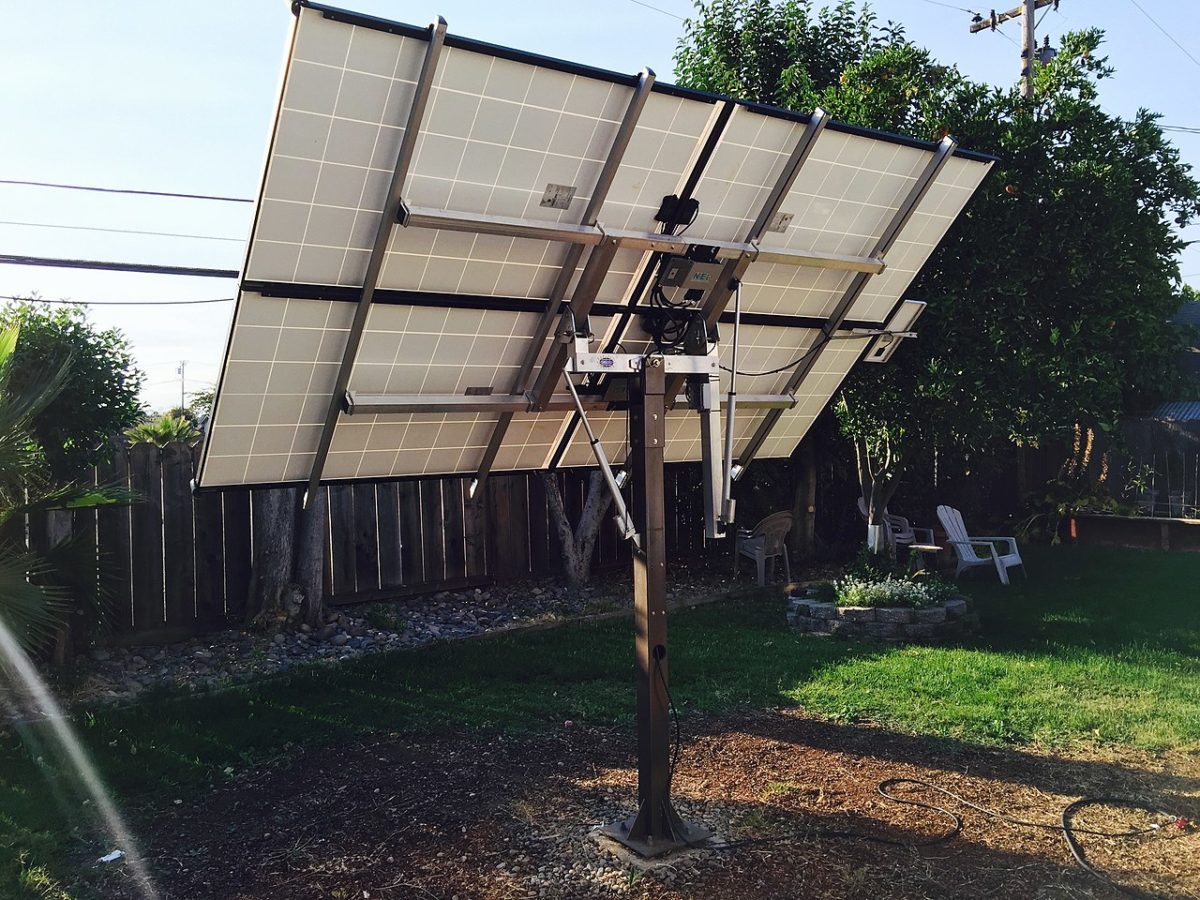
A dual-axis solar tracker

Image: Adsala, wikimedia commons, https://bit.ly/3LFTVox

An Indian-Chinese research team has developed a new dual-axis solar tracking system based on sensors and a controller module.

“In this work, an attempt was made to design and implement a single dual-axis tracking motor for a simple yet effective control system,” the researchers said. “No programming or computer interface is required as standard electronic circuits are used. This system is independent and self-sufficient.”

The group explained that the new system uses two different sensor types: an ultraviolet (UV) sensor and a microelectromechanical solar sensor (MEMS). “The UV sensor calculates the intensity of UV radiation received from the sun, and the MEMS sensor predicts the sun’s path across the sky,” she added.

The data collected by these sensors is then fed into an arithmetic optimization-based PID (AOPID) controller, which uses arithmetic-based functions to achieve better response time, tracking accuracy and interference suppression.

“The AOPID controller uses input from the UV and MEMS sensors to change the position of the solar panels and optimize energy absorption,” the scientists further explained. “The controller achieves this by using a feedback loop that adjusts the controller’s proportional, integral and derivative gains to reduce the variation between the set point and the actual location of the solar panels through the use of arithmetic optimization algorithms.”

See also  Accelerated declines in solar cell prices since late March

The academics tested the proposed system using MATLAB simulation software based on a simulated 50W PV panel. They then compared the power production and consumption over a few hours with that of a simulated fixed-tilt PV system.

“The comparative energy analysis graph shows that the proposed dual-axis solar tracking system was more productive than the fixed-tilt solar tracking system and the matrix converter,” the researchers said. “Achieving high net energy requires precise adjustment of controller parameters and positioning. the panels.”

The system was presented in the paper “Solar PV tracking system with dual axis and sensor arithmetic optimization,” published in Measurement: sensors. The research was conducted by scientists from China’s Xinxiang Vocational and Technical College and India’s Publon Research Center.

This content is copyrighted and may not be reused. If you would like to collaborate with us and reuse some of our content, please contact: editors@pv-magazine.com.

Popular content
Source link

based dualaxis MEMS sensors solar tracker
Share. Facebook Twitter Pinterest LinkedIn Tumblr Email
solarenergy
  • Website

Related Posts

Growth in solar and wind capacity slowed last year, analysis shows

March 6, 2026

Tigo introduces a 725 W optimizer for powerful solar panels

March 6, 2026

Longi wins tender for 800 MW Hexi solar panels – SPE

March 6, 2026
Leave A Reply Cancel Reply

Don't Miss
News

Wiltshire Council denies planning permission for 30MW solar farm

By solarenergyAugust 20, 20240

The proposed farm would have delivered a net biodiversity gain of 50%. Image: West Burton…

New solar material promotes green hydrogen production

December 20, 2024

Eaton publishes commercial, industrial BESS – SPE

November 25, 2024

Machine learning-based fault detection technique for bifacial PV – SPE

October 23, 2025
Stay In Touch
  • Facebook
  • Twitter
  • Pinterest
  • Instagram
  • YouTube
  • Vimeo
Our Picks

Growth in solar and wind capacity slowed last year, analysis shows

March 6, 2026

Tigo introduces a 725 W optimizer for powerful solar panels

March 6, 2026

Fox ESS, SMA, SAX Power, Kostal and BYD impress with high efficiency – SPE

March 6, 2026

Longi wins tender for 800 MW Hexi solar panels – SPE

March 6, 2026
Our Picks

Growth in solar and wind capacity slowed last year, analysis shows

March 6, 2026

Tigo introduces a 725 W optimizer for powerful solar panels

March 6, 2026

Fox ESS, SMA, SAX Power, Kostal and BYD impress with high efficiency – SPE

March 6, 2026
About
About

Stay updated with the latest in solar energy. Discover innovations, trends, policies, and market insights driving the future of sustainable power worldwide.

Subscribe to Updates

Get the latest creative news and updates about Solar industry directly in your inbox!

Facebook X (Twitter) Instagram Pinterest
  • Contact
  • Privacy Policy
  • Terms & Conditions
© 2026 Tsolarenergynews.co - All rights reserved.

Type above and press Enter to search. Press Esc to cancel.