

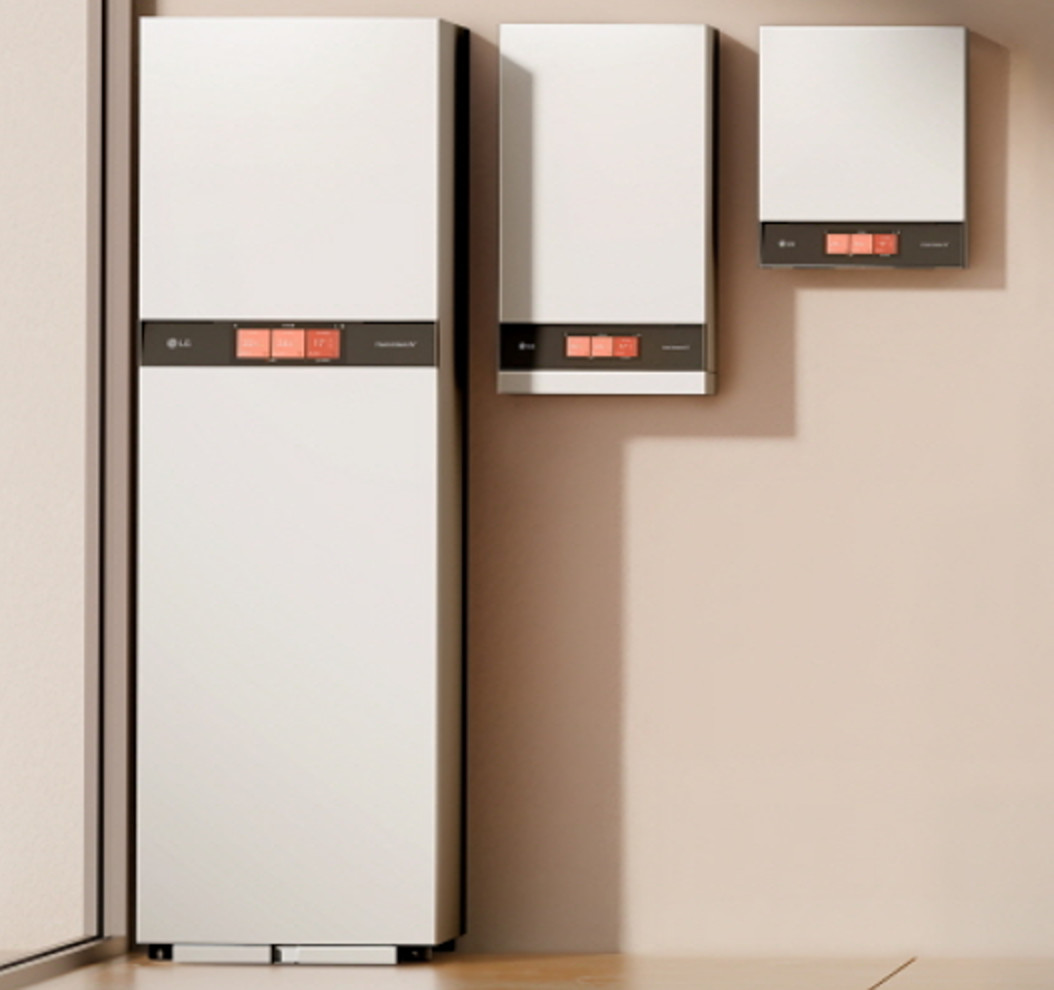
The Korean manufacturer has expanded its Therma V R290 heat pump line with three indoor unit options to improve installation flexibility. The new products are designed to deliver heating performance at ambient temperatures down to -28 C and hot water production up to 75 C.
LG Electronics, a part of South Korea’s LG Corporation, has introduced new indoor unit configurations for its Therma V R290 Monobloc air-to-water heat pump system, expanding installation flexibility for residential and light commercial heating applications.
“The new series features a unified design recognized with a 2026 iF Design Award, along with compact form factors and a 6.8-inch color display designed for European residential environments,” the company said in a statement. “The indoor units are designed for compatibility with LG’s R290 Monobloc outdoor units and support installation in a range of residential environments.”
The extensive range uses propane (R290) as a refrigerant and includes three types of indoor units – Combi, Hydro and Control – designed to work with the Therma V R290 outdoor unit and meet different installation requirements.
The Therma V R290 system is available in four versions with nominal capacities of 9 kW, 12 kW, 14 kW and 16 kW. The seasonal coefficient of performance (SCOP) is reported to be more than 5.
The Combi unit integrates space heating, cooling and domestic hot water in one housing. It includes a 200-liter stainless steel tank and temperature sensors to ensure a stable hot water supply, while rear pipe connections and a dual-zone configuration should simplify installation, the company said.
The Hydro Unit is designed as a compact hydraulic module that connects the heat pump to external heating and hot water systems. LG said the volume of the unit has been reduced by more than 30% compared to previous models, while components such as a three-way valve and a 12-liter expansion tank have been integrated to reduce the need for additional system elements.
The Control Unit separates the operating and hydraulic functions, allowing installation in tighter spaces. It uses terminal block wiring instead of direct hydraulic connections and includes built-in control logic to reduce system complexity and number of components.
“The combined solution is designed to deliver heating performance at ambient temperatures down to -28 C and hot water production up to 75 C,” the manufacturer said. “The monoblock design requires only water pipes to connect the indoor and outdoor units, thus avoiding refrigerant pipes running through indoor spaces.”
This content is copyrighted and may not be reused. If you would like to collaborate with us and reuse some of our content, please contact: editors@pv-magazine.com.
