

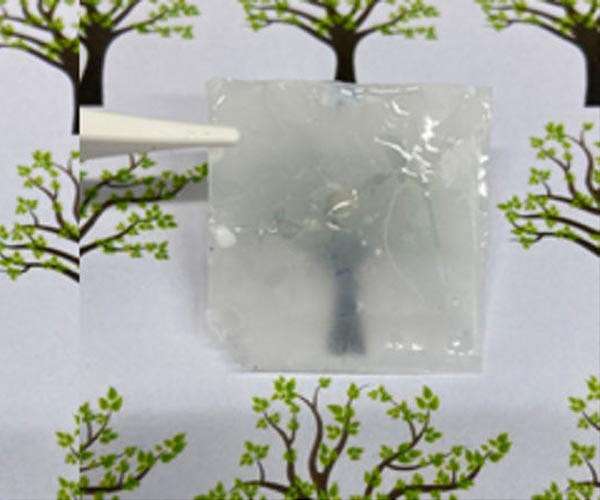
Nanocellulose infused with red onion extract protects solar cells from UV breakdown
Researchers from the University of Turku in Finland have developed a BIO-based film that offers a powerful UV protection for solar cells, treated with red ui-skin extract with the help of nanocellulose. This marks the first comparative study of how different bio-derived UV filters perform over time.
Solar cells, susceptible to damage caused by ultraviolet radiation, are typically protected by films derived from petroleum such as polyvinyl fluoride (PVF) or polyethylene -terefhtalate (PET). In an attempt to reduce the dependence on fossil fuels, researchers investigate sustainable alternatives such as nanocellulose, a material made by refining cellulose into nano scale fibers that can be adjusted for UV blocking options.
The study, conducted in collaboration with Aalto University in Finland and Wageningen University in the Netherlands, showed that nanocellulose films painted with red onion extract 99.9% of UV rays to 400 nanometers blocked. These achievements exceeded those of commercial pets filters, which served as a benchmark in the research.
“Nanocellulose films treated with red onion paint are a promising option in applications where the protective material should be on bio,” said Doctorate Researcher Rustem Nizamov of the University of Turku.
Researchers evaluated four types of nanocellulose films improved with red onion extract, lignine or iron ions, all known for their UV filtering properties. Among them, the film with red onion extract showed the most effective UV protection.
Effective UV protection must be in balance with the ability to transfer visible and near-infrared light, essential for the conversion of solar energy. While materials such as lignine excel in UV absorption, their dark hue hinders transparency. The film -based film, on the other hand, reached more than 80% light transmission in wavelengths between 650 and 1,100 nanometers, which maintained this level in relation to extensive tests.
To simulate for a long -term outdoor use, the films were exposed to artificial light for 1000 hours, equal to about a year of natural sunlight in Central Europe. Researchers followed changes in the films and solar cells due to digital imaging.
“The study emphasized the importance of long-term tests for UV filters, because the UV protection and the light shipment of the other bio-based filters changed considerably over time. For example, the films treated with iron ions had a good initial transmission that decreased after aging,” says Nizamov.
Tests aimed at dye -sensitive solar cells, which are particularly susceptible to UV -induced decline. The findings also have broader implications for other solar technologies such as perovskiet and organic photovoltaic, where bio-based UV filters can play a crucial role.
“These results are also relevant for the UV protection of other types of solar cells, including perovskite and organic photovoltaïschens, as well as any application where the use of a bio-based UV filter is paramount,” says Nizamov.
Looking ahead, the researchers want to make biodegradable solar cells that can serve as power sources in applications such as food packaging sensors.
“The forest industry is interested in developing new high -quality products. In the field of electronics, this can also be components for solar cells,” said Kati Miettunen, professor in material technology.
The Solar Energy Materials and Systems group of the University of Turku is investigating ways to integrate solar technologies into broader energy systems.
This work was part of the Biest project, supported by the Research Council of Finland.
