

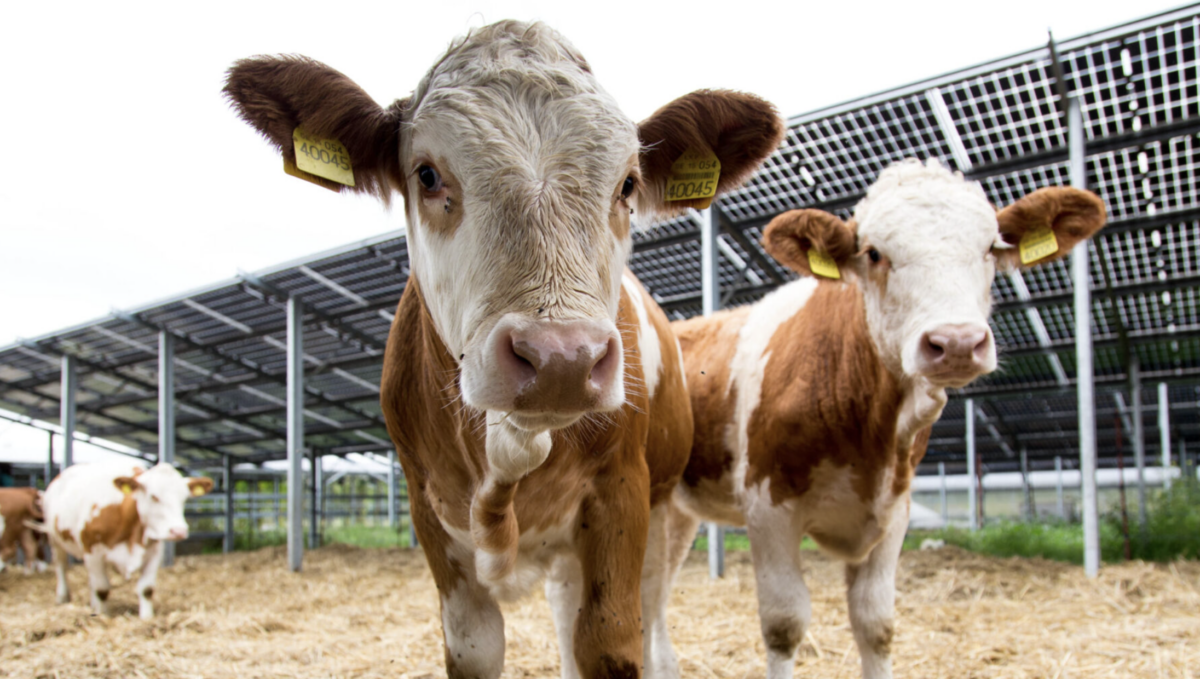
Conventional solar farms can support sheep and cattle grazing because the vegetation under and between PV modules provides sufficient feed quality, according to a new research report analyzing five installations in Germany.
Grassland in conventional solar farms can be used for grazing sheep and cattle, according to a study by the Federal Association for New Energy Industry (bne). The study found that vegetation within solar installations provides sufficient feed quality, indicating that agricultural use is possible without special cultivation agrivoltaic systems.
The study is based on research by scientists from the University of Göttingen and the University of Cologne, who analyzed vegetation, biomass and animal behavior in five solar farms in Schleswig-Holstein, Brandenburg, Hesse and Lower Saxony over an 18-month period.
Researchers compared grassland conditions under, between and outside rows of solar panels, including locations with carbon-rich soils and dry conditions. They also assessed how PV modules influence microclimate factors such as soil moisture, soil temperature and light conditions, and how these influence vegetation development and ecosystem services.
Using lidar scanners mounted on mobile platforms and drones, the team mapped the vegetation structure in three dimensions in the solar farms, including the areas under the modules. The study found greater species diversity and higher protein content in plants growing among modules, while biomass tended to be greater between module rows.
Observations of grazing animals showed that at higher temperatures sheep tended to remain under modules, where the structures provide protection from direct sunlight and weather conditions.
The association said the findings indicate that solar farms should increasingly be considered agricultural land. According to the BNE, ground-mounted photovoltaic installations can generate electricity while enabling agricultural use.
The group recommended that this type of land management be recognized as agriculture alongside agrivoltaic systems.
This content is copyrighted and may not be reused. If you would like to collaborate with us and reuse some of our content, please contact: editors@pv-magazine.com.
