


March 9, 2026
This week on Projects Weekly, RWE Americas has announced the commissioning of more than 2 GW of renewable energy since the tail end of 2025. In Texas, Origis Energy has closed on $545 million in financing for a trio of projects, and Habitat Energy has announced a move into the U.S. with a co-located solar and storage optimization project in ERCOT’s South Zone. Also in the Lone Star State, CoServ and Base Power have announced a 100-MW residential battery program in Denton County. And North of the American border, GrandBridge and PowerBank have agreed to a “co-development” agreement for solar and BESS projects in Canada’s most populous province. Maryland’s Chaberton Energy has celebrated its sixth anniversary with 33 projects worth 125 MW in solar and storage. Finally, Arevon has energized its 430-MW Kelso Solar Project, its first in Missouri. Keep reading for all the details!
GrandBridge, PowerBank ink “co-development” agreement for Canadian solar, BESS projects
GrandBridge Corporation and PowerBank Corporation have announced an agreement to jointly develop solar and BESS project throughout Ontario. As part of the agreement, PowerBank will be leading development and construction of the projects, and GrandBridge will provide capital in exchange for co-ownership.
Bright spot: The agreement “establishes a collaborative framework” for development of solar and BESS projects in Ontario, specifically those with nameplate capacity of 2 MWac or more. The project are intended to be developed for submission under select programs like Independent Electricity System Operator (IESO) Request for Proposals (RFPs), as well as virtual power purchase agreements (VPPAs) and local generation programs.
Sarah Hughes, President and CEO, GrandBridge Corporation, says PowerBank is “a like-minded and experienced partner” in both renewable energy and BESS projects.
“Solar generation and battery storage solutions can be developed in relatively short timeframes and at competitive costs, alleviating the pressure of securing incremental transmission capacity,” she says. “Combined with other innovative grid solutions — including GridShare, GrandBridge Energy’s new Local Capacity Auction program, which provides price signals for customers to participate in local grid events — these resources can form part of an affordable toolkit to help limit grid congestion.”
The partnership also features an exclusive collaboration between the two during a three-year development period on “qualifying project within the defined territory.” That select territory includes cities like Brantford and Cambridge, as well as North Dumfries township and the entirety of the County of Brant.
Dr. Richard Lu, PowerBank’s president and CEO, says the two companies are “well-positioned to respond” to consistently growing demand on local grids across North America. The firms are excited to be able to contribute to the resilience of southwestern Ontario’s grid, he adds.
“PowerBank has a long history in Ontario, beginning operations here in 2013, and this partnership reflects our commitment to deploying our development and construction expertise to meet the province’s rapidly evolving energy needs,” Lu says. “GrandBridge’s deep roots in the communities they serve, combined with PowerBank’s expertise in solar and battery storage development, creates a powerful partnership to deliver clean, reliable energy solutions. PowerBank has developed over 100 megawatts of renewable energy projects across North America, and we look forward to bringing that experience to this partnership.”
Chaberton Energy celebrates sixth anniversary with 125 MW in solar and storage
Rockville, Maryland-based Chaberton Energy is celebrating its sixth anniversary this year, having completed development on 33 projects totaling over 125 MW of distributed energy capacity.
Most of Chaberton’s energy projects, the company says, range from 2 MW to 10 MW in size. The anniversary achievement “represents dozens of communities across the United States and Italy being powered by locally generated, affordable energy,” the company says.
“Six years ago, we started Chaberton with the conviction that distributed energy — community solar, battery storage, projects sized for the places they serve — was the right way to build a more equitable, efficient and resilient grid while contributing to the clean energy transition,” says Stefano Ratti, CEO and founder of Chaberton Energy. “Crossing 125 megawatts of developed projects is a meaningful proof point, but what I’m most proud of is that we got here by earning the trust of landowners, communities and partners one project at a time.”
Bright spot: This anniversary milestone is part of a much larger portfolio, Chaberton says, with the portfolio representing over 500 MWdc of distributed energy projects. The entire development pipeline, the company says, already exceeds 1 GW of electricity.
The company has been more focused on battery storage than ever in recent years, officials say, with a “deliberate focus” on BESS projects. The flexibility of storage is essential with the uncertainty of today’s grid systems, and BESS systems position both Chaberton and the communities it serves ahead of the curve on grid resilience.
“Battery storage changes the conversation,” says Mike Doniger, Chaberton’s president and co-founder. “More than solving generation needs, BESS helps provide electricity when and where it’s most critically needed. That’s a more complete answer to what communities and grid operators need to address the current energy affordability challenge.”
Origis Energy closes $545 million in funding for Texan solar projects
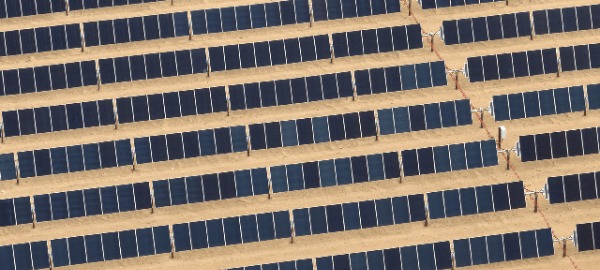
American renewable energy platform Origis Energy has announced the close of approximately $545 million in senior secured project financing, which will go toward three utility-scale solar projects in Texas.
Located in Ector County in the western area of the Lone Star State, the three projects — known collectively as the Rockhound Projects — will supply about 413 MW to the local energy grid. The financing will come from Natixis and Santander’s CIB divisions.
All three are already under construction and should be operational this summer, according to Origis representatives.
“This financing reflects the quality of the Rockhound portfolio and the confidence our capital partners place in Origis’ ability to execute complex, multi-project transactions with discipline and scale,” says Origis CFO Alice Heathcote. “Natixis and Santander have been exceptional partners throughout the process. Together, we are advancing resilient, long-term energy infrastructure in Texas while delivering meaningful economic benefits to local communities.”
Bright spot: The financing is part of a new phase of solar construction for Origis, representing a part of the firm’s multi-project solar complex in western Texas. The total portfolio will total over 700 MW upon completion, the company says, including the Swift Air II and III projects, which closed financially in 2025.
Arevon energizes 430-MW Kelso Solar Project in southeast Missouri
Arevon’s first large-scale facility in the state of Missouri has come online, the company has announced, as it energized the Kelso Solar Project in Scott County, Missouri on March 4.
Bright spot: The $500 million, 430-MW project was developed, constructed, and now will be operated by Arevon over the course of two distinct phases. As Arevon’s first utility-scale project in the Show-Me State, the Kelso solar field will increase the state’s solar capacity by nearly 50%, and will generate enough power to serve more than 62,000 homes every year.
Justin Johnson, Arevon’s COO and interim CEO, says he is proud to see the project come to fruition following years of development.
“Kelso Solar reflects the strong collaboration among Arevon, our partners, and Scott County’s landowners and local leaders, who all played a critical role in bringing this project to fruition,” Johnson says. “We look forward to Kelso Solar serving America’s energy needs for many decades.”
Arevon has also been “actively engaged” with the surrounding community throughout the project’s development and construction. During development, the company has supported local organizations including a $300,000 contribution to the Kenny Rogers Children’s Center outpatient therapy facility.
“The Kelso Solar Project is a meaningful investment in Scott County’s future — it strengthens our tax base, supports critical public services, and adds a new energy resource to our region,” says Danny Tetley, the presiding commissioner at Scott County Commission, during the ribbon-cutting ceremony. “We value the community-first approach Arevon has taken and continues to exercise as well as the lasting benefits the project brings to our community.”
Habitat Energy announces co-located solar and storage optimization project in Texas
Habitat Energy has announced its first move into the U.S. with a co-located solar and storage partnership with Birch Creek, meant to optimize its solar and battery operations in Texas.
The partnership will cover ERCOT’s South Zone area, including Birch Creek’s Bee County asset, where Habitat has achieved the Production Load Date (PLD) on behalf of Birch Creek. That asset is now in the early stages of commissioning, the company says, with commercial operations expected to begin in August 2026. Battery will follow soon after in October 2026.
“Consistent responses to market signals are essential to both asset performance and grid stability in ERCOT,” says Fred Short, director of commercial strategy at Birch Creek. “Working with Habitat to optimize dispatch decisions will help ensure the Honeycomb project delivers the full value of the clean energy it generates and stores to the market and the surrounding community.”
Bright spot: The project “represents an early operational example of co-located solar and storage optimization in ERCOT’s rapidly scaling hybrid market.” During peak solar hours, the battery can absorb excess energy while positioning itself for price volatility later in the day. Management of that interaction requires both weather and price forecasting, plus a platform capable of co-optimizing between two ERCOT generation assets.
“Co-locating solar and storage improves the economics of both assets, but it also raises the bar for operational sophistication,” says Mike Kirschner, U.S. managing director for Habitat Energy. “Our platform is built to manage that complexity, optimizing solar DART strategies alongside battery operations while respecting POI constraints.”
CoServ, Base Power launch 100-MW residential storage program in northern Texas
Base Power has announced a new collaboration with the Denton County Electric Cooperative (CoServ) to deploy 100 MW of residential battery storage in northern Texas.
CoServ current operates and serves more than 330,000 electric meters. Under the new agreement, Base Power’s largest to date, the two will create one of the largest distributed energy and storage networks led by a Texan electric cooperative.
Bright spot: The program will allow Base Power to deploy a “fleet” of residential battery storage systems in the CoServ service region, providing the company will dispatchable capacity to help support the ERCOT grid during peak demand. The installed batteries will provide whole-home backup power, Base Power says, which will be available at affordable rates.
“Distributed energy storage is becoming an increasingly important tool for utilities navigating load growth, extreme weather, and infrastructure constraints,” says Gary Franzen, chief energy resources officer at CoServ. “This collaboration with Base Power allows us to add flexible, cost-effective capacity while maintaining operational control and delivering tangible reliability benefits for our Members at an affordable price.”
Under the conditions of the agreement, Base Power will handle system installation and maintenance, and CoServ will oversee the usage of the battery fleet itself. For homeowners with existing BESS capabilities, Base will be able to pair the battery to the CoServ network, allowing the system to either be powered by the grid or the member’s solar system.
Zach Dell, the CEO of Base Power, says his company is proud to partner with CoServ. The effort marks the firm’s fifth utility collaboration in the state of Texas, and “builds on a proven model” of adding grid capacity while protecting homeowners from power outages across the state.
“By aggregating residential batteries into a utility-controlled resource, CoServ can strengthen reliability, manage peak demand, and ultimately improve affordability for its Members, all while providing reliable outage protection,” Dell says. “We’re proud to partner with CoServ in bringing 100 MW of flexible, reliable capacity to its system.”
RWE commissions 2 GW of new American energy projects in the U.S.
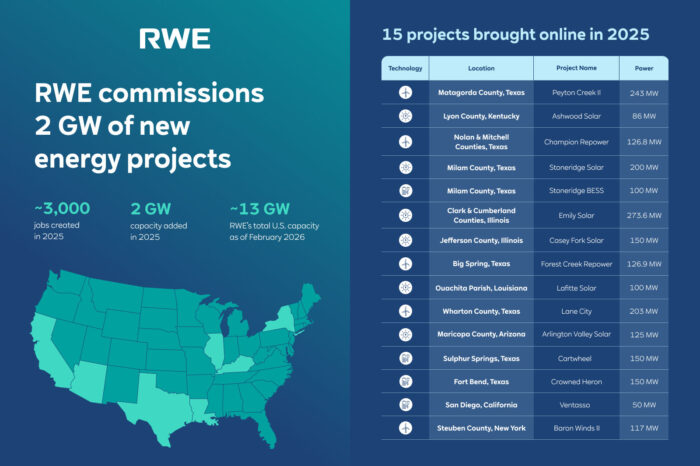
German renewable energy company RWE ended its 2025 by adding 2 GW to its operating capacity in the U.S., bringing its total operational capacity to about 12.7 GW nationwide.
Spanning seven different states in a few regions of the country, the recently completed projects created “thousands” of construction jobs around the U.S. Additionally, the projects allowed RWE to invest more than $500 million into local communities.
Andrew Flanagan, the CEO of RWE Americas, says the company is swooping in at a critical time in the American energy space.
“The U.S. is at a pivotal moment for electricity demand and RWE is helping to meet that demand with 15 new projects commissioned across the country in 2025, bringing our total generation capacity to approximately 13 GW,” Flanagan says. “We are delivering affordable, reliable electricity to our customers, residents, and local businesses, while supporting local economies. These projects are more than just getting steel in the ground; they are about delivering power and generating lasting impact in the communities we serve.”
The company recently launched six different solar sites as well as four BESS projects in the U.S., plus five wind projects outside the realm of solar. The firm also expanded its asset base into two new states, putting solar projects in Kentucky and Louisiana.
“The company continues to drive positive impact and support local communities wherever it develops and operates projects,” the company says. “For example, its first two Illinois solar projects, Emily Solar (273.6 MW) and Casey Fork Solar (150 MW), generated over 600 construction jobs and are expected to deliver more than $50 million in local tax revenue over their lifetimes.”
Tags: commercial and industrial, project, Projects Weekly, Residential Solar, utility-scale
