

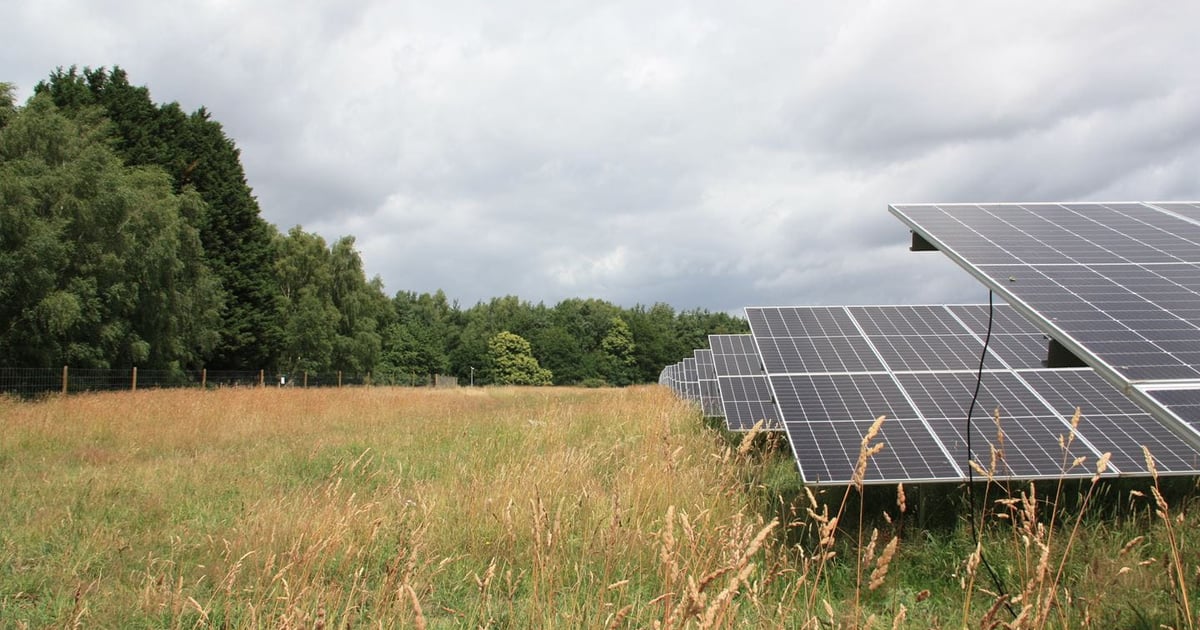
Britain is on track to have more than 160 GW of solar capacity in operation by 2060, but ‘whole systems thinking’ will be needed to ensure that the energy transition delivers Britain a robust energy system.
This is the key takeaway from DNV’s latest report on Britain’s energy future. Published this week, the ‘Energy Transition Outlook UK 2026’ assesses the state of the UK’s current energy mix, alongside forecasts for 2060, and expects significantly more solar capacity to be deployed in Britain over the coming decades.
Of the capacity to be operational in 2060, rooftop solar will account for 74 GW, approximately the same as the capacity in operation in the utility sector, reflecting a significant shift in the UK solar sector towards distributed energy generation. DNV notes that the UK’s operational rooftop solar sector accounted for around half of utility-scale solar capacity in 2024, with just 6GW of operational capacity, but this is likely to change in the long term.
Behind-the-meter solar energy (BTM), in particular, is expected to account for a larger share of the country’s energy mix. DNV estimates that BTM solar will meet 17% of electricity demand by 2050, up from just 2.4% now. This is expected to rise slightly more, to 19%, by 2060, although it is worth noting that the change in scale of BTM solar is not expected to coincide with a significant change in the ratio of BTM solar used for self-consumption versus that sold to the grip, which will “remain roughly the same” until 2060.
A major driving force behind this change is the relatively low levelized cost of electricity (LCOE) for solar energy. The DNV report estimates that the LCOE for solar in Britain is currently around £28/MWh, and estimates that this will fall to £17/MWh by “mid-century”. However, the report goes on to point out that the LCOE of solar energy is generally higher ‘at high northern latitudes with little solar radiation’, such as in Britain, so Britain will not benefit from the generally low LCOE of solar energy. which has been reported worldwide in recent years.
Large-scale solar energy, the whole systems thinking
However, this does not mean that there will not be a place for utility-scale projects. In fact, the report notes that the “trend to develop large-scale solar energy is expected to continue in the coming years,” with the latest Allocation Round 7 (AR7) setting a record for both the number of solar PV projects and total solar capacity. the UK government will award Contracts for Difference (CfDs)..
However, DNV notes that “government and developers will need to become increasingly aware of public perception” of solar projects as larger utility-scale installations become a more critical part of the UK’s energy infrastructure. This is evident from figures from the US developers who enter into discussions with the local population during the project development process experience significantly less local resistance to their projectswhich could be a useful precedent for Britain as new utility-scale solar installations are built near and around an increasing number of local communities.
This is an example of the ‘whole systems thinking’ that the report calls for. In the foreword to the report, Hari Vamadevan, regional director of UK & Ireland Energy Systems at DNV, notes that: “what the UK energy transition requires, and what underpins this report, is whole systems thinking.”
“This report highlights that Britain will have a fundamentally different energy system by 2060: renewables, backed by nuclear power, will supply the vast majority of electricity and meet 60% of final energy demand, and energy imports will decline to just 15% of total demand,” he wrote. “Energy security will not depend on imported fuels, but on domestic generation, storage and flexible demand.”
These dramatic shifts will significantly change the UK’s energy mix as a whole, and technologies such as battery energy storage systems (BESS) will be essential to provide energy security in an energy system that is more reliant than ever on renewable technologies.
The report expects the installed capacity of utility-scale storage in Britain to increase more than fivefold in the coming years, from 16 GW today to 46 GW by 2035 and ultimately more than 90 GW by 2060. Perhaps best reflected is the growth in the UK storage sector the formation of the British Energy Storage Association in June last year.
Europe’s biggest financiers of renewable energy meet in London for the fifth edition of the Summit on Procurement and Income from Renewable Energy Sourcesheld on May 20-21 Solar energy portal publisher Solar Media. Information about the event, including the full agenda and ticket purchasing options, is available at the official website.
