

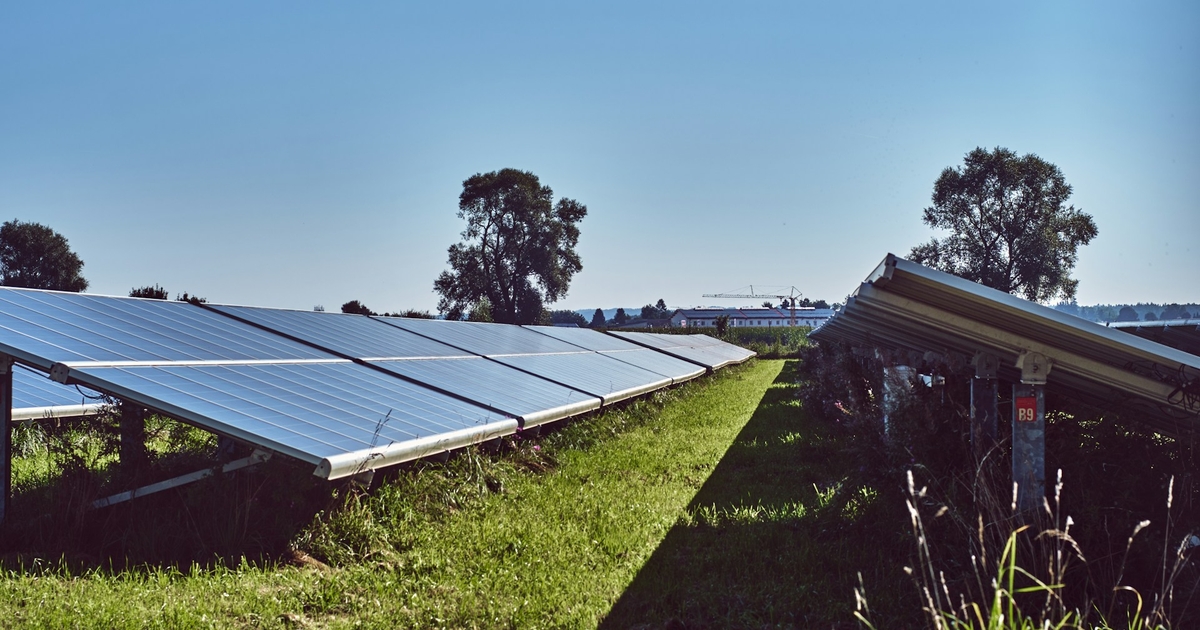
Downing Renewable Developments will build a 40MW solar PV project to power an AI data center in Essex.
The company has signed a long-term power purchase agreement (PPA) with Kao Data, a data center developer and operator, to power an “award-winning” data center campus in Harlow, Essex.
Downing said it expects the Green Data Solar Farm project to be “one of the first” ground-mounted PV systems in Britain to directly power a colocation data centre. Kao Data said the Harlow campus is Britain’s “largest” currently under development, and the PPA agreement will support its target of becoming completely net zero by 2030.
“The agreement with Kao Data reflects the growing importance of integrated clean energy solutions in digital infrastructure,” said Tony Gannon, head of Downing Renewable Developments.
The company said renewable energy could provide a solution for data center operators looking to lower the price of their energy consumption. Britain has some of the highest energy prices in Europe, and recent data from Unite the Union shows that the country has highest industrial energy costs of each country reporting to the International Energy Agency (IEA) claiming that prices have risen by around 29% due to profiteering in the sector.
“Energy availability, energy prices and grid delays remain three of the key challenges facing UK data center operators, and without decisive action and innovation our country could lose pace in the AI race,” said Mathew Harris, CFO at Kao Data.
“Our partnership with DRD shows how companies like Kao Data can take proactive action to directly solve some of the UK’s renewable energy challenges, delivering green energy at pace and at scale, exactly where it is needed.”
Data center operators around the world are turning to renewable energy sources, especially solar energy, to secure fast and affordable energy for their growing operations. The IEA said last week that it has global expectations data center electricity consumption will double between 2024 and 2030, becoming one of the fastest growing sectors.
In September, Google selected Shell to manage the clean energy supply for its UK data center operations. Thanks to the collaboration between the two global giants, Shell Energy Europe will manage and balance Google’s energy portfolio with battery energy storage systems (BESS).
The government set up the AI Energy Council earlier this year to ensure Britain can meet its artificially intelligent energy needs. The council includes the Secretaries of State for Energy Security and Net Zero and Science, Innovation and Technology and a range of energy and technology industry leaders from companies including National Grid, Scottish Power, Google and Amazon.
At its most recent meeting, in June 2025, the council noted that wholesale energy prices and grid connection lead times were “challenges for data center investment in the UK”. According to the minutes of the meetingparticipants also “broadly agreed” that AI inference – the process of using a generative AI model to make predictions or decisions, rather than the process of training it – would “dominate” AI energy consumption.
Downing Renewable Developments said deals such as the new PPA with Kao Data could encourage data center operators “to move to a prosumer model where they generate their own renewable energy, secure low energy costs in the long term and reduce demand on the electricity grid.”
While demand for AI is likely to drive the development of sustainable energy projects, some analyzes say it could jeopardize global emissions reduction targets. Energy market analyst Wood Mackenzie said last month that the surge in demand for AI data centers “threatens electricity crises and higher tariffs while derailing 2030 clean energy commitments,” as power supplies become even more politicized and AI demand puts more pressure on capacity expansion.
