
Close Menu
  • News
  • Industry
  • Solar Panels
  • Commercial
  • Residential
  • Finance
  • Technology
  • Carbon Credit
  • More
    • Policy
    • Energy Storage
    • Utility
    • Cummunity
What's Hot

Manufacturing partnership brings new PV technology to US solar

April 23, 2026

Tesla launches three-phase Powerwall 3P – SPE

April 23, 2026

Why the UK solar industry needs to own its safety story

April 23, 2026
Facebook X (Twitter) Instagram
Solar Energy News
Thursday, April 23
  • News
  • Industry
  • Solar Panels
  • Commercial
  • Residential
  • Finance
  • Technology
  • Carbon Credit
  • More
    • Policy
    • Energy Storage
    • Utility
    • Cummunity
Solar Energy News
Home - Technology - Semi-online technology for short-term solar radiation prediction in PV installations – SPE
Technology

Semi-online technology for short-term solar radiation prediction in PV installations – SPE

solarenergyBy solarenergySeptember 26, 2024No Comments3 Mins Read
Facebook Twitter Pinterest LinkedIn Tumblr Email
Share
Facebook Twitter LinkedIn Pinterest Email

Scientists in Spain have developed a semi-online technique to predict solar radiation at different locations in a photovoltaic installation. The proposed training approach is described as suitable for predicting highly variable time series.

September 25, 2024 Lior Kahana

Researchers from the University of Seville in Spain have developed a new machine learning algorithm for predicting very short-term solar radiation. The input is based on sensor data preprocessing using temporal and spatial correlation analysis of cloud movements.

“Short- or very short-term forecasts of electricity production can help in areas such as real-time monitoring of the system, electricity prices or avoiding system overloads,” they said. “A further motivation lies in the field of regulations. An increasing number of countries require wind and photovoltaic generators to provide so-called ancillary services, which are fundamental activities for the safe and reliable operation of electrical systems.”

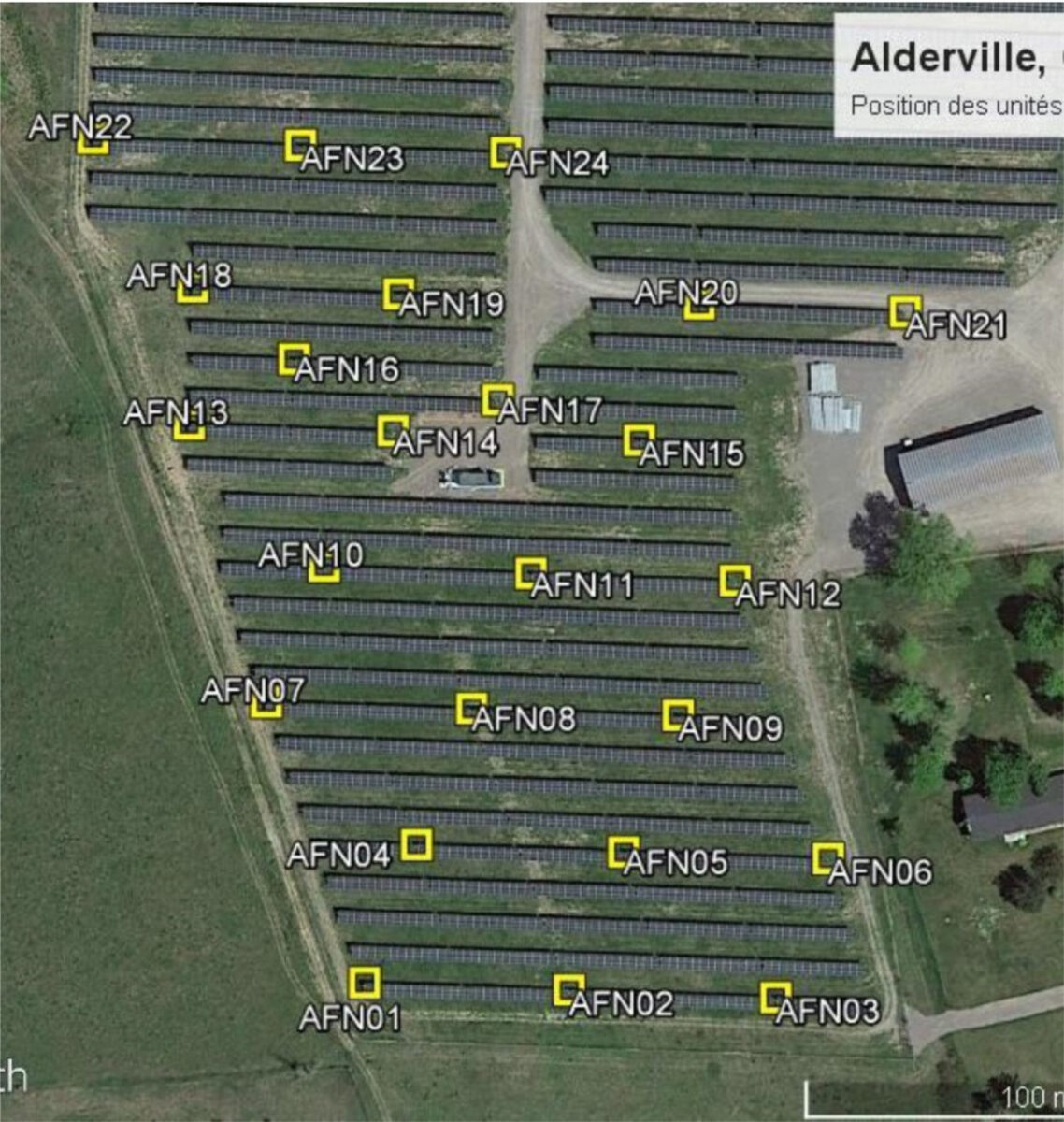
The dataset used to develop the model came from an online repository of the 5 MW Alderville solar farm in southeastern Canada. Specifically, it consisted of 24 PV solar panels that provided irradiation data every 1 ms on days with variable and highly variable cloud cover.

Because the research group focused on 15- and 30-second forecast horizons, they created a correlation analysis to understand the relationships between the panels at different points in time. To do that, they examined the correlation of the measured irradiance of each panel with that of all other panels. They then evaluated the correlation with different time delays.

“The panels that are close together show higher correlations because they are influenced by the same cloud patterns, while the panels located at the ends of the wind direction axis show lower correlations because of their positioning within the cloud evolution gradient,” the team explains .

See also  Summit Ridge Energy Building 5.1-MW Solar Project supports Illinois Data Centers

Taking time delay and panel correlation into account, the researchers then fed the data into three machine learning techniques: eXtreme Gradient Boosting (XGB), Light Gradient Boosting Machine (LGBM) and Random Forest (RF). -online because the inference is performed in real time, but the model training is not performed incrementally on each instance. Instead, it is trained with very small numbers of instances,” the researchers pointed out.

“Slightly better results have been achieved with LGBM compared to XGB and RF, although the differences are not significant,” she added. “On the highly variable day, a mean absolute percentage error (MAPE) of 4.411 was obtained in the worst case scenario (30 s forecast horizon in the upstream cluster) and 2.483 in the best case scenario (15 s forecast horizon in the cluster). downstream).”

Looking ahead, the academics plan to determine exactly how far into the future the system can deliver accurate results and analyze the system’s response speed to abrupt changes in wind direction.

Their findings were presented in “Semi-real-time decision tree ensemble algorithms for very short-term solar irradiance prediction”, published in the International Journal of Electrical Power and Energy Systems.

This content is copyrighted and may not be reused. If you would like to collaborate with us and reuse some of our content, please contact: editors@pv-magazine.com.

Popular content

Source link

installations Prediction radiation Semionline shortterm solar SPE technology
Share. Facebook Twitter Pinterest LinkedIn Tumblr Email
solarenergy
  • Website

Related Posts

Manufacturing partnership brings new PV technology to US solar

April 23, 2026

Tesla launches three-phase Powerwall 3P – SPE

April 23, 2026

Why the UK solar industry needs to own its safety story

April 23, 2026
Leave A Reply Cancel Reply

Don't Miss
News

Hounen Solar opens second solar panel assembly plant in South Carolina

By solarenergyNovember 17, 20250

South Carolina-based solar panel assembler Hounen Solar has announced it will open a second manufacturing…

Greater demand and gas prices are driving up European electricity prices – SPE

January 27, 2025

BMW, Exolum bet on H2 logistics – SPE

December 3, 2024

Strategies to reduce the breakdown of perovskiet solar cell, caused by thermal stress – PV Magazine International

February 26, 2025
Stay In Touch
  • Facebook
  • Twitter
  • Pinterest
  • Instagram
  • YouTube
  • Vimeo
Our Picks

Manufacturing partnership brings new PV technology to US solar

April 23, 2026

Tesla launches three-phase Powerwall 3P – SPE

April 23, 2026

Why the UK solar industry needs to own its safety story

April 23, 2026

Fraunhofer ISE develops colored film technology for patterned solar panels

April 23, 2026
Our Picks

Manufacturing partnership brings new PV technology to US solar

April 23, 2026

Tesla launches three-phase Powerwall 3P – SPE

April 23, 2026

Why the UK solar industry needs to own its safety story

April 23, 2026
About
About

Stay updated with the latest in solar energy. Discover innovations, trends, policies, and market insights driving the future of sustainable power worldwide.

Subscribe to Updates

Get the latest creative news and updates about Solar industry directly in your inbox!

Facebook X (Twitter) Instagram Pinterest
  • Contact
  • Privacy Policy
  • Terms & Conditions
© 2026 Tsolarenergynews.co - All rights reserved.

Type above and press Enter to search. Press Esc to cancel.