

How space-based solar panels can tackle global energy crises
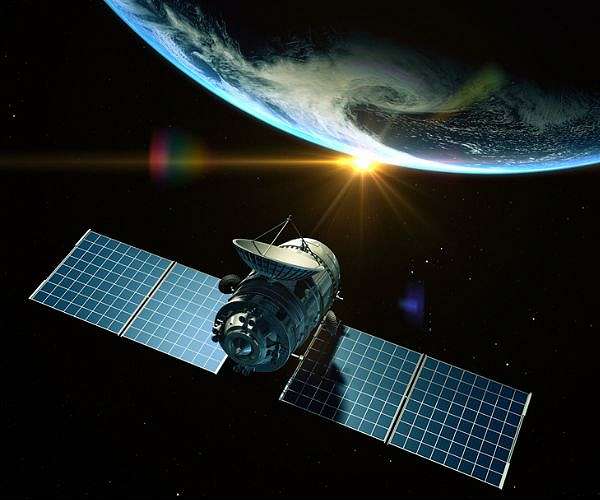
As global energy prices and emissions from unsustainable processes rise, new research from Queen’s University could demonstrate a way to use space-based solar panels to solve problems on Earth. The university’s School of Electronics, Electrical Engineering and Computer Science (EEESS) suggests that specially designed satellites could harness solar energy and send it to Earth non-stop, every day of the week, using microwave beams.
With a groundbreaking prototype, they successfully unveiled it at the Center for Wireless Innovation (CWI), a division of EEECS and ECIT. The prototype, developed by Space Solar Ltd, in collaboration with the CWI, marks a groundbreaking achievement in the field of energy transmission in space.
Compared to solar panels for your homethese can be more effective in tackling energy problems. The appeal of space-based solar farms lies in their potential to provide uninterrupted energy regardless of weather conditions. This benefit stems from the significantly improved energy production of solar panels in space compared to those on Earth, due to the increased light intensity in the absence of atmospheric interference.
The satellites and their devices would be relatively large compared to standard solar panels. Equipped with an antenna with a diameter of 2 km, the entire satellite could provide approximately two gigawatts of continuous power. For context, this would be more than enough to meet the energy needs of one million households on earth.
These transmission satellites have yet to be extensively tested, but offer many promising applications. Any scaled-up plans foresee the technology being tested for use in space by 2030. Even more ambitious, the future partnership between these institutions envisions the launch of several hundred satellites, a feat that would require more than 60 rocket missions per satellite for automated installation.
The current results are the result of ten years of research and development. A notable achievement includes the development of CASSIOPeiA (named after a large constellation in the northern sky), Space Solar’s satellite design featuring a groundbreaking solid-state power-beaming architecture capable of maintaining the sun’s alignment while orbiting orbiting moving objects and transferring energy back to Earth. .
The trials and tests in the current phase were educational and simulated as closely as possible to a deep space environment on Earth. The successful testing of the satellite prototype in the CWI’s anechoic chamber, equipped with more than 150 individual antennas, marks a crucial milestone in pre-field testing of proof of concept. Further trials are intended to refine and scale up the technology over the coming years.
Dr. Neil Buchanan, principal investigator at Queen’s CWI, highlights the initial financial investment required, but also emphasizes the subsequent potential for revenue generation and positive environmental impact once the satellites are operational. Several ships have been sent into space for the project, and that’s just the beginning. Other expenses include maintenance and monitoring of the satellite.
Martin Soltau, co-CEO of Space Solar Ltd, expresses his gratitude for the partnership with Queen’s and underlines the transformative potential of space-based solar energy in facilitating a different approach to alternative energy sources.
“We greatly value our close collaboration with Queen’s and together we have delivered this world first of 360 power-beam control, which is a core requirement for the operational energy satellite, in just six months.
“We look forward to building on this successful project as we scale the technology together. Space-based solar energy can help realize the energy transition with reliable, affordable energy from space, and Space Solar and our partners are leading the way. “
Major breakthroughs in the development process include solving the challenge of accurately directing microwave beams to Earth amid satellite movements and designing innovative antenna structures for energy transmission. Furthermore, the creation of highly efficient microwave energy transmitters and proprietary beam steering circuits represents significant advances in this field.
Research funding from entities such as the UK Engineering and Physical Sciences Research Council, the UK Space Agency, the UK Department for Energy, Security and Net Zero (DESNZ), along with Space Solar, has been instrumental in driving this ground-breaking venture.
In terms of scientific achievements, there have been numerous breakthroughs on the path to this innovative program. The team has been instrumental in solving the problem of precisely steering a microwave beam to Earth. The main difficulty here was compensating for movement in the satellite due to the relative position of the sun to the position of the earth.
The team also designed a new type of cross-shaped antenna array structure to radiate the energy back. The satellite produces highly efficient microwave energy with a new transmitter with a transmission efficiency of 85%.
Overall, the process is a success that has provided a novel new method of producing energy while taking up less space on Earth. Furthermore, atmospheric factors can be minimized by using space as an environment instead of Earth.
However, it is not all plain sailing. Space can be much more complicated than Earth for many reasons. That’s why field tests are critical, but they can also be extremely expensive.
