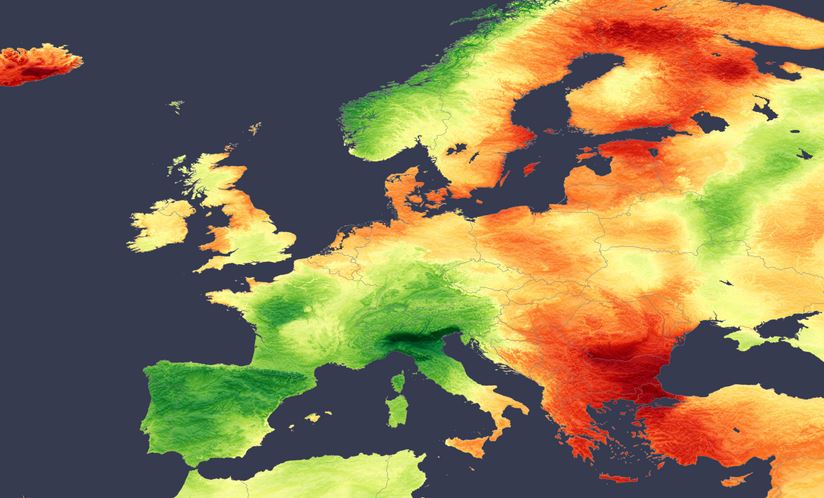
In a new weekly update for pv magazineSolcast, a DNV company, reports that blocking high pressure over Eastern Europe in October caused a strong east-west divide in solar radiation across the continent. This led to significantly lower insolation due to persistent cloud cover and rainfall, especially on the Iberian Peninsula and northern Italy.
Blocking high pressure over eastern Europe in October created a strong east-west divide in solar radiation across the continent, analysis using the Solcast API. This setup trapped low-pressure systems over western Europe, leading to noticeably lower insolation due to persistent cloud cover and rainfall, especially over the Iberian Peninsula and northern Italy. Meanwhile, Eastern Europe, protected from these weather systems, received above-average radiation levels.
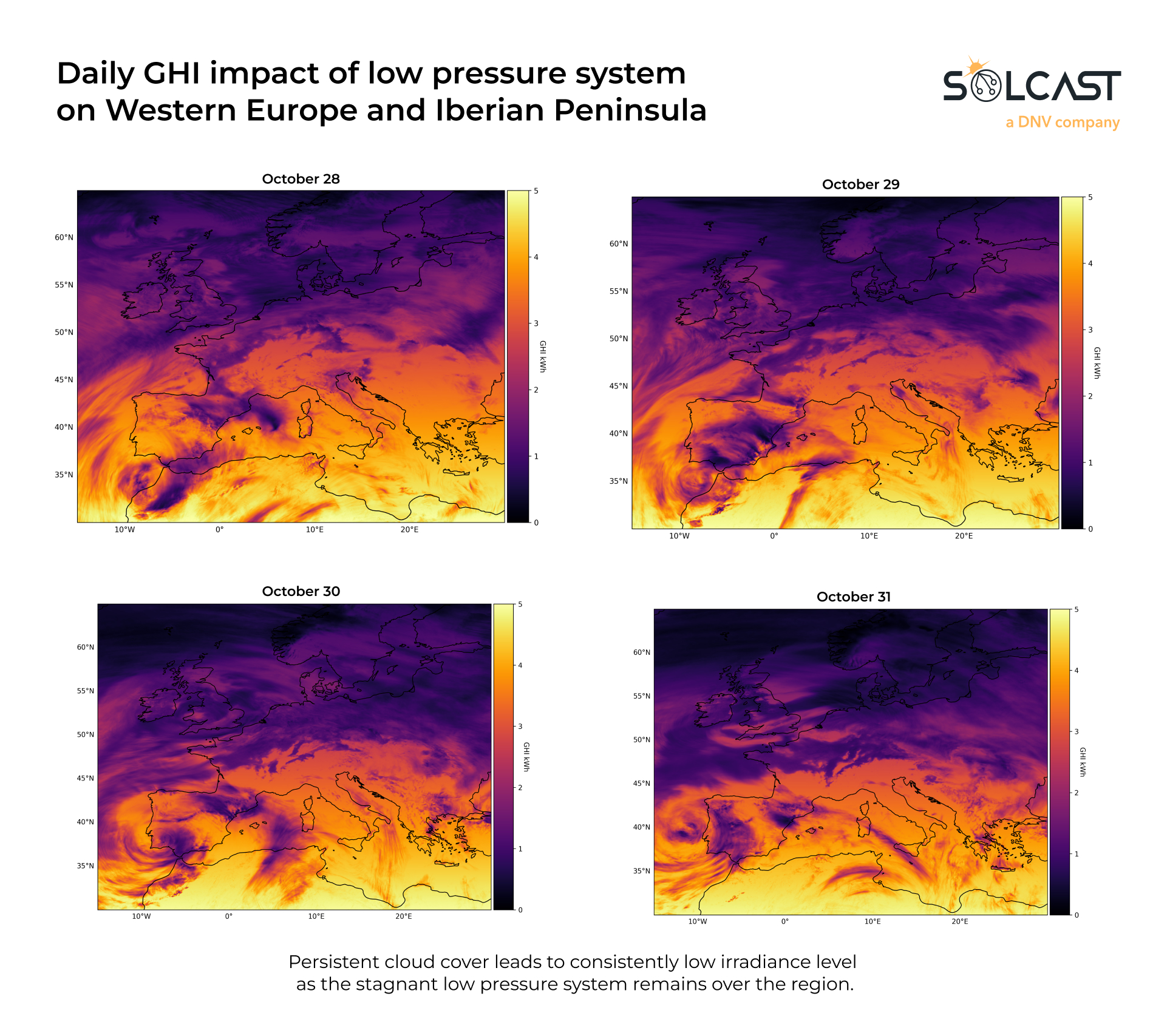
Western Europe saw insolation levels in October well below typical values, especially in the Iberian Peninsula and northern Italy, where insolation fell 20 to 30% below the October average. The cloudy conditions also brought rain, with Valencia in Spain experiencing widespread flooding, while Milan saw more than 2.5 times more rain than normal in October. Persistent cloud cover and rain were caused by low-pressure systems from the Atlantic Ocean coming into contact with warmer waters of the Mediterranean Sea. A weak, meandering jet stream and high-pressure block over eastern Europe prevented these systems from moving eastward, causing them to stagnate over western Europe, reinforcing cloudy and rainy conditions. Daily radiation data from Solcast shows how the low-pressure system persisted over the Iberian Peninsula from October 28 to 31, maintaining cloud cover that reduced solar radiation during this period.
Eastern Europe, on the other hand, had significantly clearer skies. The high pressure that trapped clouds and rain in the west created stable and dry conditions across much of Eastern Europe, leading to 20-30% above average radiation levels in regions such as Greece and Turkey. These areas remained largely shielded from the turbulent weather to the west, allowing solar conditions to remain favorable through much of October. This unusually high insolation boosted solar energy production and supported a strong end to the fall season for the region’s solar assets.
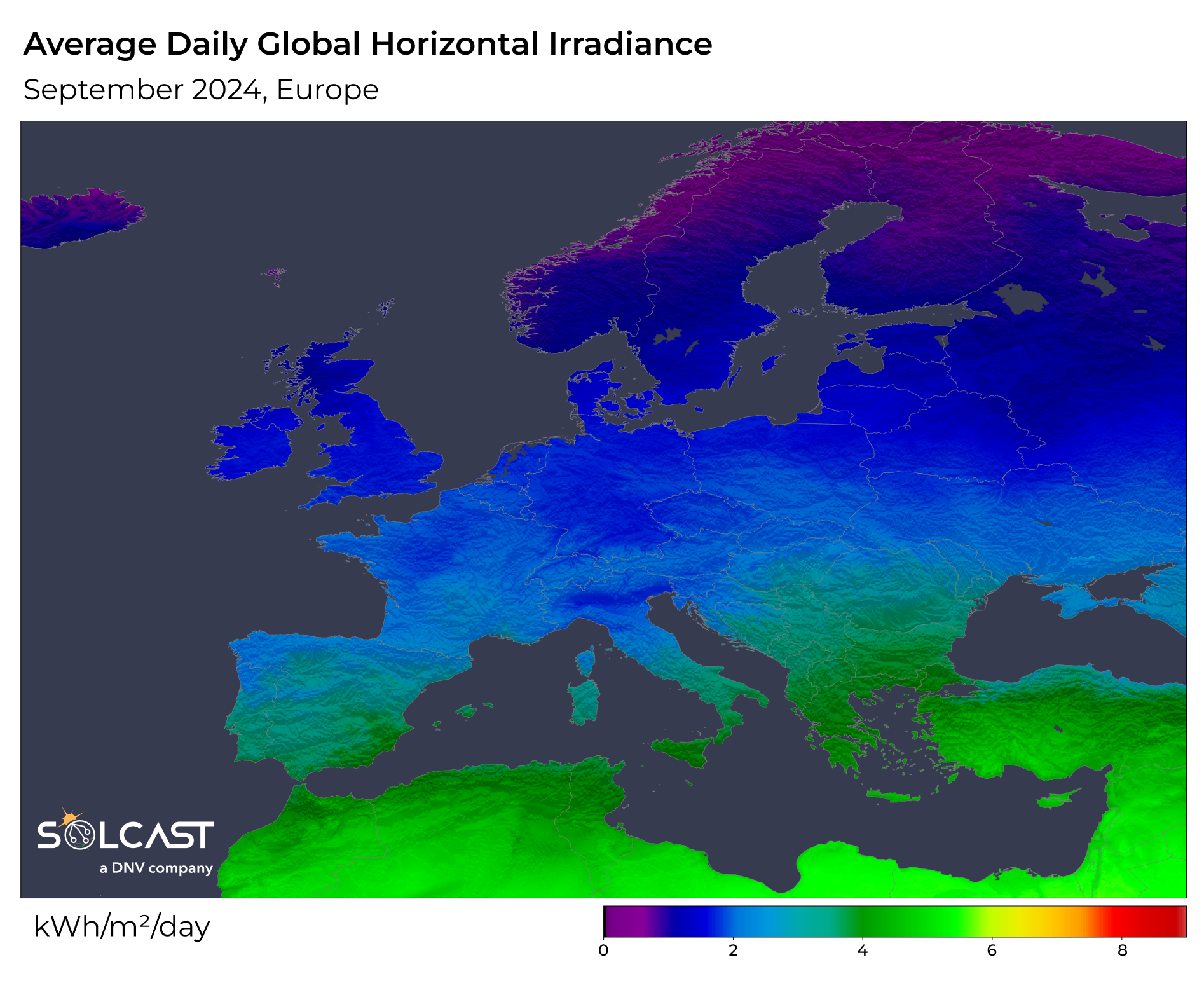
As Europe transitions into winter, the seasonal decline in insolation begins, especially at higher latitudes. Although the British Isles experienced typical radiant insolation for October, they remained well below that of even cloud-covered Spain, highlighting the region’s overall lower solar potential as winter approaches. Solar power generation in October also varied, with production in France falling to 10.8% below the long-term average (which takes into account changes in capacity), while Italy experienced a 15.3% shortfall. In Germany, irradiation patterns diverged between the northern and southern regions, with lower than average production in the south offset by higher than average production in the north, leading to near average total solar generation.

Solcast produces these figures by tracking clouds and aerosols worldwide at a resolution of 1-2 km, using proprietary satellite data AI/ML algorithms. This data is used to drive irradiance models, allowing Solcast to calculate high-resolution irradiance, with a typical deviation of less than 2%, as well as cloud tracking predictions. This data is used by more than 300 companies that manage more than 150 GW of solar energy worldwide.
The views and opinions expressed in this article are those of the author and do not necessarily reflect those of the author pv magazine.
This content is copyrighted and may not be reused. If you would like to collaborate with us and reuse some of our content, please contact: editors@pv-magazine.com.
Popular content